

What Company Supplies McDonald's Filet-O-Fish?
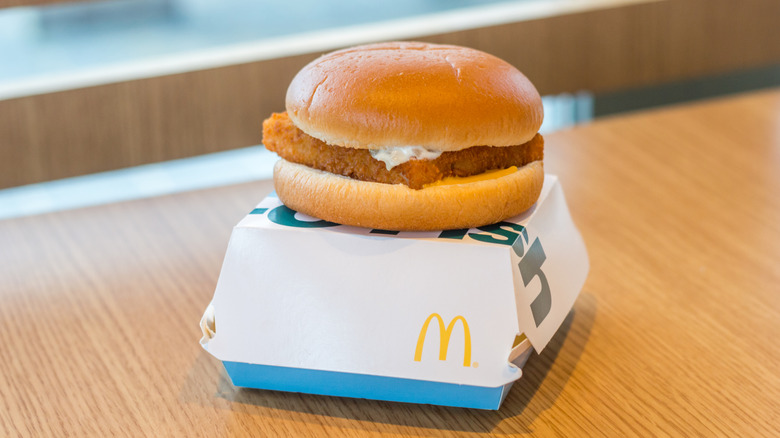
The Filet-O-Fish is nothing short of iconic and has maintained a dedicated fan base since defeating the Hula Burger back in the '60s. Featuring a half-slice of American cheese and creamy tartar sauce, the sandwich wouldn't be complete without its signature square breaded fish patty. But who supplies them? Of course, with over 44,000 locations in operation, sourcing each and every fish from a single supplier would be near-impossible. Rather, McDonald's relies on several sourcing channels, with mega-companies like Keystone Foods doing the heavy lifting, while small, independent fishermen like Kenny Longaker play a smaller role in the puzzle.
McDonald's ties to Keystone Foods stretch back to the 1960s, when founder Herb Lotman introduced the chain to the Individual Quick Freezing method still used for its burger patties. The company later helped develop Chicken McNuggets, and today it makes beef patties, chicken, and breaded fish filets. According to McDonald's, its U.S. operations produce and deliver around 15 million pounds of fish a year, a small amount compared to the 300 million pounds of chicken it supplies, but still plenty of Filet-O-Fish. McDonald's doesn't directly name Alaska pollock on Keystone's page, but since the Filet-O-Fish is its only seafood item available in the U.S., and the chain has used Alaska pollock exclusively since 2013, it's a safe bet that's what Keystone is supplying.
For any supplier, whether a corporate heavyweight or local fishermen, the story of the Filet-O-Fish starts in the Bering Sea, where huge schools of wild Alaska pollock swim. One thing that sets Alaska pollock apart from other common household fish is that it's 100% wild-caught, meaning fishermen like Longaker head out from Dutch Harbor aboard their boats — in his case, a vessel named the Defender — to catch fish straight from the ocean.
The surprising journey of McDonald's Filet-O-Fish, from sea to bun
While Keystone handles production and delivery at scale, the supply chain still starts with fishermen like Kenny Longaker. As stated on McDonald's website, he explains, "The pollock we catch are filleted and frozen within about 24 to 72 hours after being caught, and it's the quality McDonald's expects." This rapid processing helps preserve the fish before it moves further along the supply chain. Of course, catching the fish is only half the story. Once the pollock has been filleted and frozen, it must be processed into the familiar square portions that make the Filet-O-Fish instantly recognizable. In a Facebook video shared by a McDonald's restaurant, an employee explains that the fish gets its signature shape when the fillets are sliced into squares at sea — although it's unclear whether this is also how Longaker's or Keystone's catches are processed.
But McDonald's fish supply chain hasn't always looked the same. The original sandwich, invented by franchise owner Lou Groen in 1962, used premium halibut, which proved too expensive for a national rollout. McDonald's swapped it for the considerably cheaper North Atlantic cod, then went looking elsewhere once supplies tightened. In 2007, after discontinuing its use of Eastern Baltic cod, it turned to Alaska pollock and New Zealand hoki, before exclusively settling on Alaska pollock for its sandwiches.
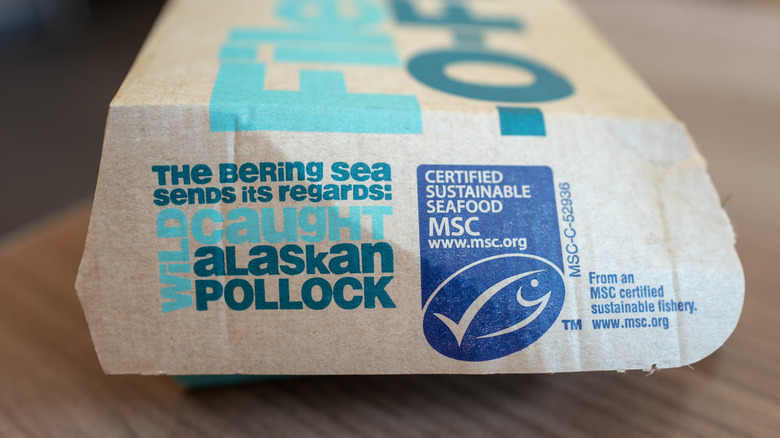
One advantage of sourcing Alaska pollock is that it comes with outside certification. If you've ever purchased the sandwich, you may have noticed the blue Marine Stewardship Council (MSC) seal on its packaging, which indicates that the wild-caught fish comes from a certified sustainable fishery. In the U.S., McDonald's sources its Filet-O-Fish pollock from the Eastern Bering Sea and Aleutian Islands region, which have been independently assessed against the MSC's sustainability standards.