

Forget Salmon: A More Versatile Option That's Flakier
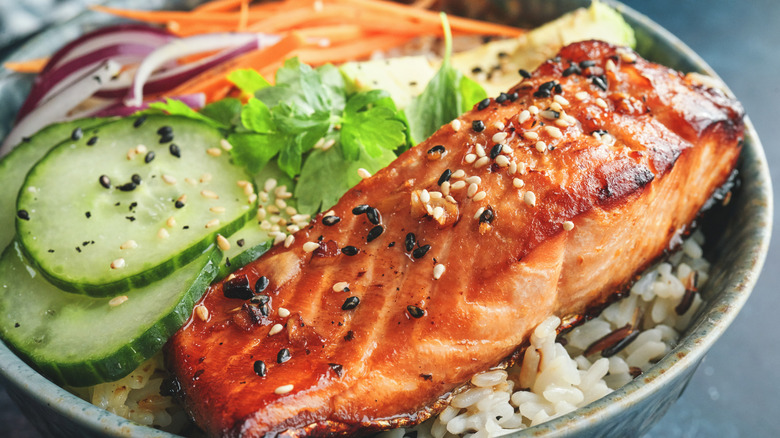
It's no secret that salmon has been having a serious moment, and it's easy to see why. It's packed with nutrients, has a famously rich, buttery texture, and its signature pinkish-red hue makes it stand out on any plate — or in a firecracker stick rice bowl. But if you're looking for a fish that's lighter, flakier, and perhaps even more versatile in the kitchen, look no further than Alaska pollock. Even better, it's also one of the more sustainable seafood options out there, and as of 2026, the vast majority of Alaska pollock fisheries are certified sustainable by the Marine Stewardship Council (MSC).
One of the most obvious differences between salmon and Alaska pollock is their appearance. Alaska pollock is a whitefish, while salmon is classified as an oily fish. White fish tend to be leaner than oily fish, making Alaska pollock the low-fat, high-protein option. However, this also means it contains less omega-3 fatty acids and fewer fat-soluble vitamins than salmon, which is known for its nutritional richness. Salmon's higher fat content also gives it a richer, bolder flavor, while Alaska pollock has a mild taste and delicate, flaky flesh.
However, one of Alaskan pollock's biggest advantages is that mild flavor, which makes it a perfect blank canvas for marinades and seasonings. Better still, it lacks that certain fishiness that oil-heavy varieties may have, especially if not cooked deftly. Because it's light and flaky, it handles many preparations well: battered frying is reminiscent of a classic British fish and chips, but it also holds up well to steaming with fresh herbs and aromatics, broiling with breadcrumbs or a dry cheese like parmesan for a nice crust, and so much more.
How cooking pollock differs from salmon (and tips to do it well)
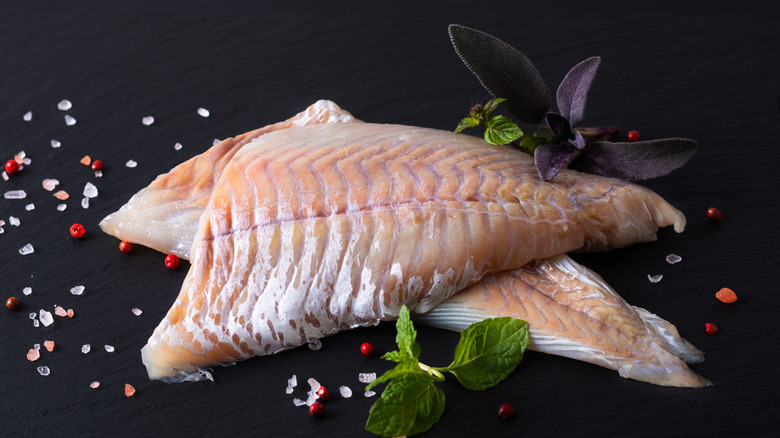
Cooking salmon versus an Alaska pollock is a little like cooking a well-marbled ribeye versus an ultra-lean filet mignon. Both can be delicious, but each benefits from a different approach. Salmon's higher fat content helps keep it moist and gives it the richness to stand up to high-heat cooking, making it a great choice for grilling or roasting. Alaskan pollock is much leaner, so it can dry out if overcooked. Try baking it gently with a drizzle of olive oil, steaming it, or pan-frying it over moderate heat until the flesh turns opaque and flakes easily with a fork. If you're grilling pollock, use a fish basket or foil to keep its delicate flesh from breaking apart, and avoid leaving it on the heat longer than necessary.
For a bright, zesty finish, try lemon juice, garlic, olive oil, and fresh herbs. Craving something with a little more kick? Mix lime juice with chili, cumin, and a touch of honey for a sweet-and-spicy glaze. Just remember that acidic marinades can start to affect the fish's delicate texture, so keep marinating times short.
Don't rule out frozen Alaska pollock, either. Much of the catch is processed and frozen soon after harvest, often abroad, by large catcher-processers operating in the remote waters of the North Pacific. You'll commonly find it in prepared products such as fish fingers, breaded filets, and fast-food sandwiches, including McDonald's iconic Filet-O-Fish. And frozen fish isn't necessarily a downgrade from fresh. When it's frozen promptly, it can retain excellent flavor and texture, making it a particularly practical choice if you live far from the coast and freshly caught seafood isn't readily available.