

Make Your Next Burger Japanese-Style For A Juicier Bite
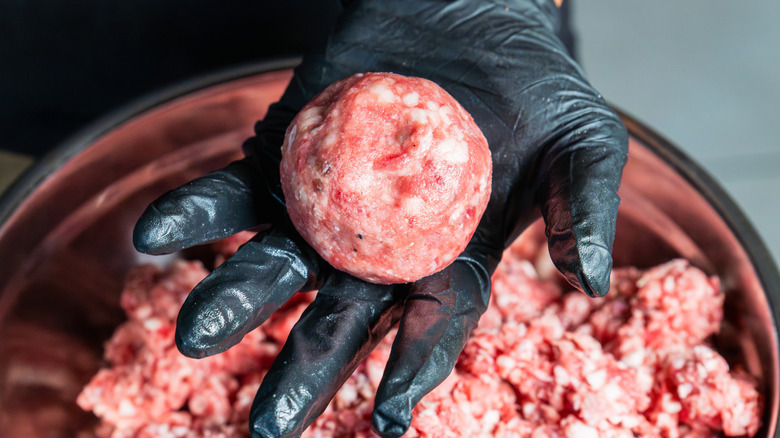
In Japanese cuisine, there's an entire subgenre dedicated to reinterpreting Western dishes called Yoshoku. The umbrella includes some of the country's most iconic foods like omurice (also spelled omuraisu) — a thin omelet served over fried rice — as well as British-influenced Japanese curry, a rich and savory meal that's a great way to use leftover vegetables. Even a burger riff named hanbāgu is part of the repertoire.
Unlike an all-American cheeseburger recipe, this dish is served without bread, instead consisting of a minced beef and pork cutlet reminiscent of Salisbury steak. Such patties are made extra juicy with the help of a fatty meat bound together using both eggs and breadcrumbs. It's an assembly technique reminiscent of meatballs; however, the meat is formed into large quarter-pound patties and pan-fried, yielding a burger-like experience. Some chefs go even further by steaming the beef in wine or stock following the searing, further enhancing the juiciness.
Traditionally, hanbāgu is rounded out with a Japanese-style demi-glace sauce, made from sweet and savory ingredients like ketchup mixed with tonkatsu or Worcestershire sauce. Served alongside rice and simple steamed vegetables, it's a burger construction that maximizes moisture while retaining an easy stove-top preparation.
Include hanbāgu techniques in your next burger recipe
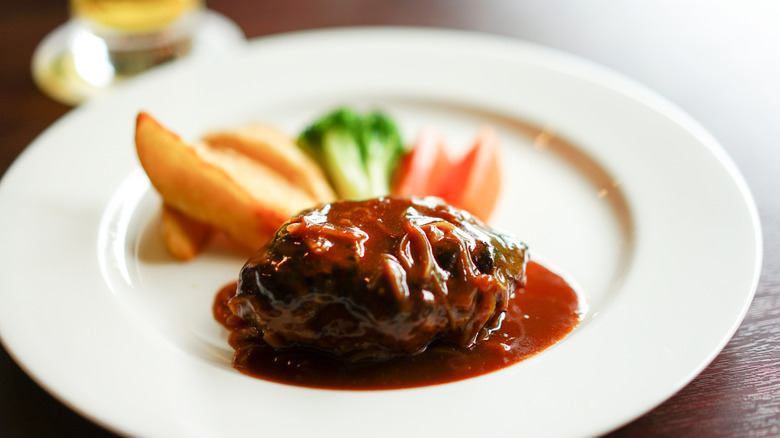
A hanbāgu complete with sauce and sides makes for a satisfying meal. Yet you can also selectively utilize some of the dish's elements in your next burger rendition. After all, a traditional all-beef burger often relies on ideal doneness for juiciness, grilling at a perfect temperature to achieve a succulent medium-rare. For fans of well-done meat, such an approach is a deterrent, making hanbāgu a better alternative.
The dish's inclusion of pork — in a ratio anywhere from a third to half of the meat composition – is one technique to increase the meal's juiciness. Pig meat necessitates cooking everything past beef's medium to ensure there is no pink whatsoever and the internal temperature reaches 160 degrees Fahrenheit; however, it won't turn out dry, instead imbuing tenderness even when well-done. Plus, pork enhances a burger's flavor, adding a pleasant sweetness to the mix.
Alongside the reworked composition, look towards hanbāgu's pan-frying technique. Stove-top burgers are nothing new, and this dish follows the classic method of first browning the patties on all sides. Finishing the meat with a hearty dose of steaming is a useful enhancement. Using a pour of flavorful wine or broth, you're not only enhancing the dish's flavor, but also ensuring the patties are uniformly cooked. The resultant burger can still be enjoyed between buns or standalone, making for a tender rendition with a Japanese twist.