

Grill Your Burgers At This Temperature For Perfection Every Time
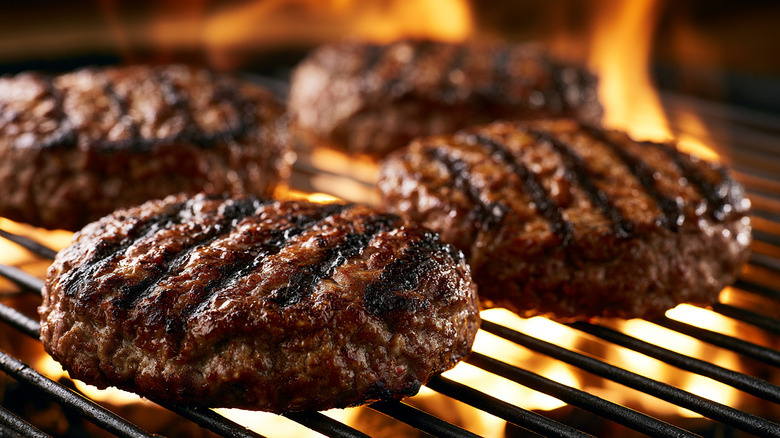
All in all, making burgers is a straightforward process. Form patties, sizzle them on a hot grill, then serve between two buns — just like that, you've got a meaty classic. Yet, like with any beef preparation, temperature control is everything. Fail to cook it long enough, the patty turns out chewy and cold. Grill too much, and you're dealing with dry and flavorless beef; you'll need some savvy technique to fix an overcooked burger. Not to mention, duration isn't the only factor at play here. You need to consider the grill temperature, too.
To achieve a properly cooked burger, aim to get your grill around 375 to 400 degrees Fahrenheit. Right on the cusp of medium-high and high heat, such a temperature kickstarts Maillard reactions, thereby achieving a mouth-watering crust and charred flavor. Still, keeping it dialed down below max heat curtails overcooking, not to mention keeps unruly flare-ups at bay.
If you're using a gas grill, hitting such a temperature zone is easy. Simply turn the burners on medium-high, keep the lid closed, then wait a measured 15 minutes to hit the right level of heat. Charcoal is a little trickier, but it produces a burger flavor that warrants the effort. Start the coals in a chimney, then spread them out on the grill bottom once lit. Close the lid, but keep both the top and bottom vents open, thereby sustaining medium-high heat. With embers hot and ready, throw the patties on the grate, ready to sear to perfection.
More grilled burger techniques to consider
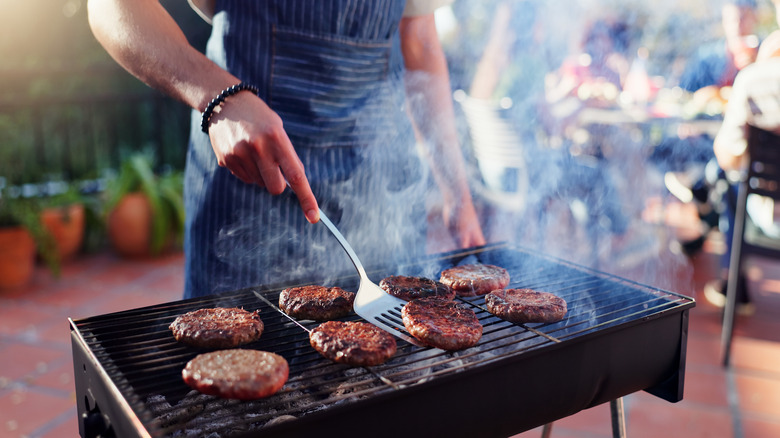
There are many rules to grilling burgers like a pro; adjustments don't stop once the meat's on the griddle. Make sure to place the patties over direct heat, letting the fuel source swiftly firm up the beef. Crust formation is key: The exterior texture not only tastes delicious, but gives your burger a satisfying texture. Once you have a solid layer going, then you can start flipping the patty. So long as you don't compress the meat too much, don't worry about frequent flips, rotating sides several times. A few minutes later, you'll be near cooking completion.
Don't forget to grab a thermometer to nail burger doneness. Using sight and touch simply won't cut it, failing to accurately assess your patty's interior. Instead, check the measurement probe, aiming for 130 degrees Fahrenheit to attain the trusty medium-rare (increase by 10 degrees to get to the next level of doneness). Once finished, let the patties rest, ensuring ideal juiciness and helping to keep your burger intact. Layer the burger with condiments, or enjoy it simply as meat and bread. Such a careful preparation process will craft a rendition a notch above the rest.