

Bobby Flay And Martha Stewart Agree: Pork Chops Are So Much Juicier When You Buy This Cut

Pork chops make for a reliable protein source. The meat is easy to cook, flavorful, and shines in a wide array of pork chop dinner recipes, like Sichuan salt and pepper pork chops or even a one-skillet French onion pork chop. The one downside, though, is that the cut is predisposed to dryness. Chops can come low on fat, making moisture loss a prevalent issue. In addition to marinating pork chops in lemon to make them juicier, one of the best ways of curtailing dry meat is selecting an optimal cut. From shoulder to sirloin, the pork meat comes in a wide variety of compositions. And an especially well-regarded option is a boneless center cut.
Noted by both Bobby Flay (per Today) and Martha Stewart, this pork chop cut is prized for its juiciness. Also called a loin chop, the center cut piece consists of loin and tenderloin, two distinct pork regions. A center-cut chop comes with a T-shaped bone, which separates both sides. Meanwhile, a boneless center cut removes this dividing structure, yielding a tender piece of meat that cooks evenly.
A boneless center cut is low in fat and not too porky in flavor. As a result, it's terrific for both high-heat cooking and braising. Cooked for too long and too hot, the meat can still turn tough. However, with a careful application of heat, it makes for a balanced and juicy experience.
How to prepare center cut boneless pork chops
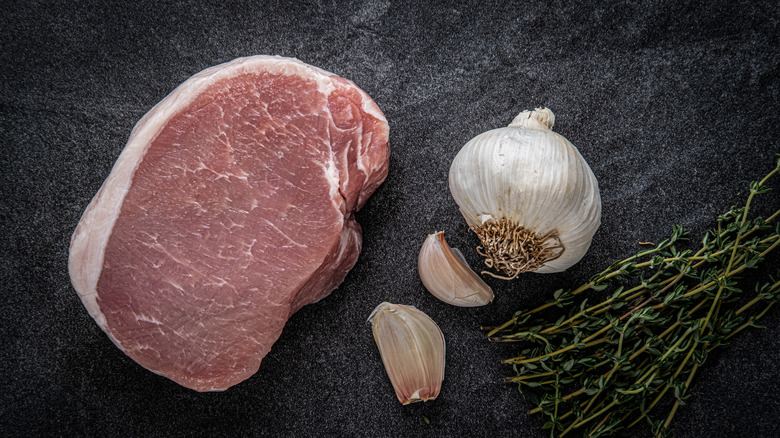
When choosing how to prepare the meat, think of center-cut boneless pork chops like a nice steak. The meat typically comes in over an inch thick. And like with beef, the worst you could do is overcook the cut at high heat. This pork chop is best built for either a rapid sear or a braise, not a cooking amalgamation of the two.
To achieve optimal texture, it's best to quick brine the meat, letting salt work its tenderizing magic. With no fat or bone, the center cut offers limited moisture protection. So if you go with a high-heat method — whether on a grill, pan or broiler — keep it to a brisk two or three minutes per side. Have a thermometer in hand to verify the temperature you need. Cooked to proper doneness, you'll get a flavorful chop, which will turn out even better with a paprika-based dry rub for added flavor.
The braise method showcases the same cut in a completely different light. Start by browning the pork a few minutes per side, as when searing. Then, cover the cut in water and vinegar, plus various aromatics (think Worcestershire sauce, alliums, or sugar). An hour of braising will result in a tender yet meaty piece of pork, showcasing the center cut in another delicious light.