

Soaking Chicken In Vinegar: What It's For And Why It's Recommended
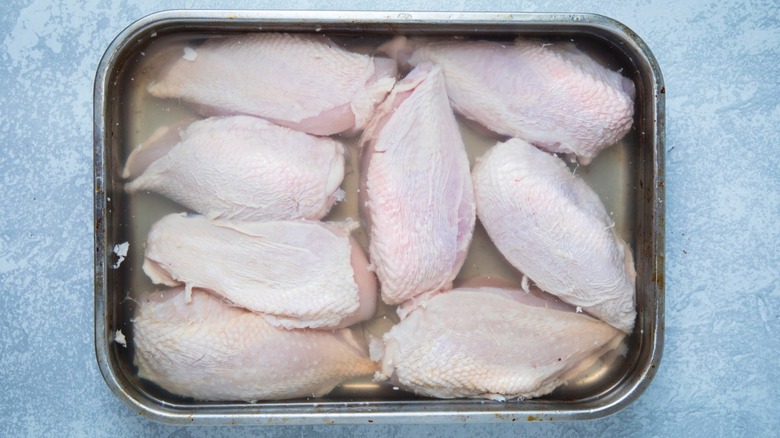
If you've ever scrolled deep into TikTok or Instagram looking for inspiration on what to do with the chicken sitting in your fridge, you've more than likely stumbled upon a home cook soaking their chicken in a vinegar solution before deep frying, roasting, or grilling it. It might seem like a harmless step, but it has proven to be divisive. For some, it's a non-negotiable. To others, it's completely unnecessary. So why do some people choose to go through the effort?
It all comes down to smell. Raw chicken can sometimes carry a distinctly gamey odor, and if you suffer from the chicken ick, it can be pretty off-putting. Just to be clear, this is very different from the rancid smell of spoilage, which means the chicken should be thrown away immediately. With perfectly good chicken, however, vinegar's acetic acid can help neutralize those natural odors, making it far more agreeable to work with. Lemon or lime juice is often added to the mix for a clean, refreshing aroma, and some people go a step further and rub the cut fruit directly over the surface. In some cases, people skip vinegar altogether and use lemon juice instead.
This step is by no means mandatory, and skipping it poses no food safety risk if your chicken is in good shape. But one common misconception is that the soak can stand in for a marinade, with the acidic vinegar tenderizing the outer layer of meat. Unfortunately, that isn't really the case. The vinegar is usually very diluted in water, so there's not nearly enough vinegar or time for it to do much beyond tackling odors. Anyway, you can also marinate the chicken afterward.
Vinegar cannot sanitize raw chicken
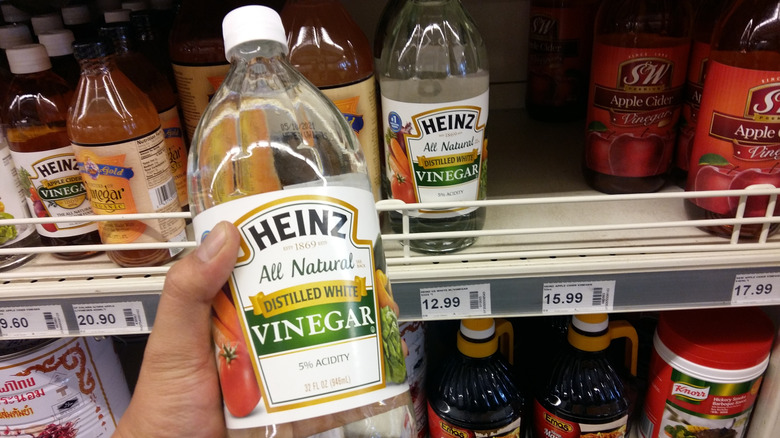
One common, potentially dangerous misconception among home cooks is that soaking chicken in vinegar will sanitize it. Look, it's not an entirely out-there assumption. Vinegar is a popular DIY cleaning staple thanks to its acidic properties, and it's often used around the kitchen to help tackle grime and grease. Mix it with baking soda, and you'll even get that satisfying fizz that can help loosen stubborn dirt. But while vinegar has its uses as a household cleaner, that doesn't mean it can reliably eliminate harmful bacteria from raw chicken.
One of the biggest concerns when handling raw chicken is Salmonella, a bacterium responsible for numerous foodborne illness outbreaks and some of the biggest recalls in food history. Unfortunately, soaking chicken in vinegar won't reliably remove or kill Salmonella, so it shouldn't be treated as a food safety measure. The only dependable way to kill harmful bacteria is to cook chicken to an internal temperature of 165 degrees Fahrenheit, checking the thickest part with a meat thermometer.
In certain cases, a vinegar soak can also create another opportunity for cross-contamination. Any liquid that comes into contact with raw chicken can carry bacteria onto your hands, countertops, utensils, and other kitchen surfaces. Even picking the chicken up out of the bowl and washing it under the tap can cause contaminated liquid to drip or splash. If you do choose to soak the chicken in vinegar, handle it carefully and keep the liquid contained. Once you're finished, wash your hands and thoroughly clean the bowl, utensils, and any surfaces that came or could have come into contact with the raw chicken using hot, soapy water. There's no need to rinse the chicken itself.