

Adding Gelatin To Ground Beef: What It's For And Why It's Recommended
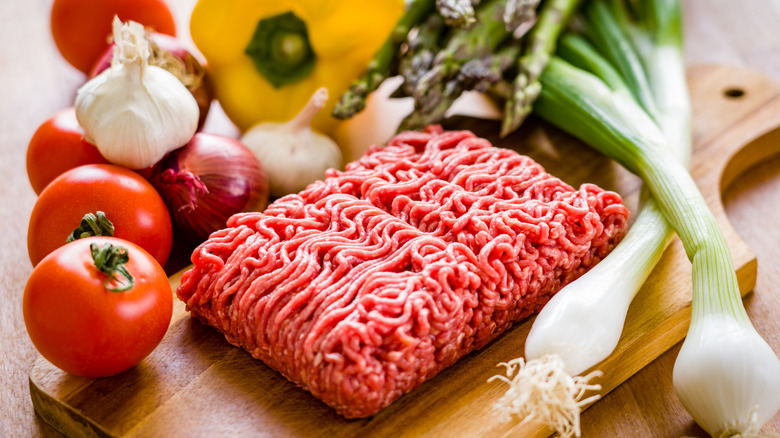
Out of the many available meat products, ground beef makes for an especially practical foundation. The ingredient can be reworked into a wide array of compositions: Classic ground beef meals range from nourishing soups to pies and grilled meats. Yet to give the beef a unique textural spin, consider preparing the ingredient with gelatin.
The technique may sound different, especially if you're thinking of sweet and savory gelatin salads, a 1960s food trend that still doesn't make sense. In ground beef recipes, though, the collagen-based ingredient isn't a defining component of the dish, but rather a subtle way to enhance juiciness. Gelatin can absorb up to 10 times its weight in water, meaning just a small amount effectively curtails dryness in beef recipes.
It's a savvy application that enhances beef dishes prone to drying out, whether that's a meatloaf, pie filling, bolognese sauce, or meatballs. A little goes a long way: You'll only need a couple of teaspoons per pound of meat. And for the most seamless integration, it's best to bloom the gelatin using cold liquid first, then chop the resultant jelly into tiny chunks. As the ground beef cooks, the gelatin retains moisture even as it melts, creating a meat dish with an extra juicy bite.
You can use a variety of liquids to bloom your gelatin
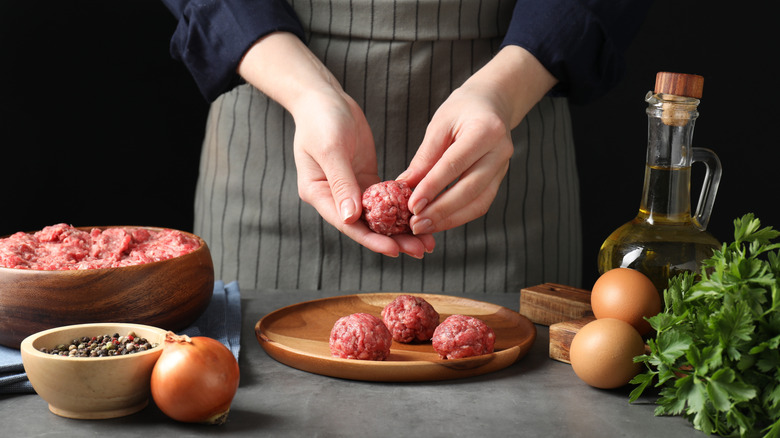
If you've ever whipped up a meatball recipe that results in a pool of liquid or a meatloaf that turned out disappointingly dry, bloomed gelatin is the magic fix. Rather than infusing a ground beef recipe with extra fat or ladling sauce onto dry mince, the ingredient lets you alter the structure from within — and you can flavor it however you like. Employed in the proper ratio, the gelatin creates tiny, tasty liquid pockets within mince, which will release moisture with each bite.
So long as there's no intense acidity or booziness, the ingredient works with a wide array of liquids. You could bloom it in cold milk when preparing a meatloaf recipe, or use a flavorful stock as the vessel when whipping up meatballs and meat sauce. Setting the mixture doesn't take long: Gelatin will solidify in as little as thirty minutes in the fridge. And once chopped up, don't fret over making the bites a teeny-tiny consistency. Gelatin will seamlessly melt into the beef dish during cooking.
You can proceed to bake, fry, or roast the beef dish as usual, preparing in the same manner as without gelatin. Just keep in mind that the technique can tenderize the dish drastically, so cut down on ingredients like breadcrumbs to avoid excessive softness — and remember, you'll still need your binder, like eggs, to hold things together. Otherwise, enjoy a reimagined classic, with an extra succulent touch.