

Add This Pantry Ingredient To Ground Beef For Juicier Meatballs (Hint: It's Not Egg Or Breadcrumbs)
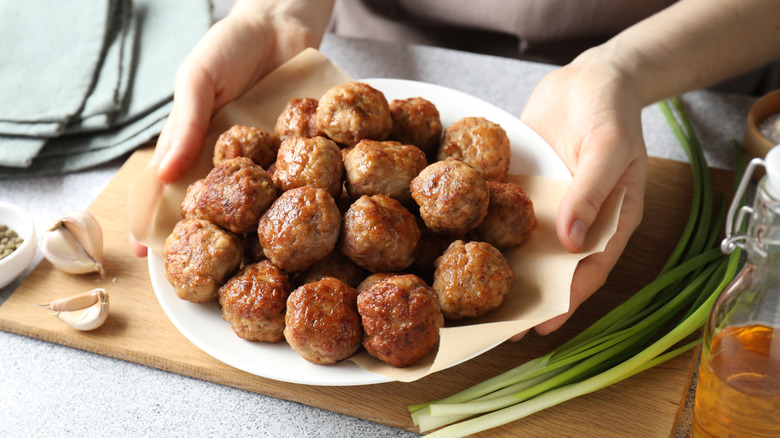
Meatballs are inexpensive, highly customizable additions that make great use of on-hand ingredients for a flavorful result. But if you don't have breadcrumbs or are just tired of the same old recipes, rice is an excellent substitute that can deliver juicy meatballs with little modification to the preparation process.
Any starch you add to meatballs has two jobs: capturing or adding moisture and binding the ingredients together. Raw rice is particularly good at the first, swelling as it absorbs the juices your meat releases and keeping them in the meatballs rather than letting them collect in the pan or on the tray. As it does so, it also helps keep even lightly worked meat blends from falling apart. When you bite into one, you should notice a juicy result, as well as a bit of extra heartiness from the filling grain.
This trick is used in meatball recipes from around the world, notably in Mexican albóndigas. It's so effective that you can use it with leaner meats as well, like ground chicken or turkey. Since rice can help hold the ingredients together, it's great for meatballs you plan to finish simmering in a soup, where they might otherwise fall apart from stirring or soaking. Using rice also eliminates the need for the traditional soaking liquid used with breadcrumbs, letting you incorporate seasoning ingredients like Worcestershire or fish sauce instead without making the meat too soupy.
Tips for adding rice to meatballs
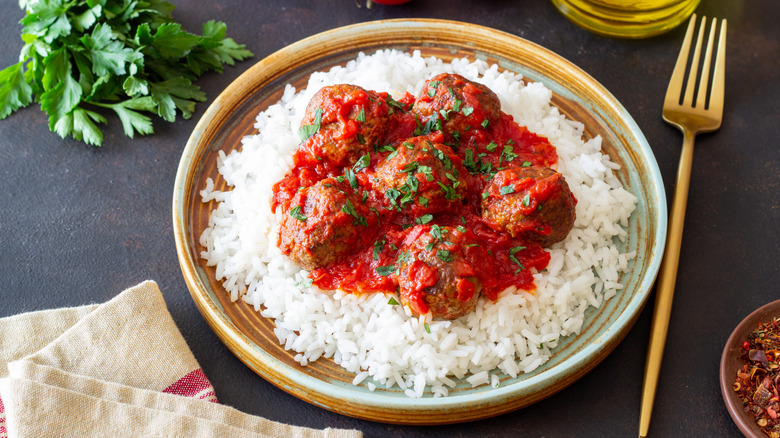
Using rice in meatballs is fairly versatile, and while your results may vary depending on the type of rice you use, the biggest difference is whether it's cooked first or not. Being too rough with your mixture can also cause texture problems, so taking a gentler approach to blending your ingredients can only help.
For 1 pound of meat, a good general rule is to use either ¼ cup of uncooked rice or 1 cup of cooked rice. If you use too much raw rice, it won't have a moist enough environment to cook properly and may remain hard in the finished meatballs. Too much cooked rice, and you end up with something closer to onigiri than a meatball. Long-grain white rice is a solid bet since it offers a good balance of starch and size, but short-grain rice is better if you primarily want it as a binder since it tends to be stickier.
Whether it's raw or has firmed up and dried out in the fridge, rice isn't a particularly delicate ingredient. Still, overworking the meat is a big mistake with meatballs, and you don't want to crush the grains. Use gentle, purposeful motions that focus on efficiently incorporating the ingredients rather than aggressive ones that squeeze the meat.