
11 Common Mistakes To Avoid If You're Buying A Bottle Of Bourbon
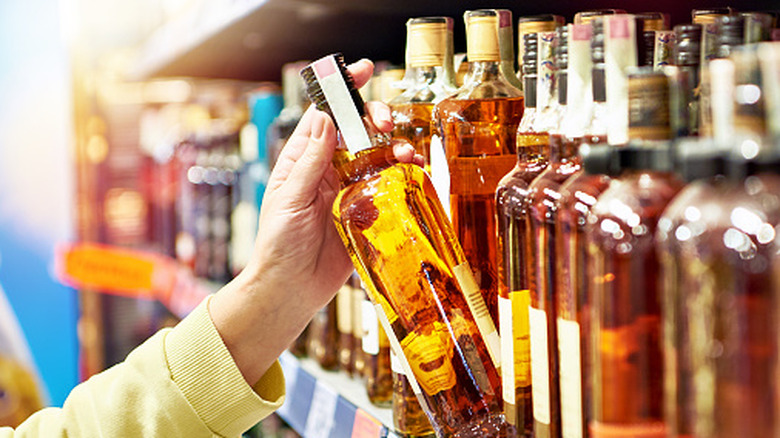
The world's your oyster when you've got a whiskey obsession and some cash to dispose of. Somewhere down that rabbit hole, you'll inevitably stumble upon bourbon, a Kentucky brainchild that plays by an entirely different set of rules than your average whiskey.
Whether it's the thrill of hunting down allocated bottles, discovering new flavor profiles, mixing with juices, or simply performing a giant compare-and-contrast experiment as you make your way through different brands, developing a bourbon obsession can be rewarding in many ways. But having a lot to explore isn't always a good thing. Things can get confusing pretty quickly when you're still trying to find your bearings. Industry jargon like mash bills, Bottled in Bond, barrel finishes, and small batch can start to sound like noise when you're standing in the liquor store, staring at a wall of bottles and wondering where to even begin.
To help you sift through the marketing gimmicks and figure out which details are actually worth your attention, we spoke to Mixologist and Spirits Education Manager for Total Wine & More Molly Horn; Beverage Director at Group Hospitality David Kravitz; Master Mixologist Nicolette "Nikki" Bonkowski; Beverage Director at Ophelia Amir Babayoff; National Spirits Specialist and Portfolio Mixologist for Heaven Hill Brands Lynn House; and Director of Whiskey Sales and Education at Foley Family Wines and Spirits Andy Westley. Here's what they had to say about some of the biggest pitfalls you're likely to encounter when picking out a bottle of bourbon.
1. Assuming expensive is always better
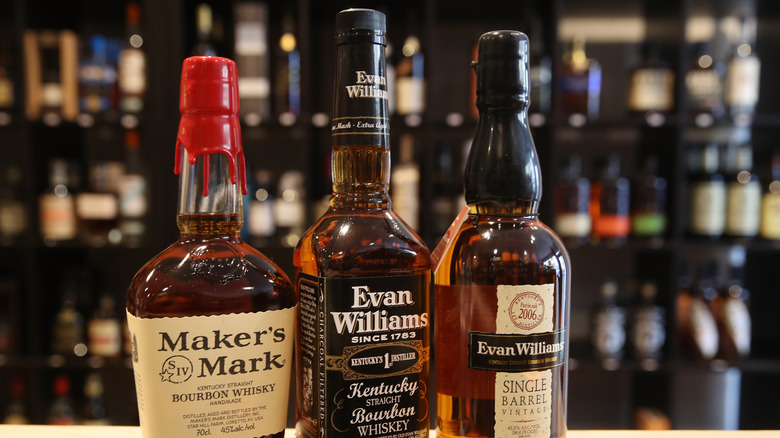
Buying a good bottle of bourbon is bound to put a little more pressure on your wallet than, say, vodka. Limited releases, allocated bottles, single barrels, and years of maturation can all rack up the tab, making a quality bottle feel like a luxury purchase. But it doesn't have to be. There are plenty of inexpensive bourbons that can deliver just as much satisfaction as some rare, premium-priced unicorn.
That's not to say you should steer clear of expensive bottles altogether. If you're building a collection, hunting down rare releases, or simply enjoy the pronounced oak character of an aged bourbon, it can absolutely be worth digging a little deeper into your pockets. Don't make expensive your default, though. As David Kravitz tells us, there are occasions when that top shelf whiskey is just not worth the money. "Not every occasion requires caviar, and bourbon is the same way," he points out. "There are solid, tested brands like Wild Turkey or Elijah Craig that work really well for everyday sipping."
According to him, an affordable everyday bottle can sometimes punch above its price tag, especially when you're using it for cocktails. "If you are mixing a drink like an Old Fashioned, I would not use an expensive bourbon as that is mostly a waste," he says. "A good affordable bourbon that has a good flavor profile works well in cocktails and will get the job done without the expense."
2. Buying based on brand hype
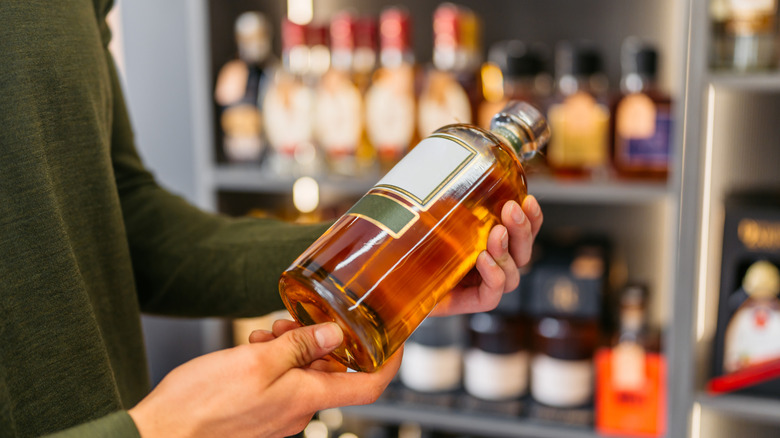
When you're still finding your bearings in the bourbon game, a familiar, much-talked-about brand can be a handy place to start. Storytelling, Kentucky heritage, celebrity endorsements, and social media's ever-churning enthusiast culture can all send a bottle shooting up the popularity charts, putting it front and center when you're scanning the shelves at the liquor store.
But as Andy Westley points out, none of that buzz tells you whether you're actually going to like what's inside. "A name in and of itself is not automatically a sign of quality. What is a sign of quality is the liquid in the bottle, and the people that have created that liquid," he says. "I would be much more concerned with the reputation of the distiller, and either your own personal tastes or recommendations from people you trust."
That's not to say a brand can't live up to the hype. But even when it does, it might be well worth your while to keep poking around beyond the familiar names. "I don't knock the comfort you find in the consistency in continuously buying the same bottle over and over," Nikki Bonkowski points out. "However, there is a world of bourbon out there and the worst mistake that you can make is letting it live beside you and not wanting to keep learning about it."
3. Buying without considering your palate

Quality, heavily-lauded bourbon isn't in short supply. But just because a bottle is the industry's star pupil doesn't mean you'll like it. Ultimately, your taste buds get the final say. So, what should you be looking for to keep them happy?
First, consider the mash bill. The amount and balance of different grains can drastically affect a bourbon's flavor profile and mouthfeel. "A high rye [bourbon] amps up that dry spicy factor. A wheated bourbon, on the other hand, swaps out the rye for wheat, giving it a softer mouthfeel, a gentler spice, and more sweetness," says Molly Horn.
Next, be on the lookout for heavily finished bourbon. Its stint in the secondary cask can introduce flavors that weren't part of the original expression, sometimes to the point that the base bourbon's original character gets lost. "Some bourbons are finished in ex-rum or port casks, like Angel's Envy, and therefore are sweeter, but some are finished in ex-Calvados casks and have a completely different finish," Amir Babayoff tells us.
Don't forget that the flavor profile can change dramatically depending on how you plan to use your bottle. For neat, you'll want a bourbon with a flavor profile that matches your palate right out of the gate. But if you prefer your bourbon in cocktails, it's worth considering something you might ordinarily dismiss if it plays well with the kinds of juices and syrups you prefer in your drink.
4. Ignoring proof
The tasting notes on your bottle of bourbon are a great starting point for sussing out whether it and your palate are likely to get along. But they're not the only piece of the puzzle. The intensity of those flavors — and the overall drinking experience — can vary dramatically depending on proof, or how much alcohol is in the bottle.
According to Amir Babayoff, higher-proof bourbon can pack more intense, nuanced flavors because the higher alcohol content allows for greater flavor extraction from the barrel. But that doesn't mean higher proof automatically gets you a better bourbon. All that intensity can get a little overwhelming, more so if you're not accustomed to bourbon's bolder side. "When drinking it neat, you need to be a bit more seasoned to go for something considered high proof. I'd start at the standard 80 proof and make your way up from there," says Nikki Bonkowski.
Things change a little if you prefer your bourbon mixed into cocktails. Here, high-proof bourbon becomes somewhat indispensable. "A high proof gives you more wiggle room when adding a lot of ingredients, or making a drink with a larger dilution rate," Bonkowski points out. "For instance, taking a bourbon that is 100 proof rather than 80 proof and making it into an old fashioned will of course be stronger but also less sweet, bolder."
5. Assuming older bourbon is better bourbon
Long-aged bourbon might command plenty of attention among bourbon enthusiasts, but the optics of all those extra years probably count for more than they should. Leaving bourbon in the barrel for longer allows it to extract more compounds from the wood, bringing those smoky, vanilla, and caramel notes of charred oak increasingly to the forefront. That's not necessarily a bad thing if you enjoy a dry, heavily-oaked finish, but it can become a little overwhelming, particularly if you're new to bourbon.
That doesn't mean age should be completely dismissed when picking out a bottle. It just means you're better off treating it as a guide to flavor rather than a quality metric. If you prefer something crisp, bright, or only lightly woody, a younger bourbon, typically around two to four years old, might be more your speed. If you crave something richer and bolder, you might want to climb a little higher up the age chart.
That is, if you're drinking it neat. According to Nikki Bonkowski, those vanilla, caramel, and tobacco notes you get from a long-aged bourbon can get whittled down pretty quickly once dilution comes into play. "I wouldn't waste an aged bourbon on a cocktail," she says. "I would save that to be enjoyed neat. That way you can appreciate the flavor that the process of distilling and aging made, rather than letting all the ingredients you add for the cocktail take over."
6. Not inspecting the bottle before buying
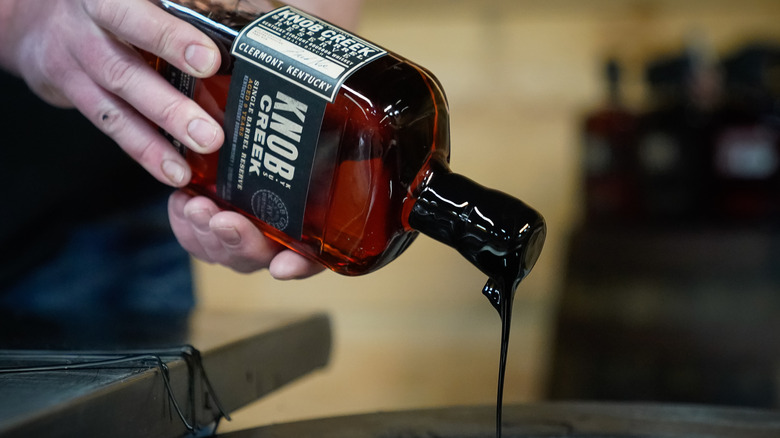
Age, proof, mash bill, and even brand can dramatically change how a bottle of bourbon tastes and whether it suits your palate. But before you get lost in all those details, it's worth giving the actual bottle a once-over. The seal, fill level, and label can offer vital clues about its integrity and authenticity, helping you sidestep bottles that are damaged, counterfeit, or otherwise compromised.
So, what exactly should a healthy bottle look like? According to Lynn House, cracks, chips, and leakage should be enough to make you pause. "I would also look for staining around the cork or label, which can indicate that the bottle has been exposed to heat or stored improperly," she adds.
Next comes the seal. "All bottles should have some sort of tamper-proof seal so you can make sure the bottle hasn't been opened," says Andy Westley. "Some brands like Maker's Mark have their famous wax. Other bottles have a perforation on the cap, so when you twist the cap open, that perforation breaks."
Then, there's the liquid itself, which can also tell you a thing or two. "It should generally look consistent," House tells us. "A small amount of sediment or haze is not always a concern, particularly with non-chill-filtered bourbon, but anything that looks unusual is worth asking about before purchasing."
7. Glossing over the label details
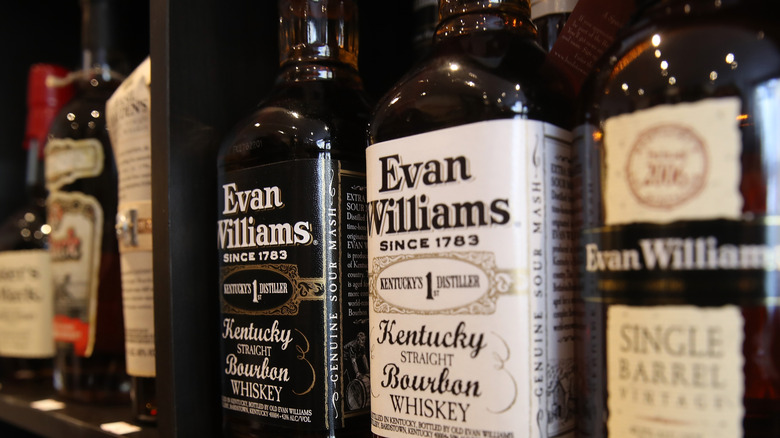
The brand name might give you a rough idea of what to expect from a bottle of bourbon, but it's only a small part of the puzzle. Some of the biggest bourbon red flags are hidden in the fine print. The brand name can tell you surprisingly little about where the liquid actually came from. Brands can purchase barrels from larger distillers, and what happens to the bourbon after that is largely up to the buyer. Some may age it longer, finish it in a secondary cask, or blend it with other barrels. Each of those choices can dramatically reshape the flavor profile and how well the bourbon gets along with your taste buds.
As Molly Horn says, most brands won't necessarily name the distillers or master blenders behind their sourced bourbon. There are still clues on the label, however, that can shed some light on where your bourbon actually came from. Keep an eye out for statements like "bottled by," for example. That's a very different designation from "distilled by" and can tell you what role the brand actually played in putting the liquid in the bottle.
Pay attention to the age statements, as well. These tend to be considerably more nuanced than they appear — and they aren't always spelled out as plainly as you'd expect. "Anything under [four] years will always say [two] years old because it must go by the youngest age of the blend of barrels," says Nikki Bonkowski.
8. Using just any bourbon for cocktails
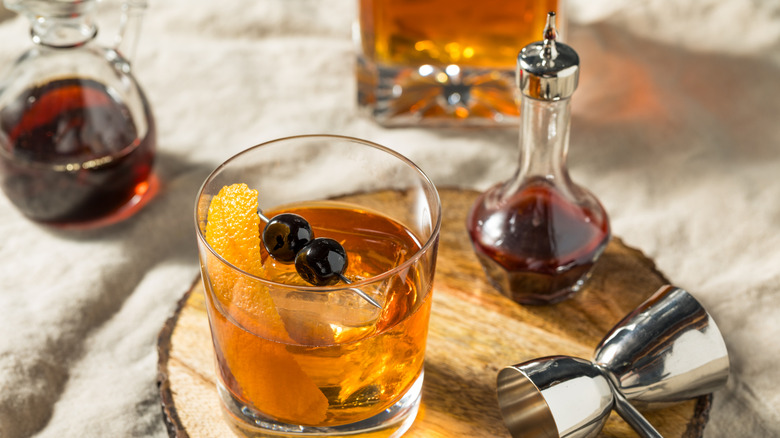
Bourbon's sweet, smooth character makes it a darling of spirit-forward cocktails like Manhattans and Boulevardiers. But that doesn't mean just any bottle will produce a bourbon cocktail worthy of a Kentucky Derby party. According to Nikki Bonkowski, dilution can significantly alter a bourbon's flavor profile, particularly more delicate notes that develop during aging or are influenced by its proof. Keeping that in mind when making a cocktail where the spirit should be front and center.
"Manhattans, Sazeracs, Old Fashioneds, and Boulevardiers, I would grab a rye that has a slightly larger proof on it. Since the bulk of the flavor is coming from the spirit itself, you want something that can stand up on its own," Bonkowski points out. Things change a little when you'd rather your bourbon play a supporting role in your cocktail. "Juices and syrups do a great job of covering up a bourbon's flavor, so a low-proof bourbon is more easily hidden than a high-proof bourbon," Bonkowski adds.
The mash bill will also come into play, though that depends largely on which flavor notes you want to bring to the party. If you like a little spice in your Manhattan, Bonkowski recommends reaching for a high-rye bourbon to turn up the heat. If you prefer things on the mellower side, however, a wheated bourbon may be more your speed. And if you're after something on the savory side, Bonkowski urges you not to knock a bourbon with malted barley.
9. Not knowing your bourbon terminology
Scanning the label carefully can put you on the right track toward finding a decent bottle, but it won't do you much good if you can't make head or tail of what's actually printed on it. You could end up overlooking production details that can dramatically affect a bourbon's flavor profile. Take single barrel bourbon: Because it comes from one individual cask, it can taste dramatically different from a blended bourbon, even when the two share an identical mash bill.
You could also breeze right past designations tied to actual regulatory requirements. As Molly Horn points out, a term like Bottled-in-Bond can tell you surprisingly plenty about what you're getting. To sport the designation, a bottle "must be made by one distiller at a single distillery, aged for a minimum of four years in a 'bonded' (aka government-supervised) warehouse, and bottled at exactly 100 proof," Horn explains.
Then, there's the age statement. According to Andy Westley, some producers omit a numerical age statement altogether, opting instead for the term "Straight" — something that might not exactly scream "age statement" if you haven't brushed up on your bourbon vocabulary. "It means the whiskey was aged for at least two years," says Westley. "Producers that are using the term Straight must also include the age if that Straight whiskey is under four years old. So if the label just says 'Straight' with no age statement, the whiskey is at least four years old."
10. Falling for over-the-top storytelling and packaging
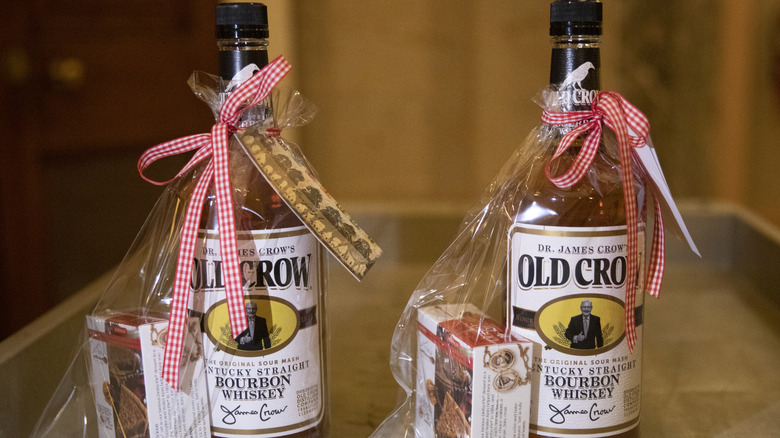
Storytelling and flair are pretty deeply steeped in bourbon tradition. Founding-father narratives, mythical lost barrels, extravagantly shaped bottles, heavy wax drips — it's all pretty standard, whether you're shopping budget or top shelf. But as Lynn House tells us, no matter how compelling — or over-the-top — the story or packaging gets, it shouldn't pull your focus from the details that actually matter.
"I love a beautiful bottle, but what is inside should always come first," she points out. "I prioritize the style of whiskey, proof, age statement when one is provided, mash bill information and where the bourbon was distilled and produced."
Once you get past the dazzle of flashy packaging and elaborate storytelling, you might even find yourself able to sniff out language that means very little but sure knows how to sound like a quality guarantee. Andy Westley urges you to be especially wary of terms that sound impressive and technical but amount to little more than alphabet soup.
"Be cautious about the term 'Small Batch' on a bottle of Bourbon or other American Whiskies. That term has no legal definition," he explains. "One distillery may call a vatting of 5 barrels 'Small Batch' and another distillery might call a vatting of 200 barrels 'Small Batch.'"
11. Dismissing blended bourbon
There's a reason single-barrel bourbon carries so much cachet in the bourbon-verse. Because each barrel can age very differently depending on its interaction with the oak, its location in the rickhouse, or even the ambient temperature, flavor profiles can vary drastically from bottle to bottle. And that has a certain appeal for bourbon lovers chasing rarity and prestige.
But just because every bourbon aficionado is chasing the single-barrel thrill doesn't mean you should, too. In fact, according to Molly Horn, single-barrel bourbon can leave you a little boxed in when it comes to flavor. "A distiller is usually limited to their one mash bill, whereas a blender can play with various mash bills to create new, unique combinations through experimenting and aging," says Horn.
That freedom can open up a much bigger flavor playground. Blending whiskeys from opposite ends of the age spectrum, for instance, can give you a bourbon that packs both the punchy, bright, grainy notes of a young bourbon as well as the sweet, vanilla, and oaky notes of an aged bourbon. Blenders can also play around with different mash bill recipes, yielding some pretty unbeatable combos. An expression that combines rye, corn, and malted barley, for instance, can bring the nutty, savory notes of the latter while still packing the spicy punch of the former. They can also play around with different proofs, giving the finished blend just enough oomph to bring out the intended character of the selected mash bills.