

5 Top Shelf Whiskeys That Are Always Worth The Money
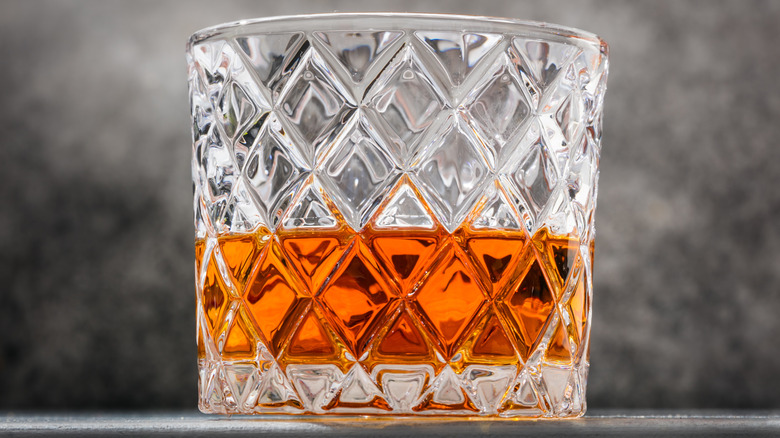
Purchasing top-shelf whiskey of any kind doesn't require a lot of in-depth knowledge about distillation, ingredients, and regional varieties. Instead, it's more important that you have a comprehensive grasp of your own palate so you don't invest serious cash in something you just don't like. However, some bottles on that high-up shelf are so good that they can't help but generate tons of mass appeal.
Top shelf doesn't have a firmly defined price point, but you can usually expect to spend at least $60 or so on a 750-milliliter bottle. While whiskey has an effectively limitless price ceiling and a fairly negotiable floor, this is where you start to discover a lot of craft distilleries or specialty batches from major labels. These generally have a more complex flavor profile as a result of high-quality ingredients and craftsmanship, earning them the nebulous title of "top shelf." While you may not be able to tell the difference between mass-produced brands like Jack Daniel's or Jim Beam, these bottles are usually quite distinct and can develop some serious followings.
Before you mix them into cocktails, be sure to experiment with them straight, on the rocks, and with water first. This lets you really appreciate their nuances and helps avoid wasting any on bad recipes. You may love a rye and Coke, but that new rye you got could be too peppery or have a different ratio of barley and corn in its mash that makes it taste foul with soda.
Lot No. 40 proves great craft rye can be relatively affordable
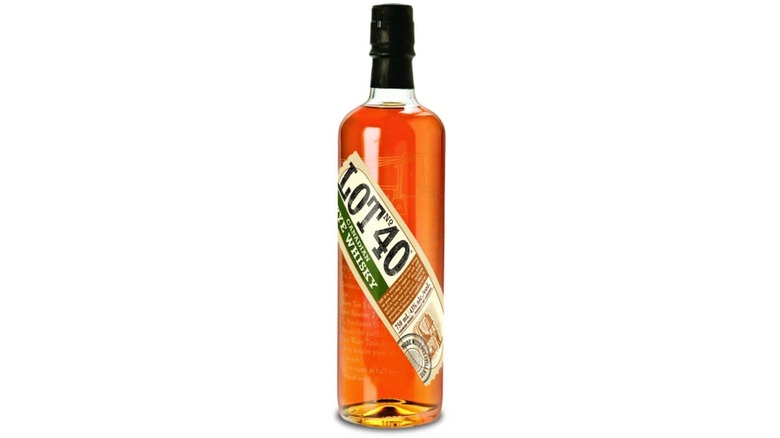
Lot No. 40 rye whiskey is proof that some cheap whiskeys can have top-shelf taste. While not as easy to find as other bottles at its price point, it can run you roughly $40 a bottle. However, it's still considered top shelf thanks to its superior quality and craft distillation methods.
Made by Hiram Walker in Windsor, Ontario, this is about as no-nonsense as a high-end bottle can get. While its flavor isn't terribly complex, the tastes that are present are magnificent, so it's more like a fantastic cheeseburger than a high-quality steak. Sniffing a glass gets you a noseful of dark bread, cinnamon, and buttery notes, with a taste that's not nearly as astringent as other ryes. This is pretty surprising considering it's made from 90% unmalted Canadian rye and 10% malted rye and distilled in old-school copper pot stills, but somehow Hiram Walker makes it work.
If you're looking for a higher-end rye to use in special-occasion cocktails, Lot No. 40 is a solid choice. While maybe not quite the best liquor on this list for sipping straight or on the rocks, it still deserves a place on the top shelf thanks to its solid quality, reliably low price point, and the quintessentially Canadian flavor it gets from aging for a minimum of three years.
Redbreast offers Scotch-like complexity
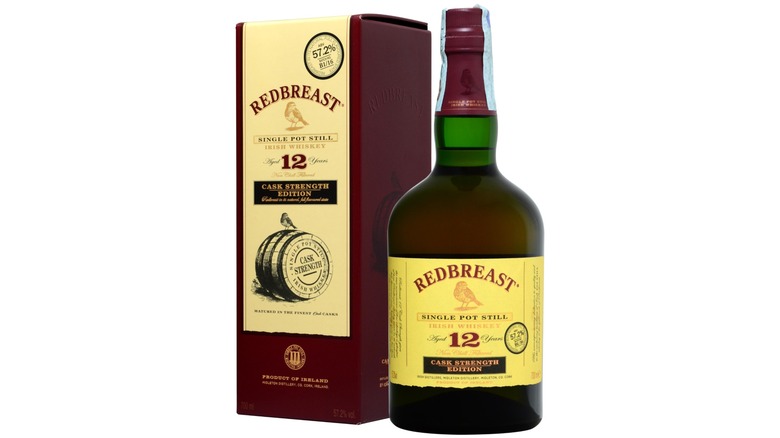
When most people think about Irish whiskey, they tend to focus only on Jameson. However, Jameson's parent company, Pernod Ricard, also has a higher-end label called Redbreast, which is a major upgrade that's well worth the roughly $65 price.
This style of traditional Single Pot Still Irish whiskey uses a mix of malted barley and unmalted barley, which provides a signature spice, deep grain flavor, and a rich, creamy texture. All Irish whiskey must be aged for at least three years, but Redbreast quadruples that and uses a combination of bourbon and sherry casks to deliver some extra oomph. The bourbon adds a bit more sweetness than you'd find in most Irish whiskeys, and sherry is always a whiskey winner thanks to its distinctly fruity notes. Most Irish whiskeys balance dry and silky finishes, but Redbreast's traditional pot still process ensures it sits on the silkier side, coating your tongue whether you're sipping it straight or in a cocktail.
Between its range of flavors and textures, each glass tastes a bit like a toasted slice of fruitcake, rich in yeast, grain, and white grape. While it may be a bit more difficult to find, this Irish whiskey is as complex as any Scotch at the same price point and as easy to sip as similarly priced bourbons. It's a fantastic after-dinner indulgence when enjoyed straight, but all those sherry notes help it pair beautifully with the orange peel and bitters in an old fashioned.
Hibiki Japanese Harmony is the perfect gateway to Japanese whisky
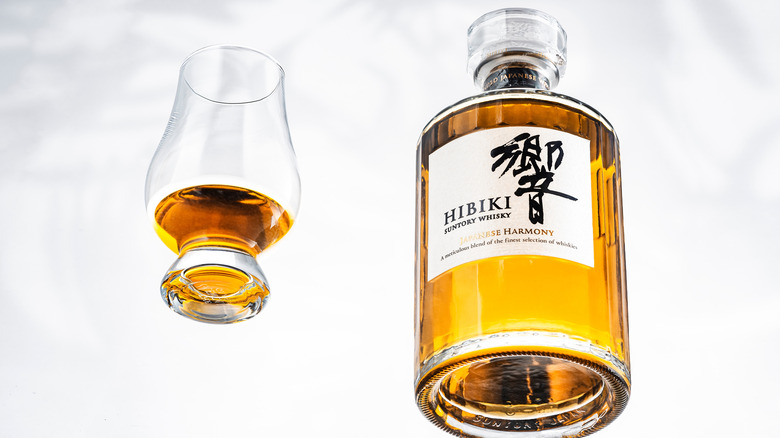
Japanese whisky is a relatively new phenomenon compared to the centuries, sometimes millennia, of whisky-making culture in Europe and America. However, Suntory has swiftly become one of the most globally recognized producers of high-quality whisky, and if you're curious to try some, its Hibiki Japanese Harmony is the place to start.
Suntory's entire Hibiki product range embodies everything that sets Japanese whisky apart from American whiskey: balance, blends, and harmony. Just like blended Scotch, Harmony's real flavor comes from the different whiskies used in its creation. Unlike Scotch, it's far lighter, brighter, and lacks the peat and smoke flavors that folks either hate or love. At around $70 to $100 a bottle, it's on the higher end of top-shelf whisky that most people can reasonably afford, but it's well worth it.
With Harmony, you can taste every step of its creation. While all aged whisky carries plenty of woody notes, Harmony's is especially unique thanks to the four different oaks used in its aging casks: North American white oak, Spanish oak, French oak, and mizunara oak. If other whiskies are like smelling a tree, Harmony is like sniffing a whole forest at once. Easy to sip, highly approachable for even non-whisky enthusiasts, and great on the rocks, it's a high-end sipping whisky that's worth it for special occasions.
Angel's Envy Finished Rye is a work of creative genius
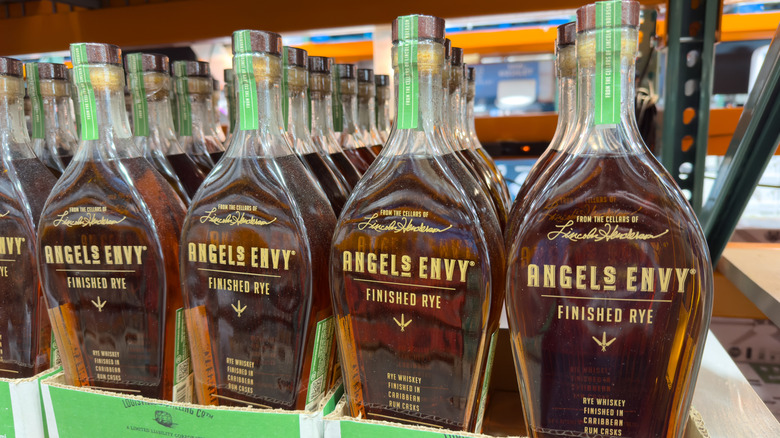
Rye whiskeys are usually pretty straightforward, developing subtle nuances in flavor from their blend of malted and unmalted grains, aging, and distillation method. As such, people who love ryes will usually love any rye you put in front of them, and people who can't stand them may never see the appeal.
Angel's Envy Finished Rye, however, is one for the rye haters. Aged for up to 18 months in Caribbean rum casks, the distiller manages to infuse it with incredible levels of tropical sweetness without overriding the subtle notes of black pepper and oak common in American ryes. It lacks much of the acerbic, sharp finish you'd expect from this type of whiskey, instead having a silkier, mellow mouthfeel more like a shot of Captain Morgan. At roughly $75 a bottle, the ingenious uniqueness alone makes it worth the price, even before you get into its great flavor.
It's easy to sip on the rocks and dynamite in simple cocktails like Sazeracs and highballs. While most cocktails call for bourbon when they need sweetness, Angel's Envy Finished Rye makes a great substitute thanks to its rum-like brown sugar notes combined with the classic, full-bodied flavor of aged whiskey. While this may not be an everyday sort of liquor, it offers something different on special occasions for those who may not care much for Scotch but still want something complex.
The Dalmore 15 is a versatile, premium Scotch investment
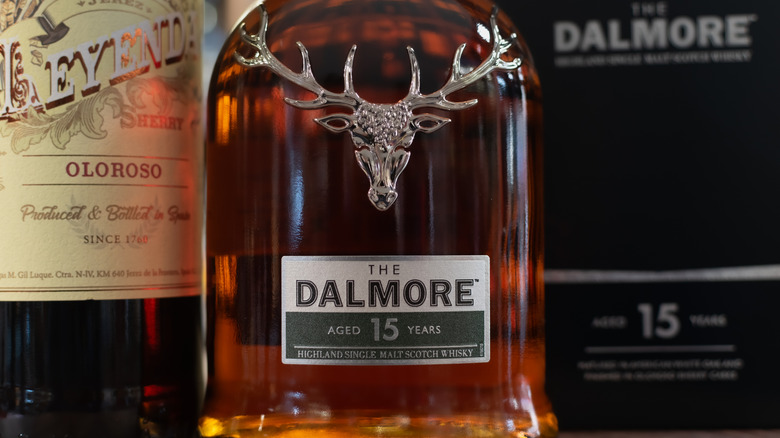
Of all whisky, Scotch probably has the widest range of prices, going all the way up to a 60-year-old bottle of The Macallan that sold for $2.7 million. Still, a good bottle of Scotch often costs around $80 to $100. While some may feel leery of spending even more than that, if you want a high-quality bottle for sipping straight or on the rocks on special occasions, we recommend a 15-year-old Dalmore.
At an average price of around $125, it's certainly the priciest liquor on this list. However, it also makes buying Scotch quite easy. Deciding whether you want a blended or single malt, smoky or not, dry or sweet, or something to drink on the rocks, straight, or with a couple of drops of water are all major factors that can determine whether all that money you're about to spend is a good investment. The 15-year-old Dalmore, however, is as middle-of-the-road as it gets, achieving great mass appeal without sacrificing complexity.
This bottle encapsulates all the major themes that make Scotch great: aging you can taste, subtle shifts from aroma to palate to finish, and small nuances that come alive depending on how you drink it. Every sip comes with serious flavor, ranging from candied orange peel, to spicy ginger, to bitter dark chocolate. Whether you're just learning about Scotch or looking for a nice gift, the 15-year-old Dalmore is as reliable and delicious as it gets at its price point.