

The Difference Between Semi-Sweet And Bittersweet Chocolate
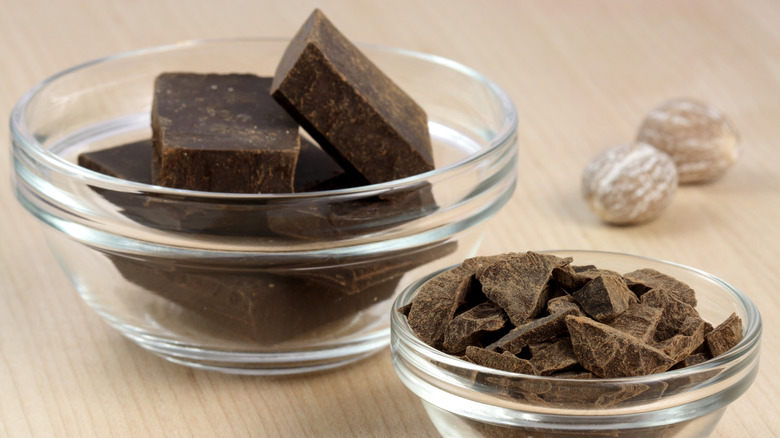
There's a lot of nuance to different types of chocolate, whether that's texture, color, sweetness, or added flavors. With something like dark and milk chocolate, these differences are usually pretty obvious and easy to understand. However, semi-sweet and bittersweet are a bit harder to differentiate, and while many of their uses overlap, they can produce foods with wildly different flavors.
Despite having "semi" or "bitter" in their name, neither is inherently better or worse than any other type. Ranking chocolate chips still comes down to the brand that made them, though you may still find yourself preferring one or the other for a quick snack. Neither bittersweet nor semi-sweet typically contains dairy, but both are classified as dark chocolate thanks to their high percentages of cacao and lower percentages of sugar. Bittersweet sits around 70% – whereas semi-sweet is closer to 60%, so they technically can be interchangeable depending on your tastes. However, their subtle differences still make them better suited to different recipes and are immediately noticeable by chocolate lovers.
Both are fairly firm and won't melt quite as easily compared to milk or white varieties. Typically, neither would be most people's first choice to eat plain unless someone has a craving for cocoa and not much of a sweet tooth. But both have great potential in a wide variety of recipes, from baked goods to savory dishes, and it all boils down to how their sugars and cacao interact with and improve other ingredients.
Semi-sweet chocolate is a versatile balance of sweet, bitter, and cacao
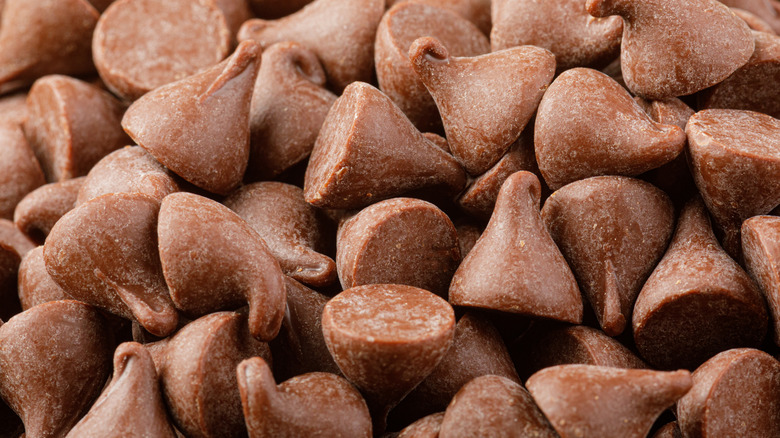
New bakers may find themselves confused as to why a dessert recipe calls for semi-sweet chocolate rather than a more sugary milk variety. However, even the sweetest baked goods still need balance, and this is an area where semi-sweet chocolate excels.
It has enough sugar for most anyone to enjoy, but not so much that it amplifies the general sweetness of a dish. Rather, the added sugar serves to cut the bitterness and depth of cacao flavor. This makes semi-sweet varieties a bit more versatile than bittersweet, palatable enough for most folks without ruining balances in desserts. Additionally, semi-sweet typically has a higher percentage of cocoa butter, the main ingredient that gives French chocolate its intense flavor and great meltability. Between this and soy lecithin, a common emulsifier and thinning agent also found in bittersweet, semi-sweet is far better for dipping
Semi-sweet is ideal for any recipe that's already plenty sweet but that you may still want to taste like chocolate. Cookies are a great example, where a dough contains most of the sugar and semi-sweet chips act like more of a seasoning. Plus, it's not uncommon to find varieties that include additional ingredients like vanilla, so they may also impart a more diverse aroma to whatever you put them in.
Bittersweet chocolate is a potent ingredient that's great in specific applications
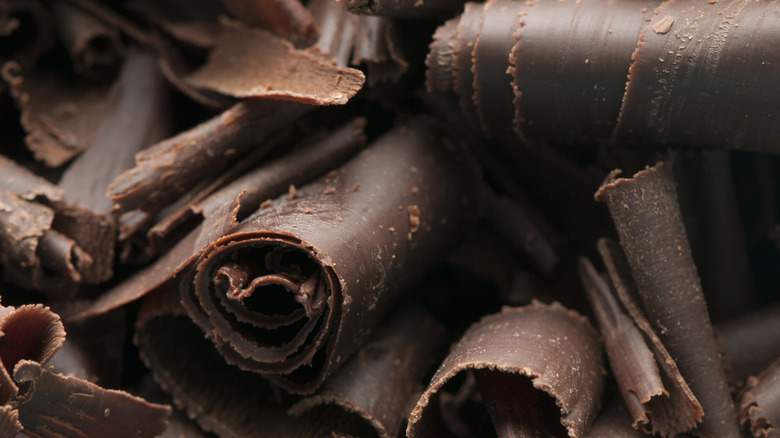
It's important to keep in mind that cacao fruit doesn't actually taste like chocolate, and neither do its "beans." They're earthy, bitter, and extremely concentrated. When you want this flavor profile at the forefront, bittersweet is far superior to semi-sweet.
While bittersweet chocolate does contain a percentage of sugar, it's best used in desserts where you want to introduce a dichotomy of sweet and bitter. Whereas semi-sweet won't add or interfere with any sugar present, bittersweet actively balances it out, toning it down a bit. However, in acidic dishes, that small amount of sugar is enough to help soften the bite, but not too much, while still imparting tons of cacao flavor. This is similar to putting cocoa powder in your chili, but with the added effect of reducing the taste of acidity in things like tomatoes, pickled peppers, or canned chiles.
While you may be less likely to use bittersweet chocolate in certain recipes, you'll notice a lot of difference in the ones you choose it for. Whereas semi-sweet is a bit unobtrusive, especially when used with sugar, bittersweet is bold and rich enough to steal the spotlight. When used correctly, it's quite potent in small amounts, imparting a darker sheen, deeply roasted aroma, and a profound depth of flavor that's hard to mistake — think dishes like flourless chocolate cake, rich espresso brownies, or even in a classic chocolate mousse, where chocolate is the star of the show. While it may not be to everyone's taste, bittersweet tends to contain quite a bit of nuance that makes it a much-loved type for devoted chocolate lovers.