

For Juicier Baby Back Ribs, Cook Them Like Applebee's
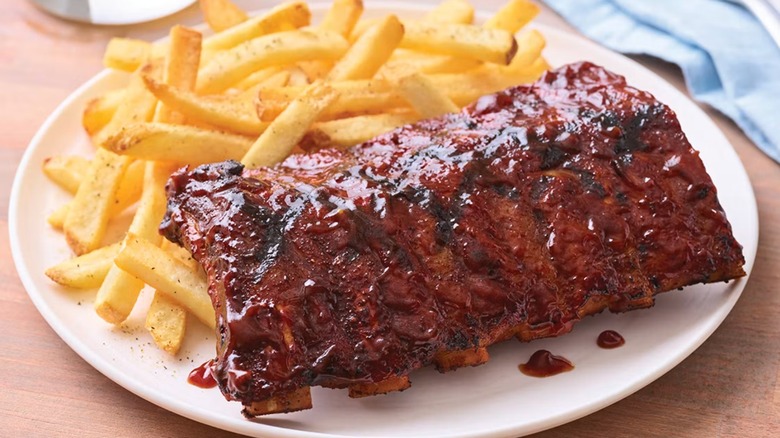
If you're looking for familiar comfort food, $1 margaritas, and an all-you-can-eat deal, Applebee's has got you covered. Since 1980, the casual chain has been serving up classic bar and grill fare like burgers and chicken wings, but, of course, we can't not mention its famous baby back ribs. If you're a fan of these bad boys and want to replicate them yourself at home, one essential step you simply cannot skip is double glazing.
Rich, smoky, and unapologetically indulgent, Applebee's baby back ribs have long had customers raving. After being generously seasoned, the ribs are slow-cooked until they're melt-in-your-mouth tender. The result is delicious on its own, but the double glaze is what really seals the deal. Diners can make the difficult decision between Honey BBQ and Sweet Asian Chile sauce, both of which bring plenty of flavor to the finished ribs.
The double glaze method is as simple as it is effective. After slow-cooking, the ribs are brushed with a thick layer of sauce. This first coating adds flavor while giving the sauce a chance to cling to the tender meat. But it doesn't stop there. After the first layer has had time to meld with the meat, a second layer goes on, ramping up the intensity. Rather than soaking in or sliding off, this final coating clings to the meat's surface, where the heat helps it caramelize into a rich, glossy crust with that mouthwatering sheen. The sweet, concentrated flavors from the glaze can help boost the flavor of baby back ribs, which can naturally be milder and less rich than other types of ribs. Once the glaze has had time to set, the ribs are quickly flame-grilled, adding that final hint of smoky char.
How to recreate Applebee's double-glazed ribs at home
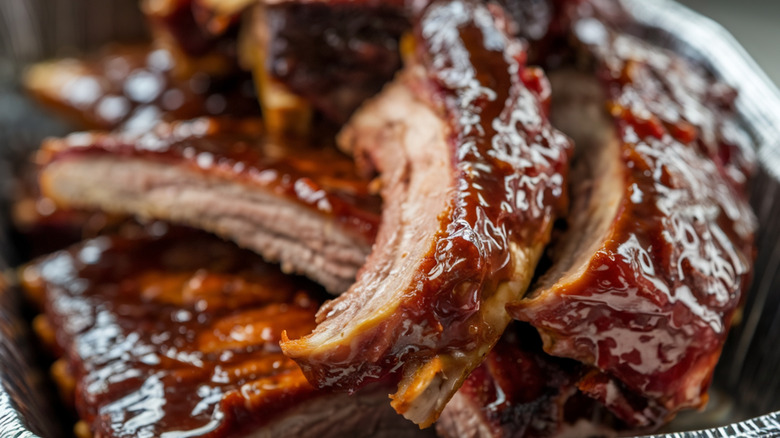
To replicate Applebee's dish at home, it all starts with a good rack of ribs. To keep them as close to the original as possible, stick with baby backs, which are relatively lean and tender ribs taken from near the pig's spine. But if you're looking to save some cash, we'd recommend spare ribs instead. They contain more fat and connective tissue than baby backs, giving them a richer pork flavor and a more indulgent bite — perfect if you're looking to pack in as much flavor as possible. You can cook both using the 3-2-1 method, although spare ribs generally need a little more time to become as tender as baby backs.
Now comes the most important part: the sauce. Whether you're trying to recreate Applebee's Honey BBQ or Sweet Asian Chile sauce, sugar is essential for achieving that signature sticky glaze. When heated, sugars caramelize and develop deeper color and flavor, while the sauce thickens into the glossy coating we're after. Brown sugar and molasses are common choices for barbecue sauce, but honey and maple syrup can work, too.
One of the biggest mistakes people make when cooking ribs is adding the barbecue sauce too early. There's a fine line between beautifully caramelized and completely burnt, and once sugar crosses that line, it can turn dark, bitter, and unpleasantly sticky. That's why we'd recommend saving the glaze for the very end of cooking, giving each coat just enough time to set without burning. A quick blast under the broiler can seriously amp up the caramelization, but we'd reserve this for the second coat and keep a very close eye on the ribs.