

Home Cook Finds An Easy Way To Make Budget-Friendly Steak Tender & Juicy
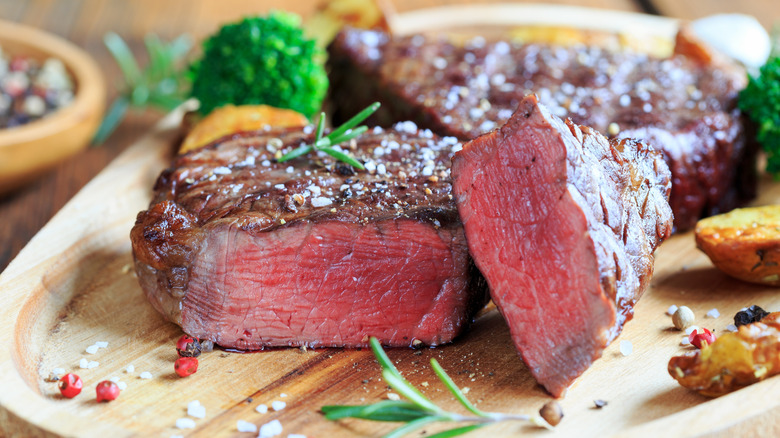
Nothing beats a steak cooked at home. It's the ultimate crowd pleaser, but isn't exactly a budget-friendly weeknight meal. Unfortunately, some of the most desirable steaks, from the ultra-marbled ribeye to the exceptionally tender filet mignon, come with a hefty price tag. If you're after a tender, juicy steak but don't want to break the bank, one TikToker shared that a simple marinade made with Coke Zero might be worth a try.
@rayho_life Tenderizing a cap sirloin steak from @costco with #cokezero ! I think it turned out really good! #fyp #fypシ #foryou #steak #easyrecipe
♬ Relaxing Japanese-style piano song inviting nostalgia – Akiko Akiyama
Hear us out: Coke Zero, or pretty much any Coke, is a seriously underrated steak marinade; that's largely thanks to phosphoric acid. Think of your standard steak marinade. Most contain an acidic ingredient, such as citrus or vinegar. Aside from cutting through the richness of the meat, acid serves another important purpose. It lowers the pH on the surface of the steak, digesting the proteins and creating a softer outer layer. That's where Coke comes in handy. The phosphoric acid works in much the same way as the citric acid in lemons or the acetic acid in vinegar. A common steak misconception to be aware of, however, is that acid tenderizes the entire steak; its effect are largely limited to the surface.
Another advantage of marinating your steak in Coke Zero is that you don't need to leave it sitting for hours. In fact, shorter is better. Leave the steak in an acidic marinade for too long, and the proteins on the surface can become over-denatured, leaving the exterior mushy rather than tender. Around 30 minutes to an hour is all you need to give the marinade time to work its magic.
More ways you can tenderize a budget-friendly steak
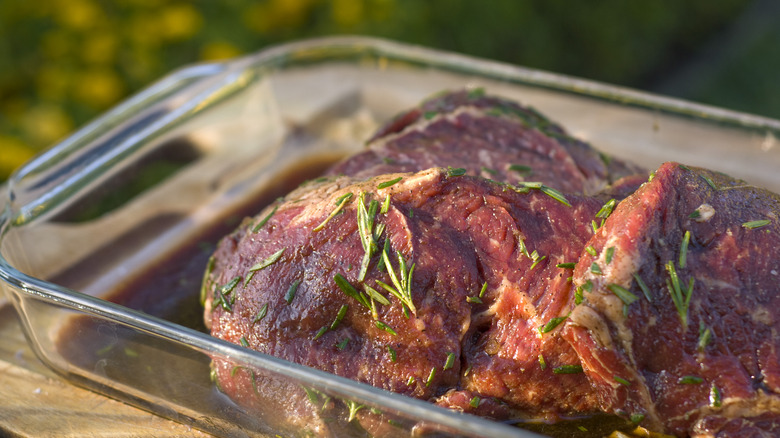
Coke isn't the only way to get a perfectly tender steak. Another ingredient may very well already be sitting in your pantry: baking soda. The hack couldn't be easier, either. Simply mix a half teaspoon of baking soda with a tablespoon of water, then rub the mixture all over the meat. Let it sit briefly before rinsing it thoroughly and patting the steak dry before cooking. Unlike acids, baking soda is an alkaline, meaning it raises the surface pH of the meat. This helps prevent muscle proteins from tightening as they heat up, allowing the steak to hold onto more of its moisture as it cooks.
Another option doesn't involve adding any ingredients to the steak at all. Instead, it means cutting down on cooking time. If you like your steak well-done, this hack unfortunately isn't for you. As steak heats up, it gradually loses moisture, which is why ultra-lean cuts like filet mignon are generally better kept below medium. They don't have much marbling to compensate for the moisture they lose. For a budget-friendly steak, medium (at around 135 to 140 degrees Fahrenheit) is a good place to land. Better yet, aim for medium-rare (130 to 135 degrees Fahrenheit). You could even go the extra-mile for rare, or the mystic blue, although the bright red center can be off-putting for some. And just to clear up a common misconception, that red liquid isn't blood; it's mostly water mixed with myoglobin, a protein found in muscle tissue.