

For More Flavorful Short Ribs, Add A Splash Of This Wine
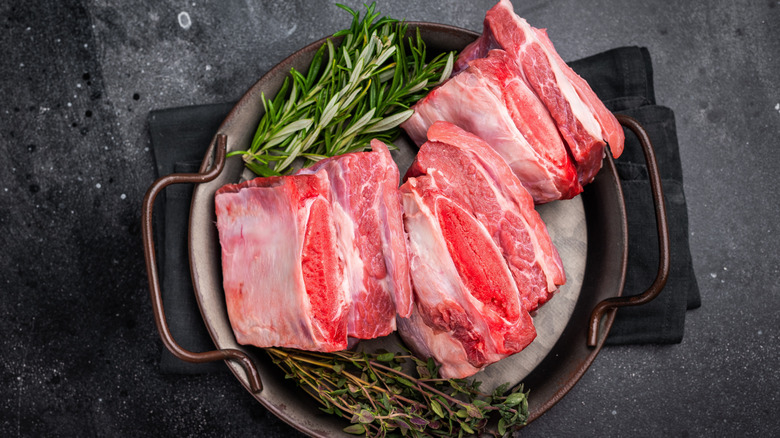
Rich, comforting, and fall-apart tender, it comes as no surprise that short ribs are a favorite dish among foodies and chefs — including the Barefoot Contessa herself. Cut from the lower section of the cow, short ribs are made up of tough, hardworking muscle, requiring low-and-slow cooking to transform their collagen into silky gelatin. That makes braising the best method for cooking them, and for good measure, we'd always add wine to the braising liquid. There are countless options to choose from, and in our own braised short rib recipe, we opt for a Zinfandel.
Zinfandel is a black-skinned wine grape that thrives in warm climates. Most of the world's supply is grown in California, particularly Lodi and Sonoma County. You can find both red and white (well, more of a rosé, if we're being technical) styles, but for braising short ribs, we'd strongly suggest sticking exclusively to red. A white wine zinfandel would work beautifully for braising lighter meats like chicken or fish, but used in this dish, it would simply get overpowered.
When braising fatty meats in wine, reds are always the superior choice largely due to two things: flavor and tannins. Zinfandel is a particularly good pick here; its bold, robust flavor holds its own against something as hearty as short ribs. The wine's tannins – naturally occurring compounds red wine carries in a much higher concentration than white or rosé – bind with the meat's proteins and fat, which counteract one another as the meat reduces the wine's bitter edge while the tannins alleviate the richness of the dish. Another indirect benefit of using red wine for braising is having a bottle left aside for a thoughtful (and more importantly, convenient) wine pairing.
Tips for perfectly braised short ribs
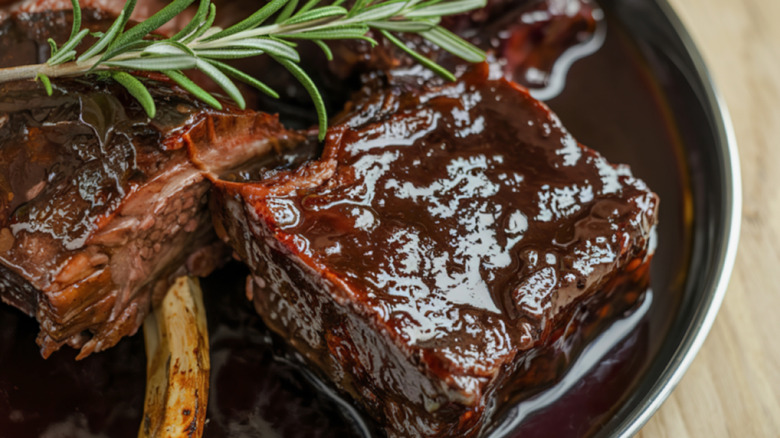
One rule to follow when braising short ribs (or any meat, for that matter) is a good, hard sear to develop a crust. One common misconception is that this seals in the meat's juices as it braises, which simply isn't true. What we actually care about is the Maillard reaction – where high heat causes the amino acids and sugars in the meat to turn into a golden-brown crust packed with flavor, leaving behind a delicious fond. This is where red wine comes in clutch. After searing your meat, remove and saute your aromatics, then deglaze the pan with red wine. The wine, aromatics, and fond come together into a cohesive, intensely flavorful base for the braise. To amplify things further, reduce the wine until it thickens slightly.
Of course, wine is only part of the picture. Red wine and short ribs on their own would make a perfectly serviceable, and likely delicious, dish, but why stop there? While red wine brings body to the braise, you'll want an umami element for real depth. Here, we recommend either tomato paste, added before the wine, so it has time to reduce and caramelize, or Worcestershire sauce, added after the wine and needing only a few drops.
How you finish the dish is just as important as how you cook it. After hours on top of the stove or in the oven, short ribs come out rich, fatty, and deeply savory, which is exactly why a garnish cannot be skipped. A simple gremolata (finely chopped parsley, lemon zest, and garlic), scattered on top right before serving, cuts through all that richness in a single bite. Even just a splash of lemon juice is a small touch that truly brings the dish to life.