
The One Recipe Bobby Flay Hasn't Changed In Over 30 Years

When Bobby Flay got his start in kitchens, he gained a wealth of experience and likely learned hundreds of recipes (and countless variations thereof). But while the former Iron Chef may be known for mixing things up, he still has a deep love for the classic prime rib he cooked starting out, so much so that he makes it the same way 30 years later.
Flay's prime rib is a bit different than most others, and it all starts with the prep. He keeps his roast juicy with an untrimmed fat cap and big handfuls of salt, and while this means he has to discard the top crust, it's great at retaining moisture. If you love the crust, however, you can still adapt some of his tricks. You can use less salt and keep the exterior by rubbing your seasoning in the night before, creating a dry brine that helps meat retain its juice. Similarly, you can make prime rib like a pro with a mustard-herb slather, which not only develops the perfect bark but helps to tenderize the meat a bit.
Whether you opt for Flay's method or a more traditional one, starting the roast at a high temperature, then finishing it for hours at a much lower one never fails. You end up with a perfect outside and can carefully dial in exactly how done you want the middle.
More prime rib methods from Bobby Flay
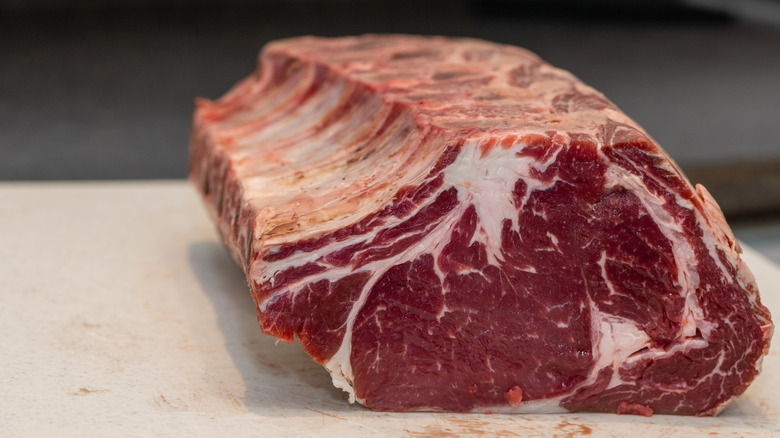
If you're a particular fan of middle pieces without much crust to begin with, or you bought meat from a butcher to get an exceptionally high-quality cut, Bobby Flay's method is ideal. The only downside is that it means you'll need to really lean on dressing up the roast after it's cooked, but a great sauce and proper slicing can go a long way toward that.
The best sauces use up every last drop of flavor from the roast, and the best way to do that is by starting with a stove-safe metal pan. This not only maximizes flavor but gives you fewer dishes since all you have to do is remove the roast and slap it on the burner. Aromatics and beef fat give it body, but Flay really develops the flavor through a mix of red wine and red wine vinegar. The wine's sugars caramelize as it's simmered, but it's that splash of acid that provides the tanginess necessary to cut through the prime rib's beautiful marbling. What wine you choose will depend on the spices you've employed: Dill, shallot, and thyme go particularly well with a pinot noir while bay leaves pair well with a syrah, and cumin? A Bordeaux.
No homemade steak is complete without an herby compound butter. While Flay opts to toss his directly into the wine sauce, never neglect its virtues as a finishing ingredient directly on your meat. Compound butters can be a saving grace for overcooked pieces, plumping them up with more moisture and giving them a silkier mouthfeel. You can even baste your prime rib in some melted butter, but you get the best results on a well-trimmed roast and one with an intact exterior.