

The Budget-Friendly Chicken Bobby Flay Recommends Buying Over Breast Or Thighs

Chicken is an incredibly versatile ingredient in the kitchen, and it's one of the more affordable types of meat you can buy at a supermarket. Typically, many people buy pieces of chicken from a store, like breasts or thighs, and you may have noticed that the prices can vary depending on how much those pieces are processed. For instance, boneless and skinless chicken breasts may be more expensive than those that include the bones and skin. This is because it requires more labor to remove those parts from the bird. However, there is one tip that Bobby Flay recommends for saving the most money on your next shopping trip: Buy a whole chicken!
As Flay points out in an interview with The GW Hatchet, "Once you cut, it will be a lot more expensive," referring to how processing plants cut up a whole chicken into pieces. If you compare prices, you'll see that a whole bird can cost around half as much per pound as its boneless, skinless breasts. But besides saving you money, the advantage of buying a whole chicken versus pieces is that you have a lot more options for what you can do with your purchase and can actually make an assortment of dishes with just one bird. Flay says you should try to utilize every part of the bird, such as braising the legs in a recipe for chicken tacos or making chicken milanese, which you can do by using an Italian cutting method wherein you create vertical slices of chicken and then pound them flat. Just think of all of your favorite chicken dishes, and you'll have the star ingredient right there in a whole chicken.
With some technique and planning, a whole chicken can help you prepare many dishes
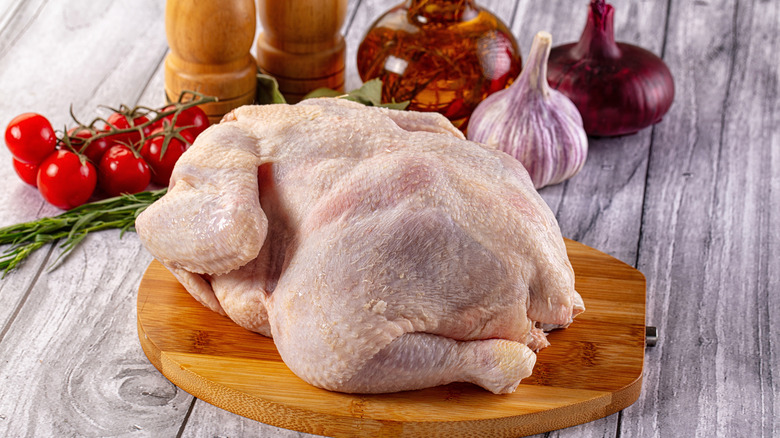
After reading Bobby Flay's advice, you may be imagining a whole chicken in a different light, thinking about all the wonderfully delicious things you can make with it. If the idea of saving money on your poultry sounds appealing, but you don't have the foggiest clue where to start, the best place to begin your whole chicken journey is to cook it whole. A great technique to employ is called spatchcocking, in which you remove the bird's backbone and press it flat, helping the meat cook more evenly, especially when roasting or grilling; Jacques Pépin has some simple tips for making sure you get the most succulent results, like making small incisions near the joints. The great thing about cooking a whole chicken is that you're left with a bunch of meat you can use in all sorts of recipes, from salads and wraps to croquettes and casseroles.
If cooking the entire clucker isn't in the cards for you, then it pays to learn how to cut up your poultry, and you can also invest in some Japanese chef knives from Amazon for under $40, which will help you chop and fillet your bird easily. Once you've separated the breasts, thighs, and drumsticks, though, you may be wondering what to do with the rest of the carcass, and this may require some careful planning plus making use of your freezer. The wing portions can be used to make Buffalo wings, but there are only two per wing bird, which will render two flats and two drumettes. Just place those into a large freezer bag to save for later and keep refilling it with more wings as you buy more whole chickens. Now you'll be left with the backbone and its attached meat, which is perfect for making a stock for soup.