

What's The Difference Between Beef Stew And Pot Roast?
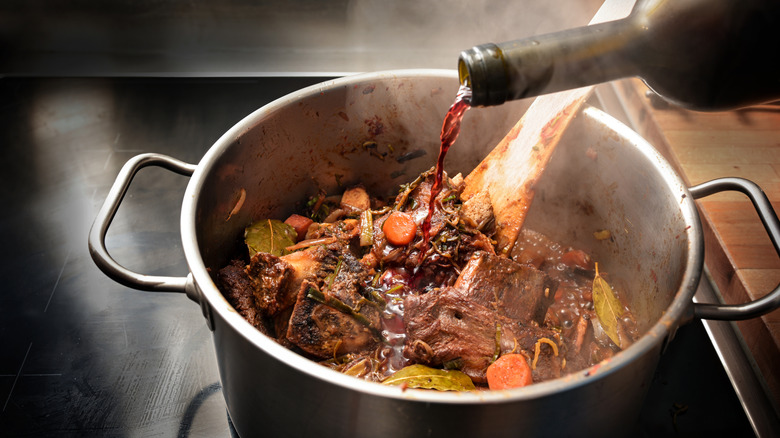
Slow-cooking beef is a savvy culinary technique, letting cheaper cuts break down into gloriously tender bites of meat. The method patiently melts down collagen into gelatin in tougher cuts, yielding rich bites without toughness. No surprise many methods rely on this technique; pot roast and beef stew are two all-American examples.
The two recipes share several major attributes, relying on a flavored stock, root vegetables, and cuts like chuck roast to craft a savory dish. Both welcome various herbs, sauces, as well as seasonings, with many reinterpretations upon the classic template. They're two storied classics that continue to enjoy popularity.
Still, it's handy to know the foundations to optimally prepare each dish. A classic beef stew recipe slow-cooks smaller chunks of beef into a nourishing meal, enjoyed with a spoon and bowl. Meanwhile, pot roast entails simmering an intact beef cut that's then sliced up once cooking is complete. It's a simple culinary distinction that results in discernible dining experiences.
Beef stew employs cut up meat pieces to make a richer dish
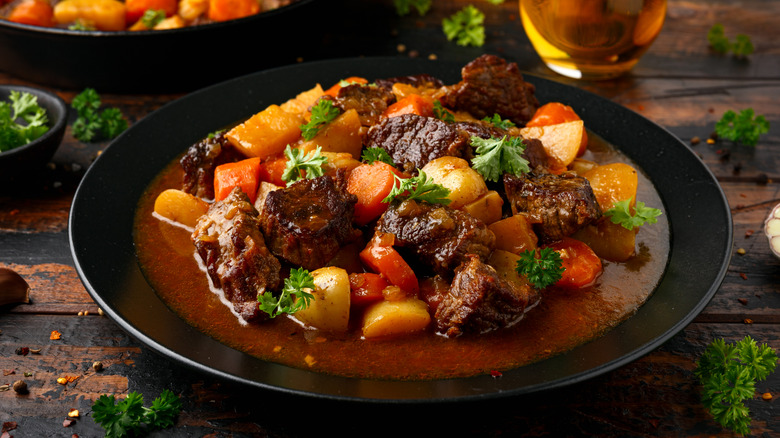
The concept of beef stew traces back centuries, with even Ancient Romans slow-simmering meats in wine. Today's American version most strongly takes on influences from centuries-old French dishes like pot-au-feu, historically prepared over a hearth, now adapted for modern convenience. The aim of the dish is to craft tender cubed beef pieces, flavorful vegetables, and a rich sauce — all ready to eat with a spoon. It's a consistency you can easily find in a can; tinned pot roast exists, but is less common.
Even though both dishes call for similar ingredients, the central distinction diverges early in the preparation process. Beef stew utilizes pieces of meat cut before an extended braise. On the other hand, pot roast sears and then slow-cooks an entire cut in one go, yielding a still intact slab of meat. Subsequently, stew requires not only less time to cook, but is more open-ended to the kind of beef utilized. The dish can be made with already butchered scraps, a chuck roast, or even a rich short rib.
With the greater exposed surface area, the bits of meat in beef stew take on more sear. As this bubbles away in the braising liquid — which is typically beef broth — the dish intensifies into a meatier flavor than pot roast. The collagen thickens the braise, with some chefs adding gelatin for an even richer texture. Umami additions, like an underrated ketchup flavor upgrade, further flavor the meal. This comes together into a rich and spoonable beef dish, perfect for a hearty dinner.
Pot roast slow cooks an intact fatty cut of meat
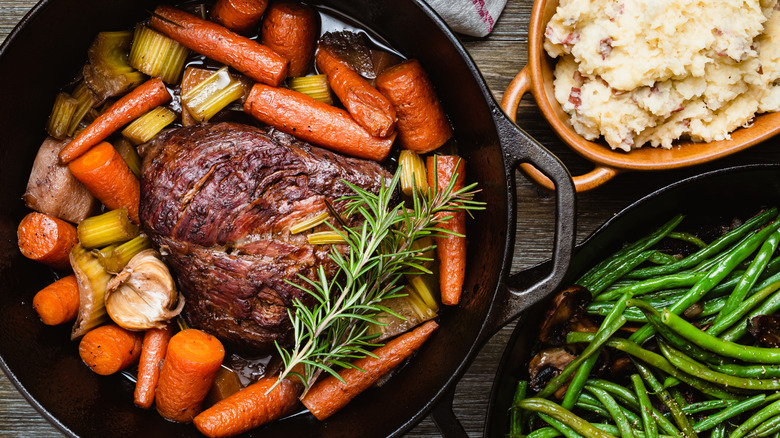
Also a part of the storied braised beef tradition, pot roast has been prepared in the U.S. since at least the 19th century, with especially strong ties to New England. The dish calls for an entire intact beef cut, classically fattier in composition. While some cooks might use a leaner brisket or an underappreciated bottom round, chuck roast is the most popular cut of choice. The beef part contributes the richest flavor, while still shredding apart into the signature pot roast consistency.
Stock, oftentimes wine, and aromatics like herbs and vinegar are similarly used to slow-cook pot roast, much like beef stew. Yet while appeal of beef stew lies in the merging of meat, broth, and root vegetables into one, pot roast functions as a beef cooking technique. Before serving, the meat is taken out of the braising liquid, with the sauce ladled atop, or even turned into a gravy afterward. The fluid used to cook a pot roast isn't such an integral part of the meal, with the large cut of beef instead the star.
Nevertheless, pot roast also frequently features a medley of root vegetables like carrots, potatoes, rutabaga, mushrooms, and more, which absorb the rich beef flavors during cooking. While the large cut functions as the center point, pot roast nevertheless makes for a convenient one-pot meal, much like other braises. It's just a little more of a fork and knife affair, opposed to spoonable beef stew.