

Not Traditional Ribeye: The Steak Cut You'll Wish You Knew About Sooner
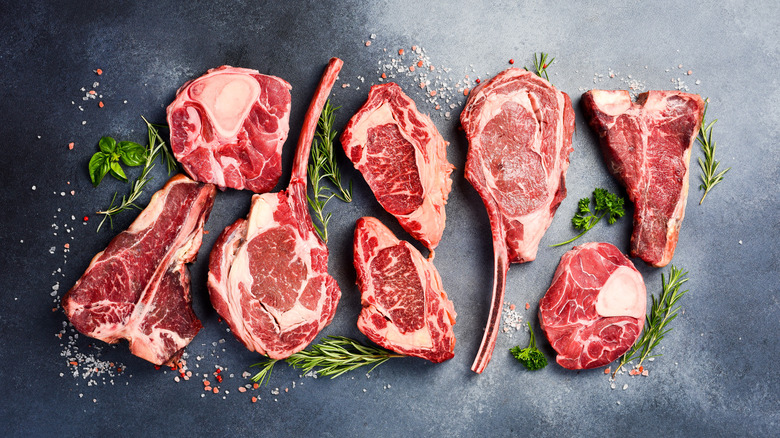
Every cut of steak offers something different, but if you're looking for intense marbling, none does it better than ribeye. As the steak cooks, this fat renders out and bastes the meat from the inside out. This juicy, buttery texture and rich, savory taste is what has earned ribeye, in our humble opinion, its very well-deserved price tag. While there are certainly more budget-friendly alternatives available, its prestige speaks for itself, so looking for an equal is essentially a fool's errand. Instead, for an exceptionally well-marbled cut, stick with ribeye, but zero in on one specific cut within it: the rib cap.
Here's a quick anatomy lesson: Ribeye comes from the upper rib section of the cow, specifically between the chuck (which is the shoulder) and the loin. Typically, it's carved from the area covering the sixth through the twelfth ribs. Because these muscles don't support the cow's weight or get much exercise, the meat stays very tender and collects heaps of intramuscular fat. But unlike, say, a filet mignon or a flank steak, the ribeye is comprised of multiple muscles, including the rib cap, also known as the spinalis.
This thin strip of meat wraps around the outside of the ribeye. Though it might seem inconspicuous, it's considered the best by many chefs, and steak aficionados think it's the tastiest bite on the entire cow. It's got even more marbling than the rest of the already well-marbled steak, plus a looser, more tender grain that lends to a melt-in-your-mouth texture. Think of it as the lovechild between ribeye and tenderloin. Most of the time, however, butchers or supermarkets leave the rib cap attached to the ribeye, so it's hard to find on its own unless you frequent a particularly high-end, specialist butcher.
How to cook a rib cap at home
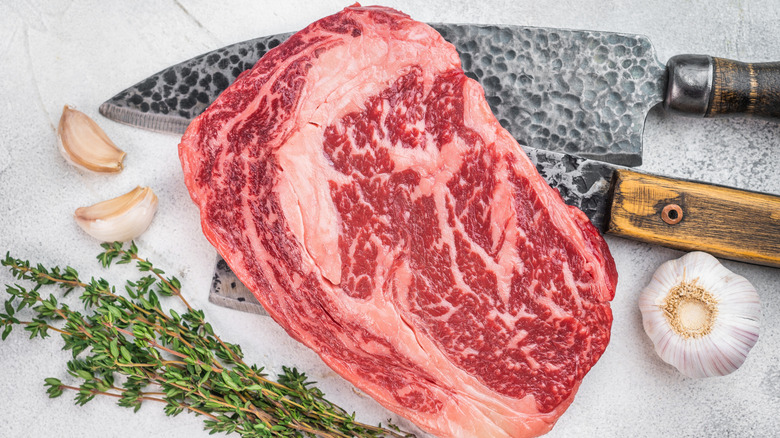
If you're unable to find rib cap sold separately at your butcher, separating it from a whole ribeye is relatively simple; the two muscles are only loosely connected by a thin layer of fat and connective tissue. Run a knife along that seam, and the cap should peel away in one long strip. From there, you've got two options: You can cook the rib cap flat, laid out like a normal steak, or roll it into a pinwheel, coiling the strip into itself and tying it off with butcher's twine.
Though the rib cap may present itself as a different cut than the ribeye, the two can be cooked in very similar ways. Fortunately, the ribeye is incredibly forgiving to work with; its fat keeps the steak juicy over heat, making it less prone to overcooking. However, because it's so heavily marbled, the rib cap actually calls for a bit more care over the flame than you might expect. All that fat can drip onto hot coals and spark sudden flare-ups, charring the exterior before the inside ever reaches the right temperature.
To stay on the safe side, we suggest sticking to a cast iron pan or a flat-top griddle; both give you far more control and cut the risk of ruining this delicious — and pricey — cut. If you're working with a pinwheel, keep in mind the center takes longer to cook than a flat cut would. Here, a reverse sear comes in handy: In an oven or on the cooler side of a two-zone grill, cook the rib cap low and slow until it's just shy of your target temperature. Then finish with a quick, hard sear to build a crust.