

The Affordable Steak Cut One Top Chef Star Recommends Over Ribeye (It Has Beefier Flavor)

There's never-ending debate about which cut of steak is the best, and while there's no official titleholder, there's a strong case for ribeye being a contender. A true triple threat, it's exceptionally well-marbled and naturally tender, with a deliciously rich and indulgent flavor. But prestige doesn't come cheap. So, if you're looking for a worthy, budget-friendly alternative, borrow some advice from "Top Chef" star Kwame Onwuachi, who revealed to The Kitchn that one of the most underrated cuts of steak — flat iron — is the beefier choice.
So, what exactly sets a ribeye and a flat iron apart? When differentiating steak cuts, the best place to start is with where they're derived from. Ribeye is cut from the rib primal, an area that does very little heavy lifting, allowing the meat to stay naturally tender and accumulate generous pockets of fat. Flat iron is cut from the chuck primal, specifically the top blade muscle. If you know a thing or two about steak, you'll know that the shoulder is a hard-working muscle group, and most cuts from this area are tough and require slow cooking. But flat iron is something of an anomaly. Once its thick strip of connective tissue is removed, this particular muscle yields an exceptionally tender cut surrounded by tougher meat. Thanks to this strategic positioning, it commands a significantly lower price than ribeye.
What's more, flat iron is generally ranked as the second-most tender cut of steak. For Onwuachi, this is a major selling point, as it's surpassed in tenderness only by filet mignon. It also typically has less marbling than ribeye, making it the leaner option by comparison. This contributes to its deep, robust, beef-forward profile, whereas ribeye's fat renders and bastes the meat, giving it a rich, buttery flavor.
How to master cooking a flat iron steak
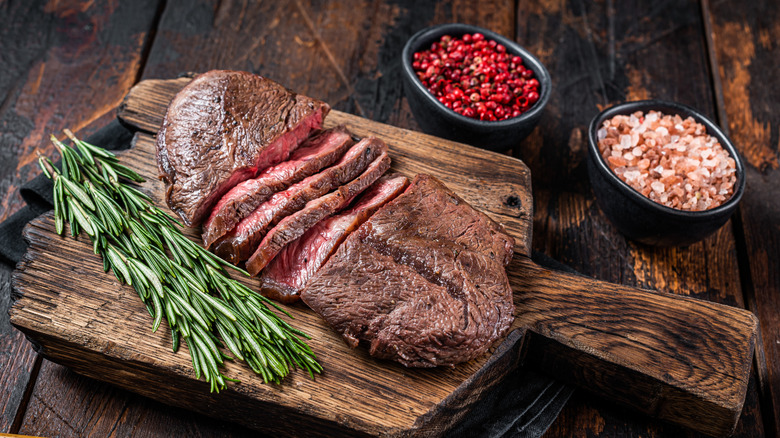
Flat iron is among the most versatile steak cuts out there. Its approachable price and exceptional tenderness make it a hugely popular choice for a casual weeknight grill session or a quick sear in a pan. Compared with ultra-lean filet mignon or super-thin skirt and flank steaks, flat iron stands out as one of the most beginner-friendly cuts to cook. But while it's generally easy to work with, home cooks should always be careful not to overcook it.
More often than not, flat iron steaks are sold relatively thin; that's why you'll often find the cut recommended as a substitute for skirt or flank steak. That comes with several upsides. For instance, the high surface-area-to-volume ratio allows marinades and seasonings to affect more of the meat quickly, so you can tenderize the meat with a salty brine or flavor it with an acid-based marinade in less time than it would take to treat a thicker ribeye. But that same thinness is also one of flat iron's biggest liabilities.
Because it's cut so thin, the window between a perfect sear and a dry, rubbery bite is incredibly small, so you have to stay on top of it. Our advice? Go in with a less-is-more mindset. An undercooked steak can always go back on the heat, but once it's overcooked, there's truly no saving it. If yours is unusually thick, you can use the reverse-sear method: Cook it low and slow in the oven first, then finish it with a quick, high-heat sear to build a beautiful crust. You can cook it to whatever doneness you like, but the sweet spot for this cut is medium, which reads at around 140 to 145 degrees Fahrenheit on a meat thermometer.