

Why You Should Think Twice Before Ordering Seafood At A Casual Restaurant
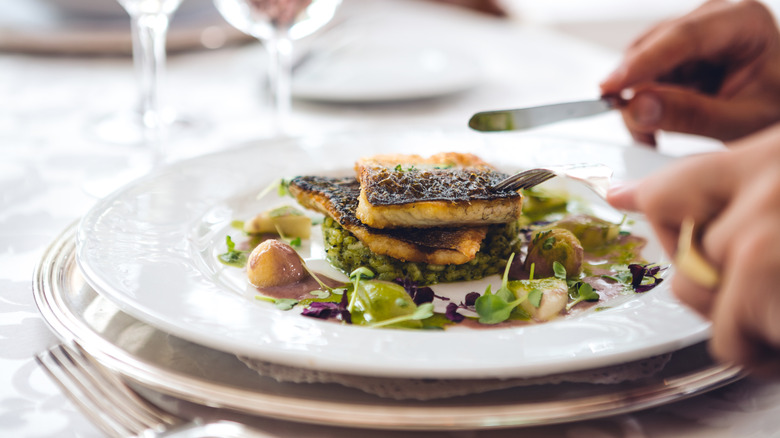
Seafood is undoubtedly one of our favorite things to order when eating out. Well, most of the time, that is. At certain restaurants, you might be better off skipping it entirely. If a menu reads like a novel, with a token "catch of the day" crammed in somewhere near the bottom, that seafood is probably not the reason anyone's walking through the door. Since it often comes paired with a high price tag, skip the casual spots and save your seafood order for restaurants that actually specialize in it, like one of America's many excellent seafood buffets.
For seafood, sourcing is just as important as how it's cooked. Seafood is highly seasonal, driven by both natural and external factors. Top seafood restaurants often source their fish through personal, direct relationships with suppliers — think of Tokyo's sushi masters, many of whom source their fish daily from major wholesale hubs like the legendary Tsukiji Fish Market. Like your local farmers market, what's available will change throughout the year, which should be reflected on a dynamic, shifting menu. For serious seafood chefs, where the fish comes from is a point of real pride, and any waiter at a reputable restaurant should be able to tell you exactly when and where it was caught.
At a casual spot where seafood isn't the main event, you risk less thought going into its provenance. Without a direct relationship with a trusted supplier, the sea-to-table journey can quickly turn murky. This creates simple issues, like fish being incorrectly sold as local, to more concerning cases of fraud where fillets are injected with water or soaked in additives to boost their weight. In serious cases, you could unknowingly be consuming seafood tied to human rights violations. These are just a few reasons why knowing where your seafood comes from is so important.
Seafood has strict storage and serving requirements

How a restaurant sources its seafood isn't the only thing that can make or break a dish. Even with a solid supply chain in place, how it stores that seafood is just as important. The difference is, while it's nearly impossible to spot poorly sourced fish just by looking, you can usually tell whether a restaurant knows how to store it just by looking for some warning signs. Sometimes, your nose will do the work for you (or spotting disheveled staff with dirty uniforms).
One of the most obvious giveaways that a restaurant doesn't know what it's doing with its seafood is how it handles oysters. Whether you're at a coastal snack bar or a high-end restaurant, keep an eye out for how they're stored. For starters, oysters that aren't nestled deep in a bed of fresh ice are a major food safety and quality red flag. Ice doesn't just make the oysters look good; it keeps them at a safe temperature, too. That ice should be shaved or pebbled and placed inside a bowl or colander so that it drains properly. Oysters are saltwater creatures, and they'll die if left sitting in a puddle of melted freshwater ice.
Another sign that a restaurant's seafood is best skipped is a fishy or ammonia-like smell the moment you walk through the door. Contrary to popular belief, fish shouldn't smell like fish. It should have a mild, briny scent, like the ocean itself. A foul odor is a dead giveaway that what's being served is well past its prime, and often points to poor hygiene practices. If the restaurant has a raw bar, the real tell is in the eyes. Fresh fish have clear, bulging eyes. Cloudy or sunken eyes mean it's been sitting around far too long. Gray, dull gills and a slimy, mushy texture are two more signs to steer clear.