

The Fast Food Chain That Made National Drive-Thru Day Happen
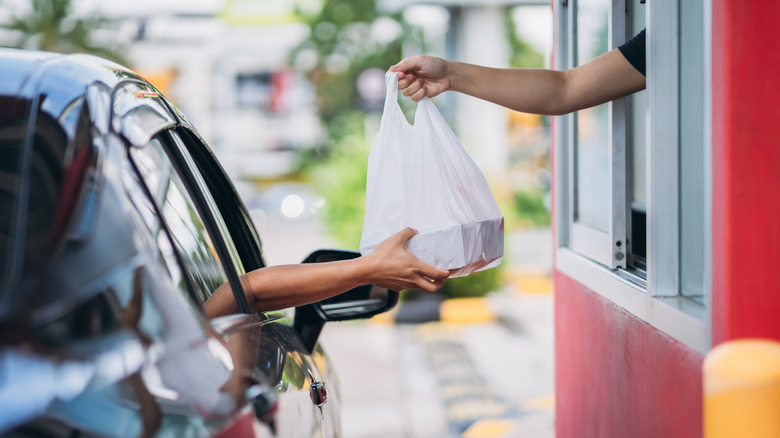
Even if you don't experience it all that often, you're no doubt familiar with the process of going through the drive-thru: Driving up, placing your order (it's actually bad etiquette to read the menu for the first time when you pull up) or checking in if you ordered through the app, and then heading for a series of windows to pay and receive your food. Not exactly groundbreaking stuff these days, but at one time the drive-thru was considered an extraordinary novelty. To celebrate this, as well as the innovations made along the way, Jack in the Box (the fast food chain with the cheapest tacos, it must be said) actually pioneered the national day devoted to the invention all the way back in 2002, and it falls on July 24 of each year.
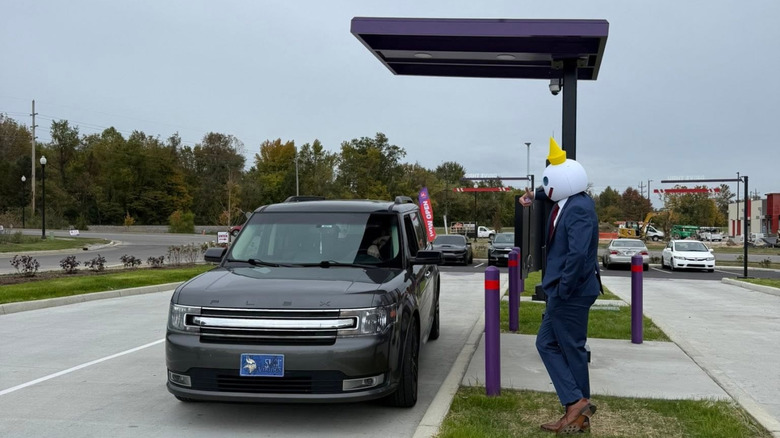
It's quite fitting that Jack in the Box made National Drive-Thru Day a thing, because while it wasn't the first restaurant to offer customers the speaker/windows set-up, it was the first to feature drive-thru-only service when it initially opened its doors in 1951. So the popular chain put that clout to good use when it reached out to the governor of California, requesting that he formally acknowledge July 28 as a statewide "holiday." Clearly, it spread beyond the Golden State, but in 2006 a slight blip occurred, and the date was changed to July 24 when it was discovered that the fast-food-adjacent National Hamburger Day already fell on the 28th.
A brief history of the drive-thru
The drive-thru that Jack in the Box made the focal point of a national celebration in 2002 has only been around since the 1940s (and fast food since the 1920s, with the opening of White Castle). It was the natural successor of the quintessential 1950s dining experience known as the drive-in, where customers parked their cars and servers on skates zipped around with food on trays. The first drive-thru debuted in 1947 in Missouri, off one of the major U.S. highways that became essential for the spread of the concept. But it really started its ascent in California, when In-N-Out Burger pioneered the use of the speaker to take orders.
After that, American culture shifted; throughout the 1950s and '60s, more households appeared where both adults worked, and the necessity for a quick, cheap meal rose, too. More and more fast food restaurants saw what was happening and acted accordingly, like McDonald's, which added its first drive-thru window in 1975 to accommodate soldiers at a nearby military base.
Drive-thrus remained largely unchanged until the 2010s, which saw widespread adoption of dynamic digital menu boards and app ordering. And the latest technology at the drive-thrus, AI ordering, has been met with mixed-to-negative reviews, as it appears there is a step too far when it comes to the lack of human interaction that fast food, and drive-thrus in particular, offer.