

The Single Ingredient Ina Garten Adds To Cabbage For A Flavor Boost

Ina Garten likes to keep things simple, but that doesn't mean she ever sacrifices flavor, even when it comes to cabbage. While you can boost this vegetable in any number of ways, from fermenting it into kimchi to grilling it for a bit of smokiness, the Barefoot Contessa elevates hers with just a bit of butter, preserving what makes it great while adding heartiness.
There are many types of cabbage, but most varieties have a high water content, making it a bit of a challenge to impart that savory, golden-brown hue that many people love in their vegetables. While any cooking fat can help with this, butter is a particularly good choice thanks to its milk solids. As the cabbage cooks in the butter, those milk solids develop nutty, toasted flavors that complement the earthy cabbage. Let the excess moisture cook off and you're left with a deep flavor that showcases the best this humble vegetable has to offer.
Using a particularly high-quality butter like Beurre de Baratte, Garten's favorite for bread, can make a big difference in this dish, since there aren't many ingredients competing for attention. This is great when you want a simple, flavorful side dish that really lets the veggie's natural flavor do the heavy lifting. Still, if you want more complexity, follow Garten's example by always keeping compound butter stocked in your fridge, ensuring you always have access to an easy, quick, flavorful dish when you're in a rush. Of course, getting the most out of that butter depends on knowing how to use it.
How to add butter to cabbage for different cooking methods
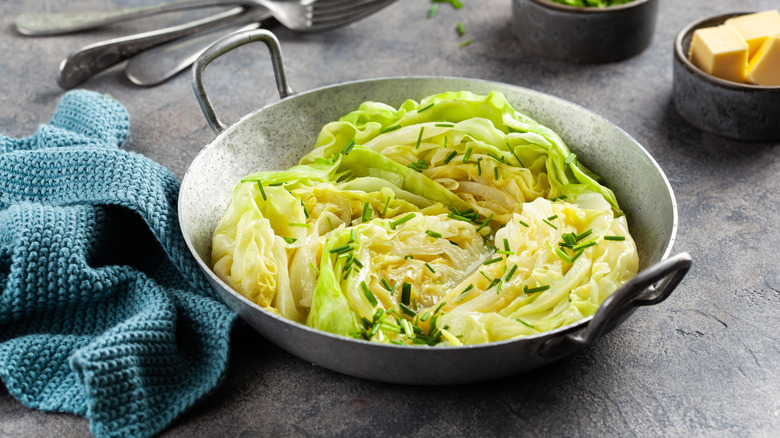
While butter is a bit delicate with a smoke point around 350 degrees Fahrenheit, careful heat control can let you use it in just about any cooking method. Adding moisture, using a lid, or even salting at the right time can all keep your butter delicious and help it infuse your cabbage while it cooks for the best end product.
Moist-heat cooking methods allow you to cook cabbage gently in butter while preventing it from burning. Braising, which is one of Jacques Pépin's preferred ways of making cabbage, lets the vegetable cook slowly in fat while a lid captures the water released by its leaves and creates a stewing effect. This is especially effective for leafy varieties, like Savoy. If you work with a particularly waxy type, you may want to add a splash of extra water to keep the butter from burning and help create steam.
Salt not only seasons leafy greens but also helps them release water. Because it takes time for salt to draw out moisture, it's the first thing Garten adds to cabbage cooked over dry heat. This lets you add the butter early, rather than as a finishing ingredient, giving it more time to flavor the cabbage. Depending on how much salt you add, you may need to opt for unsalted butter.