

Skip Expensive Beef Tenderloin: The Cheaper Alternative That's More Flavorful
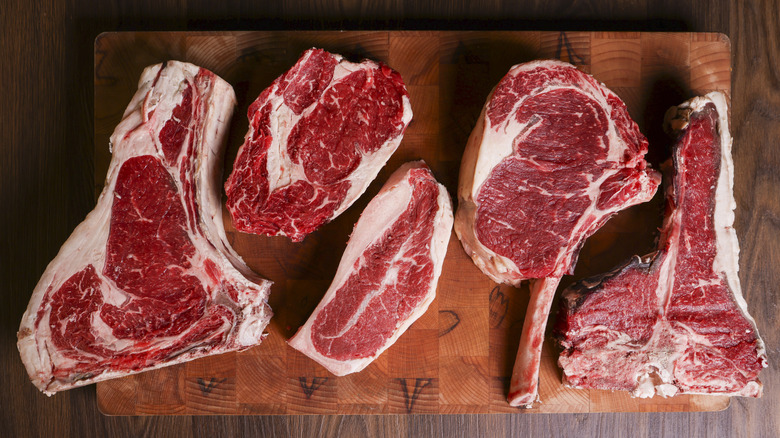
In the gilded world of beef, prices vary dramatically from cut to cut. Most of the time, the price tag is driven by tenderness. Take the tenderloin, for example, which comes from muscles that don't bear much weight or see heavy movement, building up very little connective tissue and staying tender when cooked. Hardworking cows don't have many muscles like that, so these types of cuts make up only a small fraction of the total meat on the animal, further driving up prices. But if you're in the market for a good value cut that doesn't sacrifice flavor, skip tenderloin and purchase chuck-eye roast instead.
Tenderloin is taken from the loin of the cow, whereas chuck comes from the cow's shoulder area — a heavily exercised muscle that supports a huge amount of weight. Its positioning means it's packed with tough connective tissue and thick, dense muscle fibers, making it a much tougher — and therefore cheaper — cut of beef. So you might be wondering: how can the tough chuck stack up against the ultra-tender tenderloin?
Compared to tenderloin, which is famously lean, chuck carries noticeably more fat and marbling. In our humble opinion, the fat-versus-lean divide matters far more than the tough-versus-tender one. When cooking, fat renders down and bastes the meat in rich, beefy flavor — think of it as a built-in seasoning. That's exactly why fatty, well-marbled cuts like ribeye or luxurious A5 wagyu are so prized among steak aficionados. Chuck may not reach that level of marbling, but it holds far more fat than tenderloin at a third of the price. So if you want a tender, mildly flavored steak, go for tenderloin. But if rich flavor and a juicy bite are what you're after, save the money and grab a chuck roast instead.
The best ways to cook and serve a chuck steak
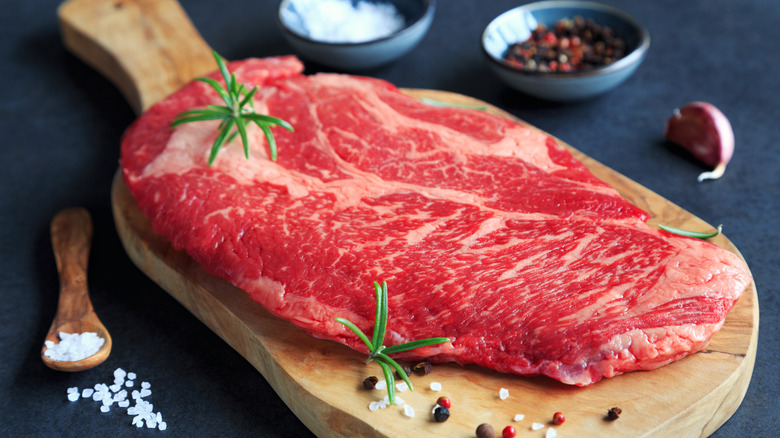
There are many benefits to cooking a chuck steak, but it doesn't come without some drawbacks. One of the primary reasons people like tenderloin is how quickly it can be cooked. Thanks to its naturally tender texture, you can throw it straight onto a searing-hot pan or grill, let it cook for a few minutes, and pull it off for a soft, buttery bite. That method simply won't work for chuck. Because its full of dense connective tissue and tough collagen, a quick flash in the pan won't give its muscle fibers enough time to break down. Worse still, over high heat, these fibers tighten up and push out moisture, stripping away the very juiciness that makes a well-marbled cut worth cooking in the first place.
With chuck, low-and-slow cooking is the way to go. Its toughness, which makes it a poor fit for quick cooking, is exactly what gives it the edge over leaner, more tender cuts when using methods like smoking or braising. Cooking chuck at low temperatures over many hours breaks down the tough collagen into soft, liquid gelatin. Even better, as it cooks the fat melts into the meat, keeping it moist and flavorful. By the time you remove it from the stove or oven, you should be able to pull the meat apart with a fork. Try that same low-and-slow method with an ultra-lean tenderloin, and the lack of connective tissue and fat would leave it dry and stringy by the time it's finished (this is precisely why tenderloin isn't ideal for slow cookers, either). So if you're planning on whipping up a budget-friendly beef stew or hunting for a brisket alternative, look no further than chuck.