
Bobby Flay Says Ribeye Steak Has One Major Flaw (Hint: It's Not The Price)

It's true: Bobby Flay knows how to handle meat; whether it's grilling, barbecue, or his distinctive high-heat searing, the Food Network chef is the ultimate connoisseur of turning animal flesh into a delicacy for his diners. It may come as a surprise that he'd take shots at one of the most prized types of steak — the ribeye, the almighty, juicy glory crowning many restaurant menus — but it's exactly this cut of beef he has some qualms with, specifically because of its fat content.
While fat can add richness and velvety texture to any meat, Flay notes how the ribeye often doesn't render. "[T]he fat doesn't always melt, even when cooked properly," he remarked (via Food&Wine). This can make the experience of biting into a ribeye noticeably inconsistent, as a perfectly tender steak can be punctuated by unpleasantly chewy fat chunks. Ribeye itself is afforded premium status precisely because of its marbling — one reason we think it works amazingly in a steak sandwich — but this is different from having larger fat pockets separating the muscle, which this cut of meat often has.
It's worth noting that Flay is not outwardly dismissing the quality of ribeye. Its marbling is precisely what makes it so popular, and, moreover, there isn't just one muscle involved in the cut. The central eye, or longissimus dorsi, which is substantial and steak-like, and the exceptionally rich, tender surrounding cap, are separated by the intramuscular fat, which is quite different to fat inside the meat itself and what can produce a gummy texture. For Flay, a skirt steak would be his first choice at home — affordable and "fabulous," in his words (per Food & Wine) and less difficult to prepare than the highly lean filet mignon, at the opposite end of the beef spectrum when compared to a ribeye.
Ribeye's fattiness means it's best served medium, for Bobby Flay
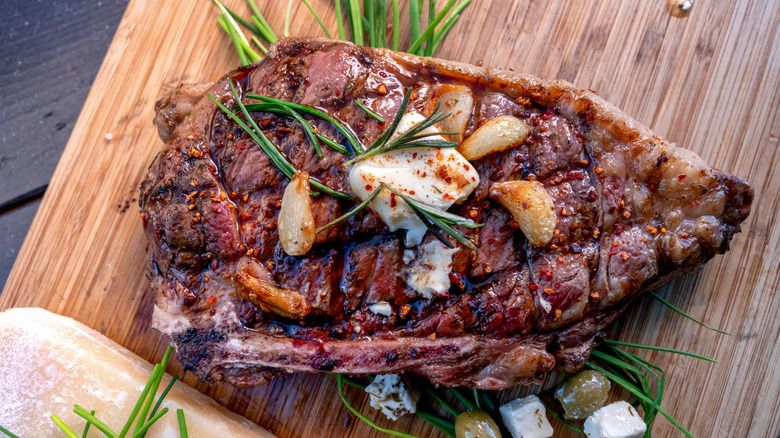
When it comes to ribeye, grilling it perfectly is of the essence. One of the keys is ensuring the fat renders, which is why cooking it for longer can be the best choice. It makes sense then that Bobby Flay generally prefers to serve his ribeyes medium or medium-rare, cooked to around 140 degrees Fahrenheit. "If the beef is too rare, it's hard to chew," he remarked to Today. "The fat has to melt" (via YouTube).
Now while the celebrity chef — best known for his many restaurants and appearances on cooking TV shows like "Iron Chef America" — may have some qualms about ribeye, he certainly uses the beef cut extensively in his cooking, and even has some suggestions on how to prepare it. One of these is a grilled cut of steak with fresh thyme and a blue cheese and onion jam topping — a perfect mix of creamy, dairy tang and sweetness — with generous salt and pepper seasoning to ensure it seeps through the thickness of the cut. Another is a spicy ribeye with a sweet and sour glaze with Korean gochujang, soy sauce, and other East Asian condiments. Regardless of the flavors, there are some basics to cooking this cut: Oiling the steak directly, rather than simply the pan, as well as using the reverse sear technique (which any thick steak should get) can ensure the exterior does not overcook while the fat has time to render. The right equipment matters too — Flay specifically recommends a hot cast iron skillet, which should be heated for at least several moments before tossing the ribeye in it.