

5 Common Problems With Stanley Water Bottles
We may receive a commission on purchases made from links.
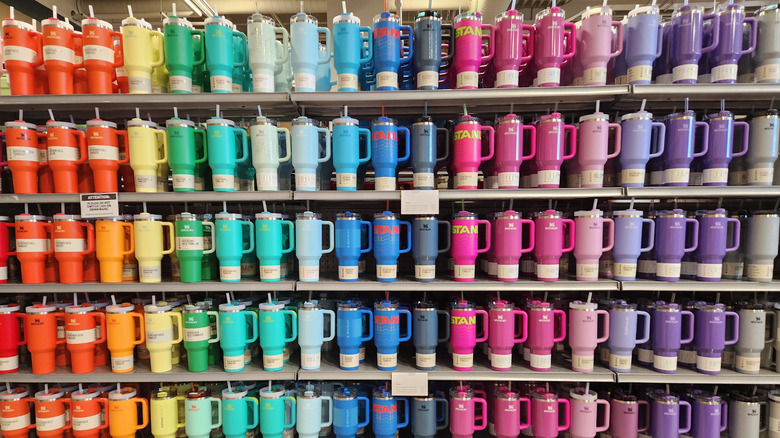
Stanley was originally known for its utilitarian double-walled, vacuum-sealed coffee bottles, popular with early risers, campers, and hard-working, often blue-collar, laborers who needed to keep their coffee hot for hours. Although the brand has been around since 1913, its bottles and mugs have seen a glow-up in recent years. They now come in a variety of styles and colors popular with the chic set, and a social media trend has blasted them into massive popularity, with buyers snatching them up as soon as they hit shelves, creating scarcity. The rarest of Stanley cup colors, Tiffany Blue, made in collaboration with Starbucks, was only available in the Philippines and could go for hundreds of dollars on the resale market at its peak. While they can still hit those high numbers, you can find them for as low as $40 on eBay these days.
When you're searching for the best sealed bottle for your hot or cold beverage, there are other brands to choose from, and it's worth noting the differences between Stanley and Yeti, for example. On Amazon, Stanley's IceFlow 2.0 Flip Straw Tumbler is the third-bestselling model behind a couple of Owala options, so the sales are still going strong. However, Stanley bottles and tumblers have some common issues you may want to know about before you pull the trigger on your purchase.
Stanley bottles contain lead
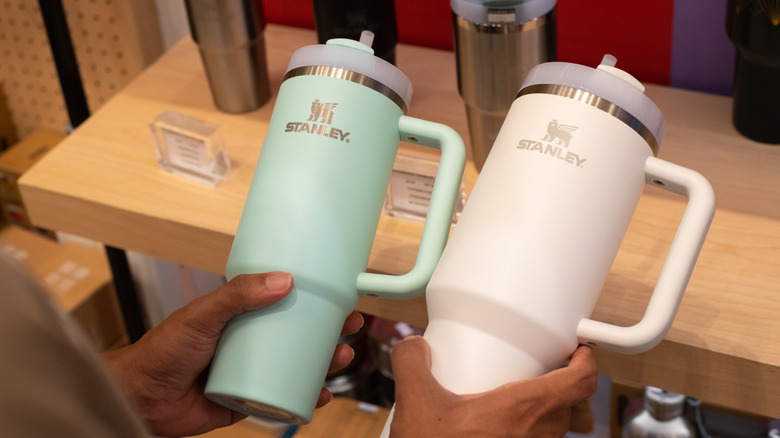
Stanley tumblers have a small piece of lead in the bottom of their substructure that aids with the vacuum-sealing, thus creating better insulation for both hot and cold beverages. Although not pervasive in the industry, this is still a pretty common practice and is considered safe by the Food & Drug Administration. According to Nebraska Medicine physician Joseph Clemons, M.D., the bottles are perfectly safe because, "The lead is sealed underneath a stainless-steel layer preventing it from leaking into the contents of the mug unless the water bottle has been severely damaged — like run over by a truck." That said, no amount of lead ingestion is safe, so you might want to keep an eye out for cracks or holes in the bottom and return the bottle for a replacement if you find anything questionable.
Stanley lids can shrink and cause burns
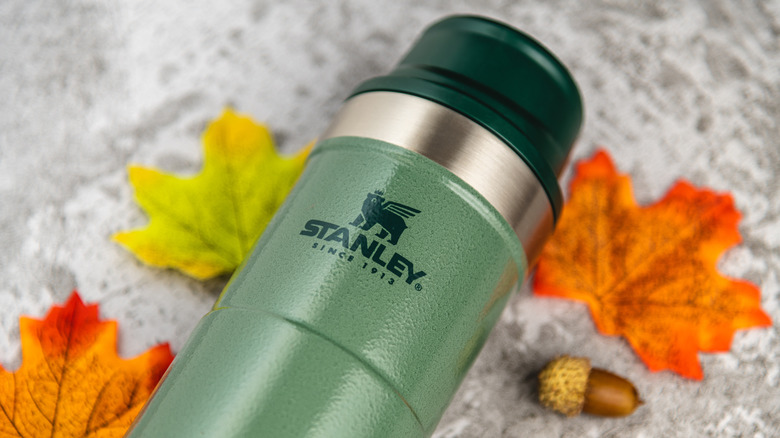
In 2024, Stanley recalled 2.6 million bottles sold by Amazon, Walmart, Dick's Sporting Goods, Target, and other retailers between June of 2016 and December of 2024. The recall covered certain designs of the Switchback and Trigger Action models because the threads on the lids could shrink under high heat, causing the lids to fall off easily. And when you're using your Stanley for a super hot cup of coffee or tea, it could be a serious burn hazard. The Consumer Product Safety Commission lists the recalled product numbers on its website, so if you bought a Switchback or Trigger Action between '16 and '24, you should probably have a look.
Stanley lids get stuck and can be difficult to remove
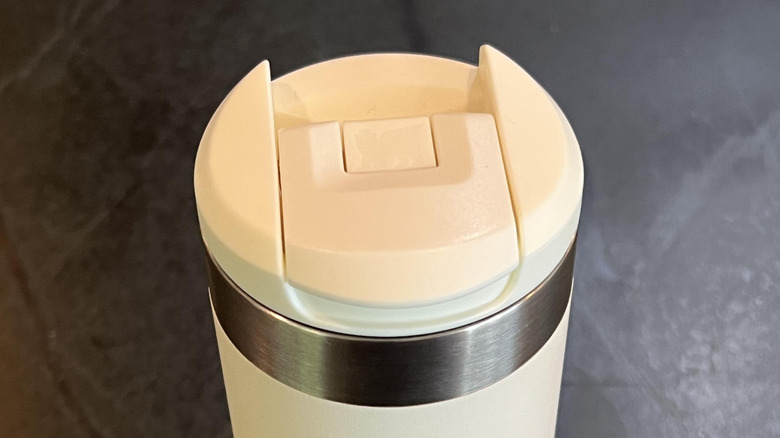
Loose lids that cause burns are certainly a threat, but what if you can't even get the darned lid off at all? Overly tight lids on Stanley tumblers appear to be a common problem online. One Facebook user even said, "I had to have maintenance people use tools to get it open. I have 5 and it happens to all of them." One solution may be to run the lid under hot water in the sink, although others claim a trip to the freezer for a few minutes will help loosen it, and you might need a silicone pad for a better grip as you wrench it off by hand. Another Facebook user wrote, "I once had a lid stuck for a month before I could get it off ... [S]oaked it in hot water then took an oven mit with a grippy part, I about broke my wrist trying to twist it but it finally came off."
Stanley tumblers are leaky
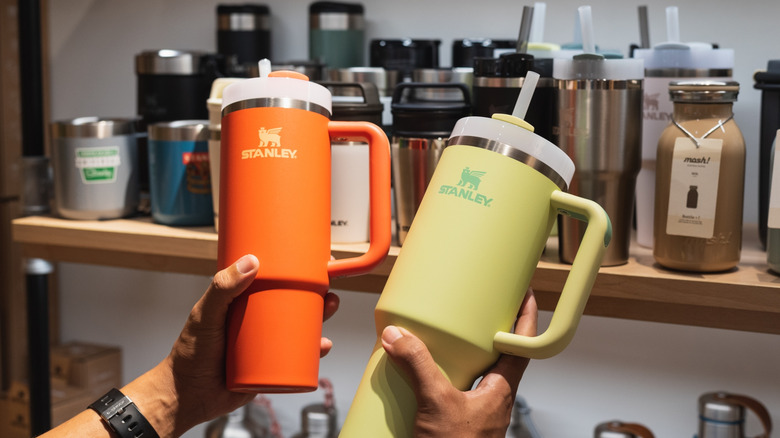
This appears to be a common problem with the Stanley Quencher. Sure, it has a straw hole, so maybe you shouldn't expect it to be completely leak-proof. But when you're taking it to the gym, or it falls on its side in the car, you don't want liquid to spill out, which seems to be the source of the complaints. If you insist on sipping from a straw, reviews point to BrüMate and Owala as good tumbler options that offer added protection around the straw, so they won't leak even when turned upside down.
Stanley water bottles can pose a health risk if not cleaned properly
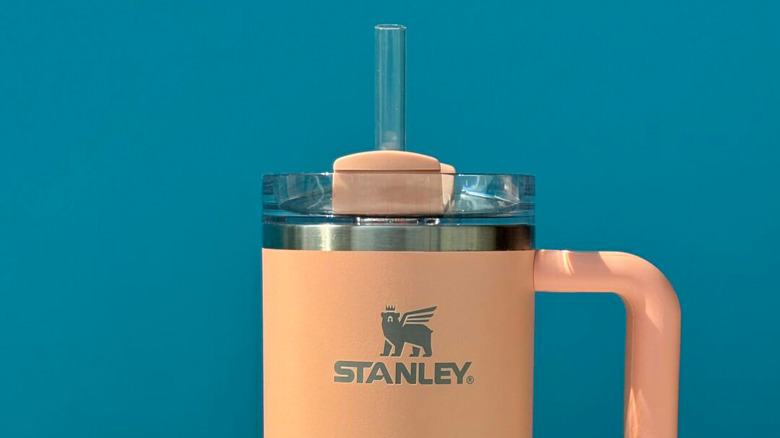
Even if you're just using water in your Stanley bottle or tumbler, mold and bacteria can still grow. And if you don't clean it regularly, you might be surprised by what you find inside all those nooks and crannies and underneath the silicone. This isn't an issue specific to Stanley, and you should be cleaning, or at least rinsing and drying, your water bottle daily.
To clean a tumbler, you'll need to take it all apart. You should rinse everything with warm water first, then hand-wash each piece with dish soap. And you're going to need a thin brush for the straw. Also, make sure everything dries completely, or the moisture will simply encourage more mold growth. If you're cleaning a flask, you can use a mixture of uncooked rice and white vinegar. Shake it to get to all those hard-to-reach places, then rinse it and let it dry.
While they may have only recently blown up into public consciousness as a cool, need-to-have collectible, Stanley bottles are also a favorite because they're generally well-made. Still, it pays to be aware of some of their drawbacks. Keeping these concerns in mind can help you make a more informed purchase.