

For A More Flavorful Pasta Sauce, Add This Pantry Staple To The Pot
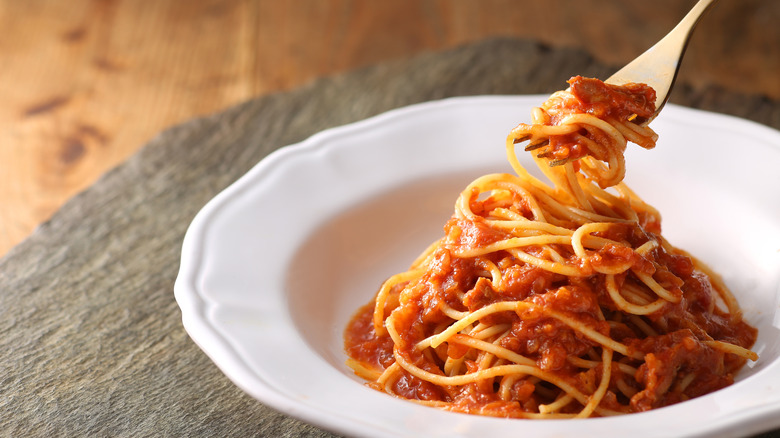
We've all toiled and labored to hit the sweet spot whenever prepping our pasta sauce. Sometimes it's a touch too thin; other times, it's dry and clumpy. Over-seasoned, or under, oily and dense or flavorless and bland, it seems striking that Goldilocks moment is a near-impossible task. What you might not have expected is one tried-and-tested trick to ensure it tastes perfect every time, which involves grabbing nothing other than the soy sauce you have catching dust in your pantry.
Wait ... an East Asian condiment in an Italian dish? Cue the immediate wrath of the pasta gods and the revocation of my Italian citizenship (apologies, Nonna). As we know, Italians don't take lightly to eccentric tinkerings to longstanding culinary traditions — one of the reasons you won't find parmesan sprinkled on top of your seafood spaghetti, for instance — and adding soy to your sauce seems like the ultimate cultural heresy. However, it turns out that top chefs have been doing it for years behind closed doors, from Ken Oringer to the Italian-born-and-bred Massimiliano Alajmo, and you don't have to be a Michelin-anointed gourmet genius to replicate it in the comfort of your home kitchen.
Soy sauce is known for its umami depth — what gives food those savory notes without needing to fetch the table salt shaker — as a result of the glutamic acid released in its fermentation. It makes a good shortcut for adding a surprising amount of flavor to your pasta sauce without turning it from a classic marinara to a makeshift Asian stir-fry. A teaspoon or two is usually enough — you don't want it to overpower or clash with your sauce, especially if it's jarred and already packed with sodium.
A small splash of soy sauce works especially well for meat-based sauces
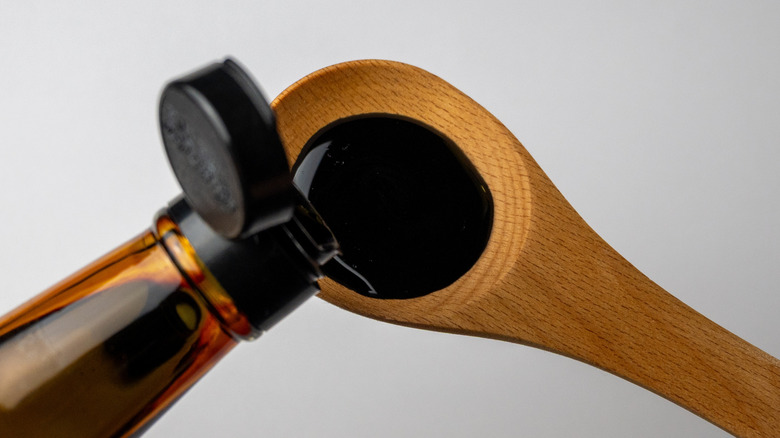
Not all pastas are made equally, and likewise, soy can fit some sauces like a glove — and with others, is best avoided. Where it's most apt is in meat sauces like bolognese or ragu, which can often land on the greasy or tasteless side without a savory enhancement. The soy both boosts the sauce's maroon color and coats the meat, making its flavor deeper and sharper, cutting through any potential greasiness from the fat. In veggie or mock-meat bolognaises, soy works even better, as it can help bring forward a meatier flavor to foods like tofu, seitan, or tempeh. On the flip side, in seafood pastas, the fish often provides enough savory flavor as-is. Here, anchovies or a bit of fish paste works better in the soffritto, or the pan-fried base of the sauce, and soy may make things unnecessarily salty.
Moreover, the key to a perfect pasta sauce isn't just the flavor, as the consistency and texture matter hugely too. Getting the basics right is sacrosanct here — salting your pasta water and adding a bit of its starch to your sauce as you cook it together for the final few minutes is arguably the most important — but that doesn't mean you can't rely on a few other sneaky, chef-approved hacks to give it that final je ne sais quoi. Adding butter to the cooked noodles before tossing them in the sauce — the signature practice of Chef Ettore Boiardi (aka Chef Boyardee) back in the 1930s, as well as my very own Italian grandmother — will guarantee a perfect velvety finish.