

The 90/10 Salmon Rule You Should Follow For The Perfect Crispy Skin
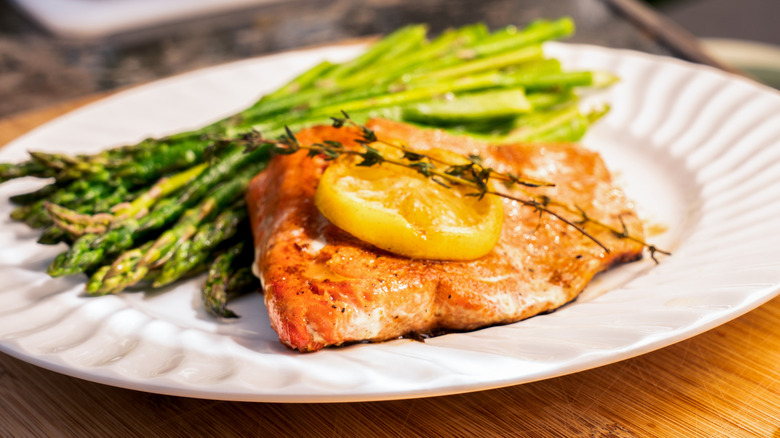
Salmon skin is a fairly underrated part of the fish, but only when it's prepared properly. That's why it's so important to let it spend 90% of your fish's cooking time in direct contact with the pan, so it can crisp up into a shatteringly yummy meal and develop its full flavor.
That brown or gray layer separating the skin from the meat is actually a skein of fat, one that's so rich you often don't need to use much oil. When you cook the fish skin-first, you give that layer a chance to render into the pan, crisping up the skin and delivering a bit of extra flavor to the bottom portion of the meat. The best part is that the secret to crispy skin is to simply leave the fish alone! Once you've guaranteed maximum surface area contact with your cooking surface, let it do its thing, and you'll end up with something like a strip of oceany bacon.
If you're still a little hesitant about the timing, you can even use a parchment paper hack to prevent sticking. Just be warned that the paper tends to burn around 420 degrees Fahrenheit, so this may not be viable if you use a high temperature to keep your fish rare. Regardless, cooking skin first is a staple of just about any fish, from river trout to char, and lets you get all those delicious vitamins and minerals you'd otherwise miss out on if you just bought the meat.
More tips to maximize skin crispiness
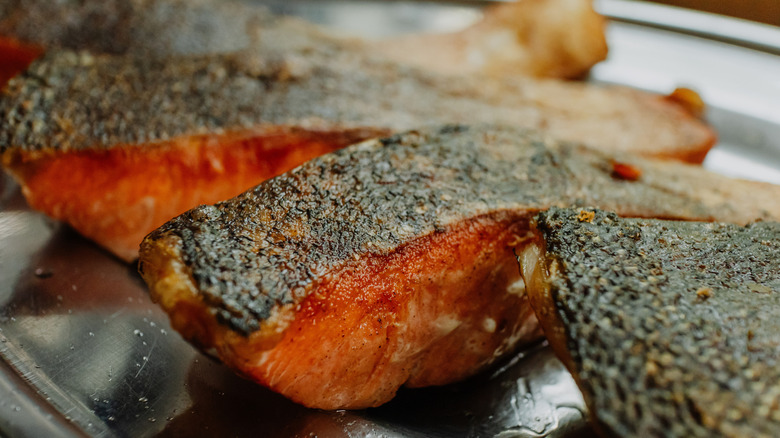
Just like getting the crispiest coating on fried chicken, the trick is to evaporate as much moisture as possible without burning your protein. Removing excess moisture beforehand and providing the best cooking environment are both hands-off and straightforward, so cooking some showstopping salmon is an absolute breeze.
Anytime you plan on cooking non-marinated meat in a pan, you should always pat it dry with paper towels first. Moisture must evaporate before the Maillard reaction responsible for delicious skin can start, so if you have too much, you may end up with overcooked meat. To guarantee there's as little moisture as possible, give your meat a thin coating of oil, salt it, then let it sit, uncovered, in the fridge for about an hour. This draws out surface-level moisture and guarantees the Maillard reaction can start as soon as possible.
When it comes time to cook your fish, don't be afraid to press the meat down. Not only does this prevent curling, which makes cooking the other sides more difficult when it happens, but it guarantees every last millimeter of skin is in direct contact with a hot surface. The oil from the salting step should be sufficient until more renders, so you can essentially sear the meat portion in its own fat for an extra-salmony dinner. If you're cooking filets one at a time, you might want to wipe the pan clean as salmon oil tends to burn quite quickly and may make subsequent proteins a bit bitter.