

American Vs Norwegian-Style Cinnamon Rolls: What's The Difference?

Warm, gooey, and utterly indulgent, the humble cinnamon roll has managed to capture the heart of America. With a pillowy sweet pastry slathered in frosting, it's almost impossible not to love. Though there's no shortage of die-hard fans who would argue American-style cinnamon rolls are the best in the world, other countries versions could give them a run for their money. One such place is Norway, whose bakers take a very different approach to the pastry.
Of course, there are bound to be some similarities. They share the same bones; both start with a sweet, yeast-leavened, enriched dough wrapped around a filling of butter, cinnamon, and sugar (with flour sometimes added for an extra gooey texture). But that's where the resemblance basically ends. Take one bite into a Norwegian cinnamon roll, and you'll notice a distinctly warm, aromatic flavor the American version lacks. That's thanks to cardamom, a quintessential Scandinavian baking spice that's mixed into the dough before it's baked.
Walking into a Norwegian bakery, aside from the cozy cardamom aroma, one of the first things you'll notice is a complete absence of frosting coating the rolls. Traditional Scandinavian baking leans into the flavor of the yeasted dough itself rather than overpowering it with a heavy, sugar-based frosting. That's not to knock down the American version. For many, the delicious frosting is the best part. It's really just a matter of different taste preferences and culinary traditions. It's not just the frosting that gives them a different look, either. Picture the classic Cinnabun cinnamon roll: a tight spiral coiled into a soft, square-ish shape — that's the archetypal American style. Norwegian cinnamon rolls take many different shapes, sometimes into that familiar spiral, but often twisted into complex, aesthetically pleasing knots instead.
American cinnamon rolls are much heavier than their Norwegian counterparts
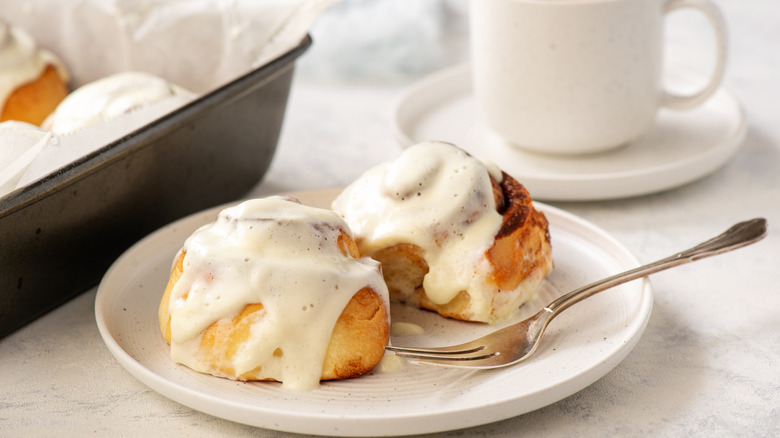
More often than not, American cinnamon rolls tend to be heavier, softer, and richer than their Norwegian counterparts. This largely comes down to ingredients. American recipes favor an enriched, brioche-style dough loaded with a high proportion of butter and eggs, giving them that irresistibly soft and gooey texture. Norwegian recipes use all the same ingredients, just in smaller proportion.
Another reasons American rolls are tend to be softer is how they're baked. Packed tightly into a pan or dish, there's less room for steam to escape as they bake, giving the rolls a perfect horizontal rise and keeping all their sides soft and fluffy – it doesn't hurt to coat the bottom of the pan with sweetened condensed milk, either. Norwegian rolls, on the other hand, are usually baked individually as distinct knots or coils, giving them a denser, breadier texture.
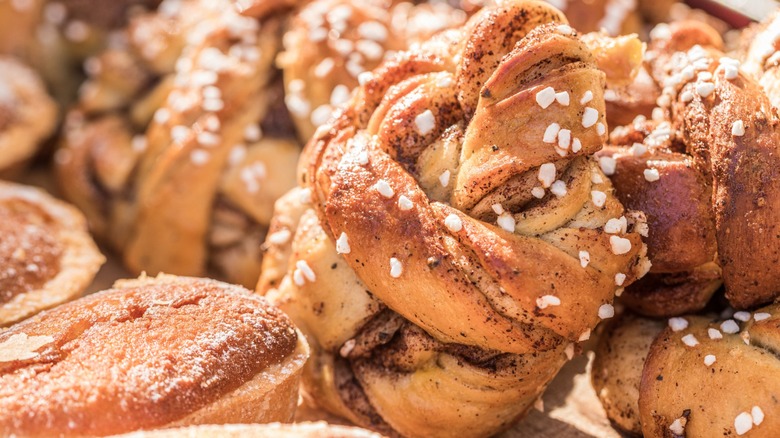
It's also no secret that the thick, creamy frosting is the main event on an American cinnamon roll. Typically made from cream cheese, butter, powdered sugar, vanilla extract, and a touch of milk, the rich texture and sweet, slightly tangy flavor transforms the rolls into something entirely distinct from its Norwegian cousin. Over there, bakers take a far more minimalist approach. Before the buns go into the oven, they're typically topped with pearl sugar (also known as perlesukker), large, opaque white sugar granules that don't melt or dissolve under high heat. Not only does this make the rolls look great, it also adds a signature crunch the American version is missing.
Norwegian cinnamon rolls aren't all the same
In America, cinnamon rolls are seen as an indulgent treat. Over in Norway, they're far more woven into daily life and ritual. Because the dough is comparatively lighter than American cinnamon buns, Norwegians often enjoy them as a daily mid-morning snack, and the country has no shortage of amazing bakeries selling them fresh out the oven. You'll find them enjoyed during the kaffepause (aka coffee break), a charming custom where people pause during the work day to unwind with warm cup of coffee paired with a cinnamon roll.
If you're ever planning on making Norwegian-style cinnamon rolls, cardamom is simply a must. You might be wondering how this Indian spice made its into Norwegian bakehouses, and the history stretches back over a millennium; exactly how remains a popular debate among historians. What we do know, however, is that the spice has been used in the region since at least the 16th century. To incorporate it into your cinnamon rolls, always use the whole pods rather than the pre-ground powder, as grinding causes its aroma to fade quickly. Just dry-roast the pods over heat, grind them in a blender, then strain out the fibrous husks with a fine mesh strainer.
Up there with the cardamom flavor, another thing we love about Norwegian style cinnamon rolls is their unique shapes. They typically either come in a flat spiral snail shape or a twisted knot. Interestingly, certain shapes are tied to specific regions. The rolled spiral, known as skillingsboller, is historically linked to the coastal city of Bergen, introduced by Hanseatic traders and named after an old Norwegian coin. The knot style (kanelsnurrer or kanelknuter) is popular across Norway and the rest of Scandinavia, and tends to be favored for its slightly denser, beadier texture.