

Bratwurst Vs Knockwurst: How The Sausages Are Actually Different
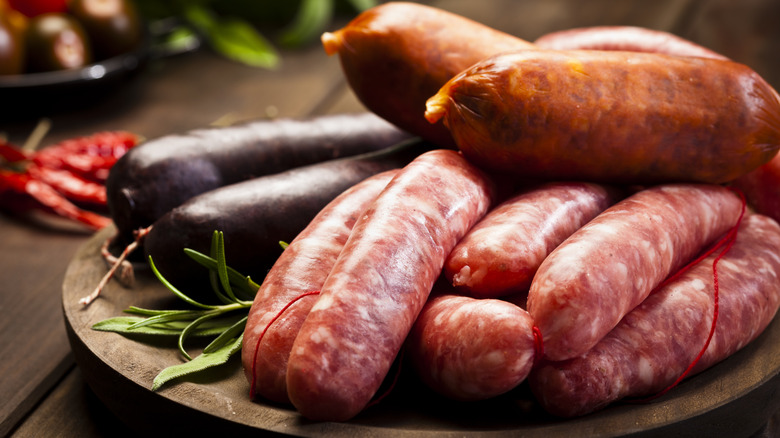
Sausages are, without a doubt, one of the most versatile ingredients ever invented, with hundreds of varieties to choose from, and one country with a whole host of options is Germany. Chief among them is, of course, the iconic bratwurst, but there are also some lesser-known versions you should try next time you're at Oktoberfest. One seriously underappreciated relative, let's say cousin, of the bratwurst is knockwurst, a sausage that takes a very different path to the plate.
At first glance, neither wurst seems too distinct. Both are stuffed in natural casings and built on a (primarily) pork, beef, or veal base, but that's where the resemblance ends. Take a bite of either side-by-side, and the differences will become obvious. A well-made knockwurst should hit you with a heavy, unapologetic garlic punch, while bratwurst leans into a warmer, more aromatic blend of spices. For a bratwurst, it's the meat doing the talking, whereas Knockwurst's sharp, assertive garlic seasoning takes the opposite approach.
Ingredients aside, there's plenty more setting these two apart. Size is an easy tell once you know what to look for. Bratwurst tends to run long and thinner, while knockwurst comes shorter and noticeably plumper. Then there's how they're prepared before hitting the plate. Bratwurst always needs to be thoroughly cooked before eating, while knockwurst only needs a light reheating, as it's almost always pre-cooked and smoked before sale.
Few sausages are beloved as the bratwurst
Compared to knockwurst, bratwurst is far more popular in the U.S., and it's not exactly a close race. It reigns supreme in the Midwest, a region that saw a major influx of German immigrants who brought along their sausage-making traditions. The town of Bucyrus, Ohio, dubbed the "Bratwurst Capital of America," hosts the annual Bratwurst Festival every August, drawing in roughly 100,000 visitors to celebrate the sausage. Some online sleuthing turned up no evidence of a standalone knockwurst festival. In the meantime, though, those chasing knockwurst or other more obscure wursts should have no trouble finding them at larger German heritage festivals across the country.
Bratwurst is made by grinding fresh meats like pork, veal, or beef, mixing them together with spices, stuffing the blend into casings (traditionally derived from hog or sheep), then twisting off individual links. Typical seasonings include salt, pepper, marjoram, lemon, ginger, and mace — the kind of warm, cozy spices that are purpose-built to provide hearty comfort during colder months. Unlike the garlic-heavy knockwursts, the pungent aromatic ins't typically included in brats.
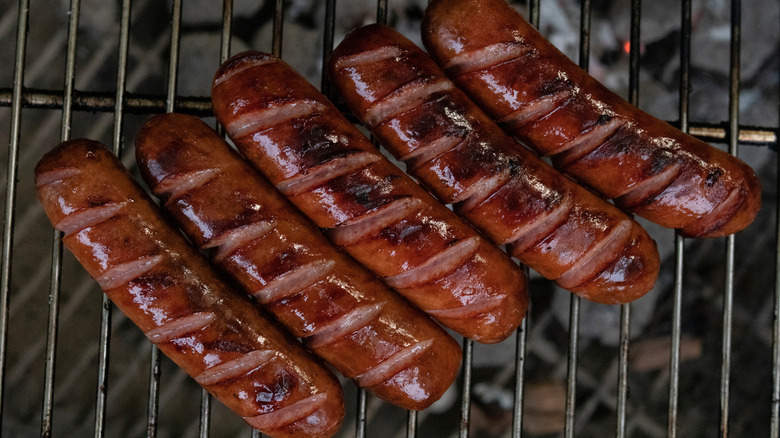
Since bratwurst is sold uncooked, you should never eat it raw. Common preparations include grilling, pan-frying, or simmering, and each brings out something a little different, so choose wiesly: Grilling is the go-to if you're after that smoky char and crisp, snappy casing; pan-frying gets you a deep, golden-brown crust, aided by the Maillard reaction; simmering or steaming is the gentlest option, poaching the sausage low and slow in water (or better yet, beer), so they stay plump and tender. For the best of both worlds, we recommend simmering your brats first, then finishing them on the grill for a perfect balance of texture and smoky flavor.
You can smell a knockwurst before you see it
The knockwurst might not be nearly as popular as the bratwurst, but it has a distinct heritage that deserves recognition. The first documented mention of bratwurst is attributed to the mid-15th century in Thuringia, Germany's central region. In contrast, knockwurst arrived roughly 200 years later, hailing from northern Germany's Holstein region. The German name — knackwurst — is borrowed from the German verb "knacken," meaning to crack — a playful nod to the noise made when it's bitten into. Since crossing over into the English-speaking world, it's been commonly referred to as knockwurst.
Compared to the coarsely ground meat of the bratwurst, knockwurst features a finer grind of either pork, beef, and, less commonly, veal. After being mixed with an extremely generous helping of garlic, it's usually aged for a few days to several weeks, then cold smoked. The smoking cures the sausages, so they're good to eat immediately upon purchase. But for a smokier, more satisfying texture, most Germans will give it a quick simmer, then a flash sear on the grill.
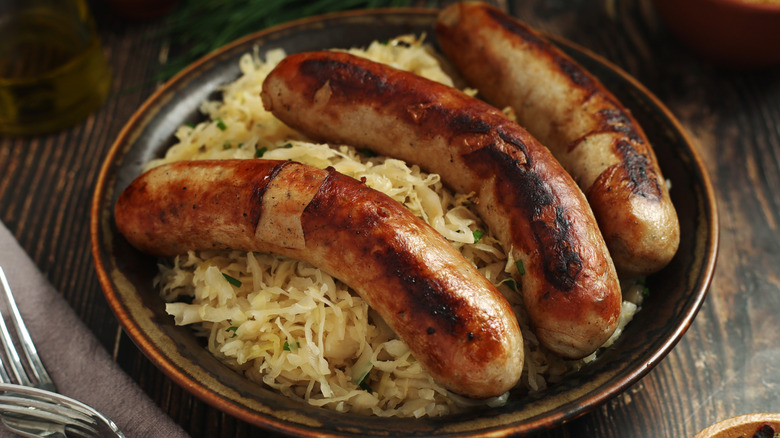
You'll most often find bratwurst cooked and served whole, paired with traditional sides like sauerkraut, cabbage, or potato salad, and of course, it's never complete without a generous dollop of mustard. While there's no shortage of fans praising the pairing of knockwurst and sauerkraut, one of its most famous preparations is slicing it into bite-sized pieces and smothering it in a spiced tomato-based sauce dusted with curry powder, an iconic street food known as currywurst. Within the wurst-loving community, the debate over which sausage goes best in a currywurst is divisive and unresolved. Bratwurst frequently shows up in currywurst too, but some claim that a knockwurst is the only acceptable option for a traditional Berlin version.