

The Tangy Fruit That Gives Savory Dishes So Much Flavor
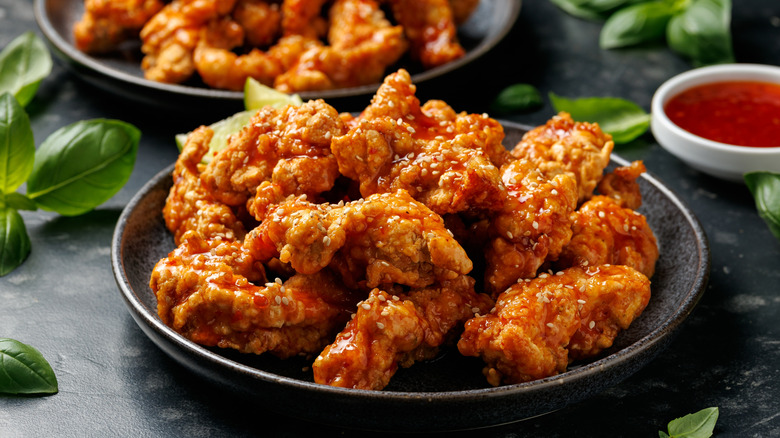
Savory dishes, from whole roasts to vegetarian curries, often benefit from a bit of tangy acid cutting through fats and roasted flavors, making them more vibrant. Fruit, in general, also provides complexity and an organic taste, so finding one that fulfills both roles is a no-brainer. That's why pineapple elevates so many different recipes, whether you're making a bánh mì sandwich or grilling up some tacos al pastor.
Pineapple is a solid balance between sour and sweet, producing the characteristic tangy flavor that makes it more versatile than a citrus or sugary fruit. It also has quite a distinct taste, imparting a low-effort tropical aroma to just about anything, which makes it immediately noticeable even in small quantities. For meats, the contrast of lightness and heaviness creates a delicious dichotomy. For vegetarian proteins, it helps lighten up powerfully earthy ingredients, like legumes, and lets other flavors shine through more easily.
Even if you aren't looking to reduce a dish's heaviness, pineapple can make food even more savory. The fruit's natural sugars are a great way to help the Maillard reaction, producing a more flavorful crust, provided you carefully control the heat and don't let those sugars burn. Salt also helps take the sting out of pineapple, so your other savory ingredients can go a long way towards mitigating one of the few negatives people associate with the tropical fruit.
Tricks to help pineapple elevate savory dishes
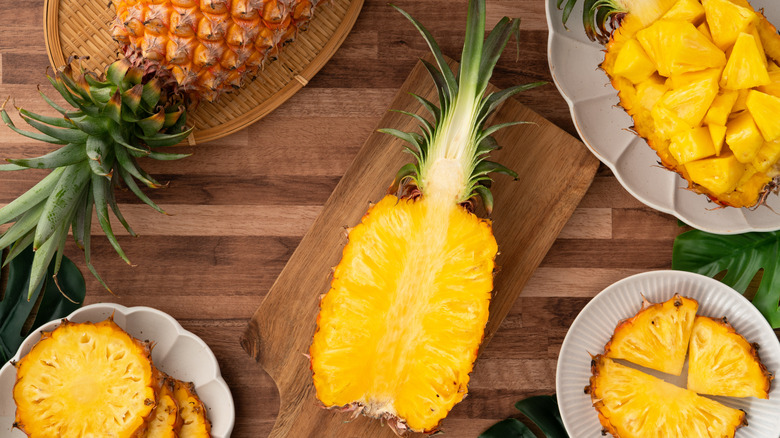
Fruit, in general, is a pretty versatile type of ingredient, but it all boils down to how you use it. Large pieces can caramelize and become far sweeter while juices are quick, tasty substitutes for traditional vinegars and other acids. It takes a bit of planning, but determining how you want to use pineapple is the best way to ensure it complements your other flavors and produces the most delicious result possible.
When kept in large chunks, whether you're roasting a ham or looking for a controversial pizza ingredient, pineapple is a dynamite sweetener. It's particularly good when paired with rich proteins, from pork belly to nut butters — because who doesn't love a bit of fat and sugar together? Your best bet is to use radiant heat, as direct contact with a hot pan may cause it to burn fast, and too much moisture prevents caramelization. Grilling can be particularly good because the wet surface of the fruit absorbs smoke particles quite quickly, capturing that lovely, open-fire flavor.
As a wet ingredient, those same enzymes that make your mouth tingle can be a powerful, all-natural tenderizer. This only boosts the savoriness of meats, as it can actually sabotage the texture of vegetable-based proteins. Acids tend to firm up cell walls, so adding pineapple juice to something like beans may actually make them take longer to cook. Instead, add them toward the end or caramelize some pieces beforehand to elevate your vegetarian savories properly and meld the flavors together right before you serve.