

This Japanese-Inspired Meal Is A Lot Like American Pizza
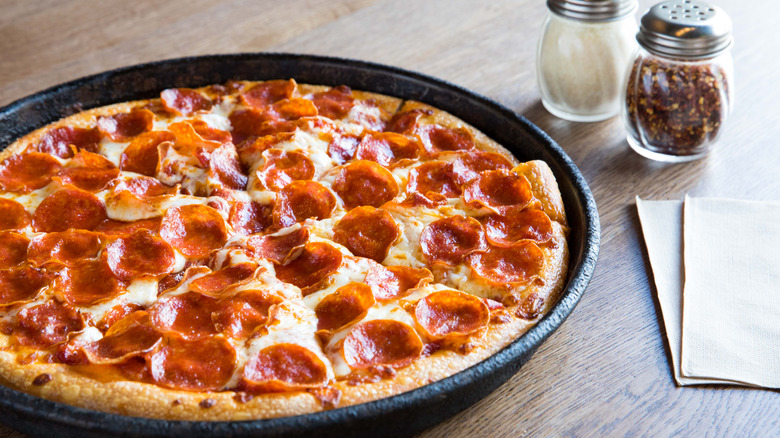
Whether it's sushi, matcha, mochi, or ramen, there's something for everyone in Japanese cooking. Within its storied cuisine, two of the most prominent categories of food are yoshoku and washoku. The former refers to Western-style food adapted to Japanese tastes, while the latter is traditional Japanese fare. Many of Japan's most viral dishes fall under yoshoku; think saucy, hamburger-inspired hambagu, or korokke, a panko-coated, deep-fried potato croquette mixed with meat or vegetables. Another delicious example of yoshoku culture, which borrows a thing or two from pizza, is Japanese pizza toast.
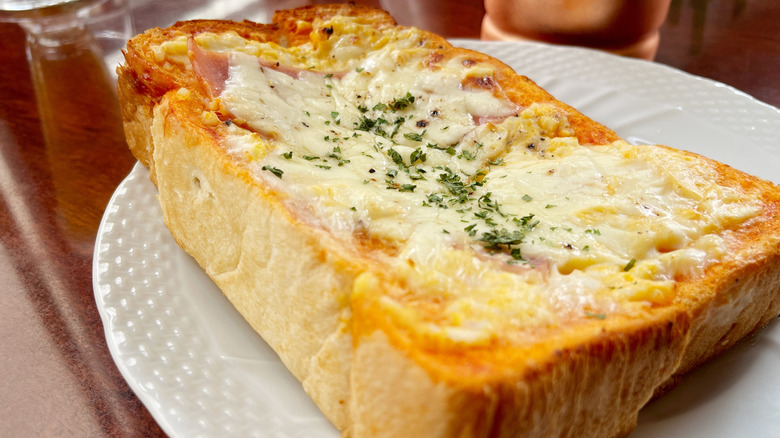
The creation of pizza toast is dated around 1964 and credited to Cafe Benisica, an old-school Tokyo cafe. Fun fact: You can still visit this charming spot today to get a sense of where the magic all started. At the time, traditional Italian pizza was expensive and hard to find in postwar Japan, so the owner's mother decided to take matters into her own hands. The absolutely moreish recipe tops shokupan (thick, pillowy Japanese milk bread used in viral fruit sandos and in delicious Japanese egg sandwiches) with a rich, tangy ketchup-y sauce, along with various toppings like thin slices of green bell pepper (piman), onion, mushroom, and ham or bacon. It's then finished with a generous helping of shredded cheese. The bread goes into a preheated toaster oven until the cheese turns melty and bubbly and the crust reaches a delectable golden brown.
We can't say we're surprised pizza toast was an instant hit among locals and tourists alike. It's gone on to become a staple at traditional, time-suspended Japanese coffeehouses called kissaten. Yet despite pizza being a great way to feed a hungry crowd, American-style pizza isn't really associated with breakfast. But over in Japan, pizza toast is almost always served in the morning, paired with a warm, steaming cup of coffee.
Other unique ways Japan puts its own spin on American-style pizza
We're not surprised that visitors to Japan rave about pizza toast, but it's just one of many Japanese takes on pizza that tourists have got to give a go. Another base-swapped fave replaces the dough with a lightly fried, crispy rice cake. One delicious (and quintessentially Japanese) topping you should try with this base is mentaiko and mochi. The mentaiko, a spiced and pickled pollock roe, adds a salty, savory kick with a hint of spice, while the mochi melts into a soft, chewy texture not too dissimilar from mozzarella.
But perhaps the most famous version of Japanese fusion pizza is Tokyo-style pizza, which has even found its way over to the United States. Invented 30-odd years ago, it's not too distinct from a classic doughy Neapolitan, but it features a crispier, more charred crust and the distinctive salt-punch technique, where chefs throw coarse Okinawan salt directly onto the hot oven stone before laying down the dough. While both typically share a standard margherita or marinara base, Tokyo-style pizza often expands into local ingredients like sakura ebi (tiny, crunchy shrimp), shirasu (baby sardines or anchovies), kombu seaweed, and umami-rich miso.
While pizza toast is a kissaten staple, you won't have much luck finding it at Japan's iconic konbini, their (elevated) take on convenience stores. A close substitute, though, is the pizza-buns. Sold everywhere from FamilyMart and Lawson to 7-Eleven, these calzone-esque snacks — known locally as "piza-man" — feature a hot steamed bun filled with gooey melted cheese and a classic tomato-based pizza sauce; it's essentially a Chinese-style steamed bun fused with Italian pizza fillings. You'll usually find these grab-and-go snacks sitting in the heated glass display cases right next to the cash register, with prices rarely exceeding ¥130 — roughly a single dollar.