

Why You Should Never Buy Plastic Food Storage Containers From Thrift Stores
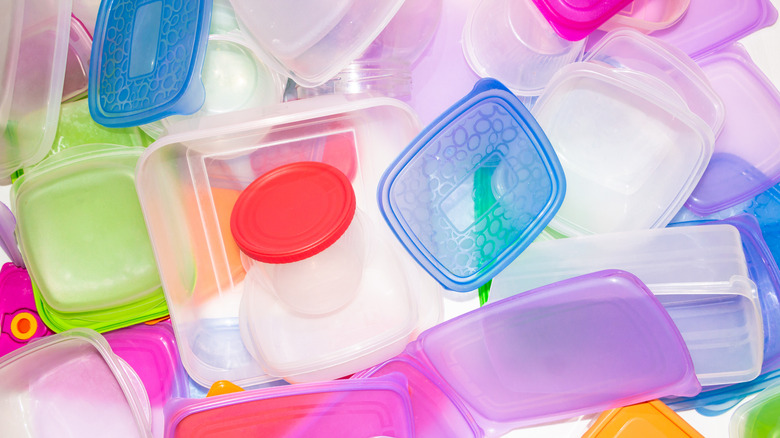
If thrifting kitchenware offers you a thrill second to none, we salute you. In this age of fast fashion and cheaply made electronics, you are keeping things out of landfills, while also likely using a bowl or colorful Fiestaware dinner plate that served nourishing meals from mother or father to child. But not everything in secondhand stores or yard sales is a treasure. You might find a perfectly serviceable, and perhaps even complete, set of plastic food storage containers, and be tempted to scoop them up before anyone else does. But the truth of the matter is, you could be inviting unseen bacteria into your kitchen.
Used plastic is different from, say, glass or metal — because the material is a lot more vulnerable to degradation over time. If the previous owner warmed something up in a plastic food storage container, and then cut up a piece of meat while it was still in the bowl, the knife's slice marks might still be visible at the bottom. And within those grooves, bacteria can lurk, no matter how many times, or how thoroughly, it was washed.
And it's not just plastic containers with visible cut marks. Even if it shows no signs of damage, there is a good chance that there are bacteria lingering on the surface of that secondhand Tupperware or deli container, just by virtue of it being used before. Pick them up if you want to start seedlings in them, but not for keeping food.
More dangers concerning secondhand plastic food storage
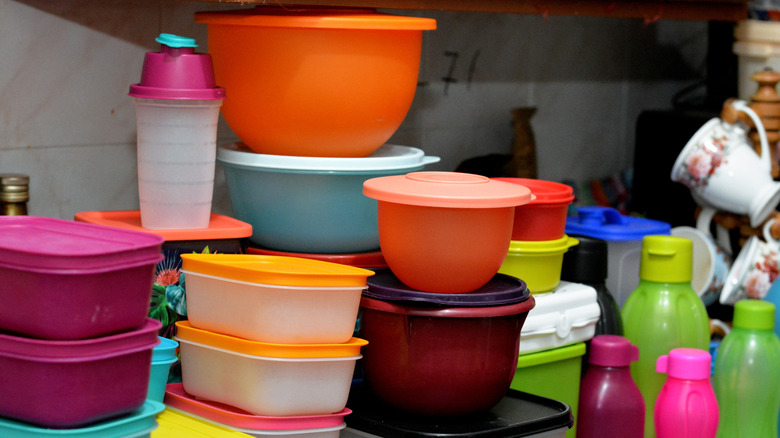
Unfortunately, residual bacteria hiding in the nooks and crannies of that used plastic food storage container is just the tip of the iceberg when it comes to concerns about why you shouldn't buy such kitchenware secondhand. There is also the risk of chemical leaching. While it's true that even brand-new plastic containers can also be hazardous in this way, it's the continued pre-use that the thrift store Tupperware may have undergone that makes it even more potentially dangerous. You don't know how often it was used in the microwave, or how often it went through the dishwasher, exposing it to high heat, which can degrade the plastic.
So what food storage options are safer to thrift? Glass is always a superior choice; it's sturdier and non-porous, and it resists stains and odors. Good-condition stainless steel is also a preferable option, provided it is indeed food-grade and undamaged. However, even glass and stainless steel containers tend to come with plastic lids, so it's important that they be in near-perfect condition to start and that they be used properly as you go on. That means not exposing them to high-heat situations, and you should throw them out when they do start to show signs of wear and tear.