

5 Common Problems With Your Crock-Pot And How To Fix Them
We may receive a commission on purchases made from links.
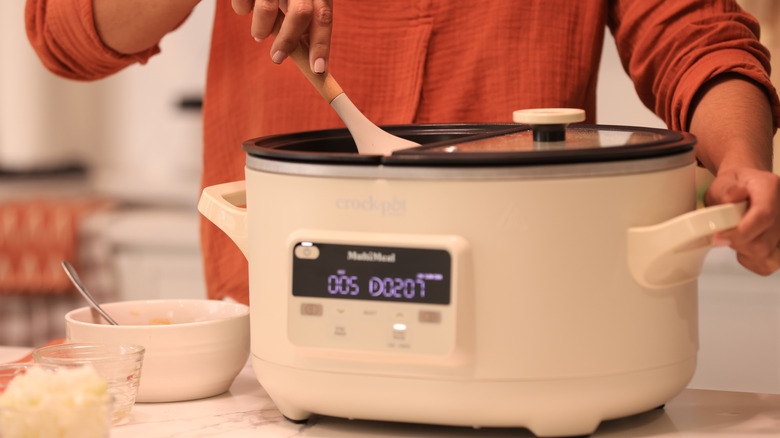
A Crock-Pot is a remarkably versatile device. Whether an entire kimchi-braised chicken with forbidden rice, a batch of caramelized onions, or a nourishing stew, the appliance can prepare a wide breadth of foods. As a type of slow cooker (Crock-Pot refers to a specific brand), much of the work occurs hands-off, letting time do the cooking.
Yet despite such conveniences, the system still requires a little know-how. There's more to Crock-Pot cooking than simply throwing in ingredients and waiting. After all, all of the slow and steady simmering means you can't adjust food during cooking — a dish might turn out not how you expect.
Subsequently, an array of issues often emerge with the Crock-Pot. Food from the slow-cooker occasionally comes out too watery or frustratingly underdone, despite ample cook time. Like with a steel pan, sometimes foodstuff gets frustratingly stuck to the cooking surface. And some Crock-Pot users might notice a dish takes way too long or just doesn't have the right textural crunch. Thankfully, each of these common problems has an easy fix. Verse yourself with Crock-Pot constraints, and you can enjoy the appliance's conveniences without mishap.
Prevent soupy Crock-Pot creations
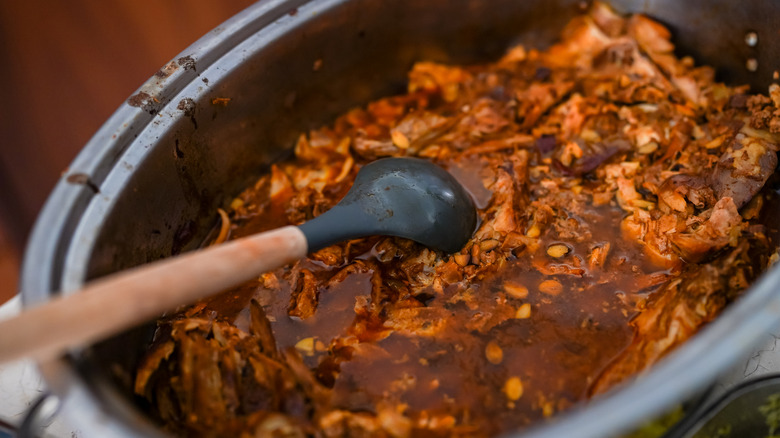
Save for a soup or stew, seldom does a slow cooker meal call for a very liquidy consistency. A runny slow cooker pot roast simply doesn't hit the spot, nor should a batch of baked beans resemble cereal floating in a bowl of milk. Yet overly-watery food often emerges from a crock pot, with several reasons to blame.
Most prominently, there's the inclination to add too much liquid. When simmering on a stove, it's natural to account for evaporation – reduction is a cornerstone of cooking. However, a Crock-Pot lid traps the condensation, with accumulated steam running back into the food. The appliance's contents won't cook down in volume, so what you put in initially is approximately what you'll get out. In fact, a typical stovetop recipe will call for twice the liquid of a Crock-Pot adaptation.
Additionally, cooks don't always account for the moisture released from ingredients. A Crock-Pot heats at a just sub-boiling temperature of 209 Degrees Fahrenheit. The moderate heat sweats out components, but doesn't reduce them, often creating a liquid layer of water suspended atop. For food safety, you'll want to submerge any raw meats, but don't add much more liquid than that for ideal textural results.
Ensure no food sticks to the slow cooker's cooking surface
When not too liquidy, a contrasting Crock-Pot issue arises: Food bits stick to the vessel's bottom. In most models, the slow cooker interior is made of ceramic, meaning you're not naturally getting the slick properties of a seasoned cast iron or non-stick. The issue only gets worse with dry and sugary foods in a Crock-Pot, like when you're making a slow cooker lemon cake or a batch of sweet potatoes. When the slow cooker's bottom layer turns sticky, scrubbing it off can prove tiresome.
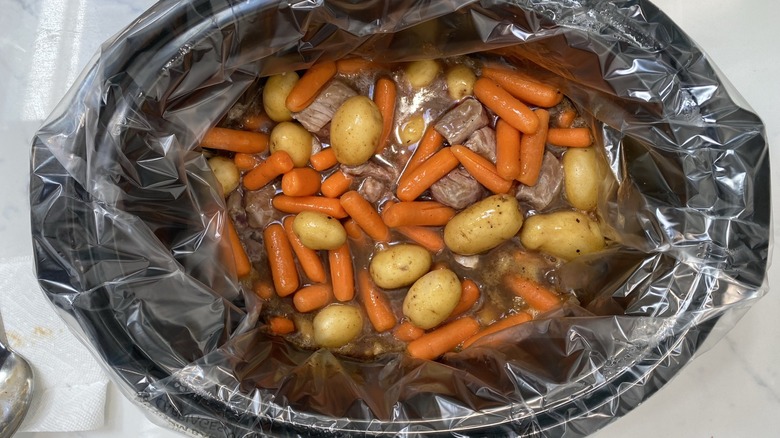
Thankfully, the fix is easy; simply grease your crockpot before preparation. A quick spritz of oil spray or a dab of butter prevents the sticking issue. To further ease cleaning, consider grabbing slow cooker liners, which conveniently contain the food. And if the issue persists, Crock-Pot sells an Easy Clean Non-Stick Ceramic Slow Cooker, offering a coating that'll further prevent such issues.
Know what leads to undercooked food with a Crock-Pot
A Crock-Pot prepares food at one steady temperature; the heat settings determine only how quickly the device warms up. As opposed to a stove or oven, you can't simply increase the temperature when simmering is slow, making undercooked food a prevalent issue. To remedy the problem, you'll instead need to consider how food initially goes into the device. Improper doneness usually occurs due to how a Crock-Pot is filled.
Most crucially, it's important not to overstuff a Crock-Pot. While it's tempting to pile in ingredients, the appliance performs best at approximately 60% capacity. Approximately half-full volume ensures ingredients don't overcook — you want enough liquid to submerge components, after all. However, exceeding 70% capacity sometimes means a dish won't come together, leaving vegetables crunchy and the meat tough.
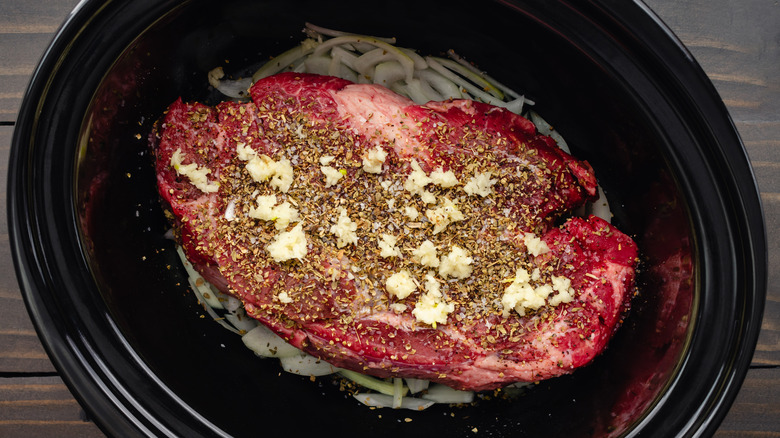
Simultaneously, the order of ingredients matters, too. Start with hearty vegetables (potatoes, carrots, beans) on the bottom, then place the star protein on top, accounting for the added heat on the Crock-Pot's lower layers. Cover everything with liquid, saving delicate herbs as well as moist ingredients like tomatoes, mushrooms, or broccoli for later in the process. Additionally, never place frozen foods into a Crock-Pot: As they thaw slowly (and unevenly), such components might lead to foodborne illness. Not to mention, cold foods further contribute to an undercooked Crock-Pot meal, making food placement a cornerstone of temperature control.
A pesky habit leads to elongated Crock-Pot cooking times
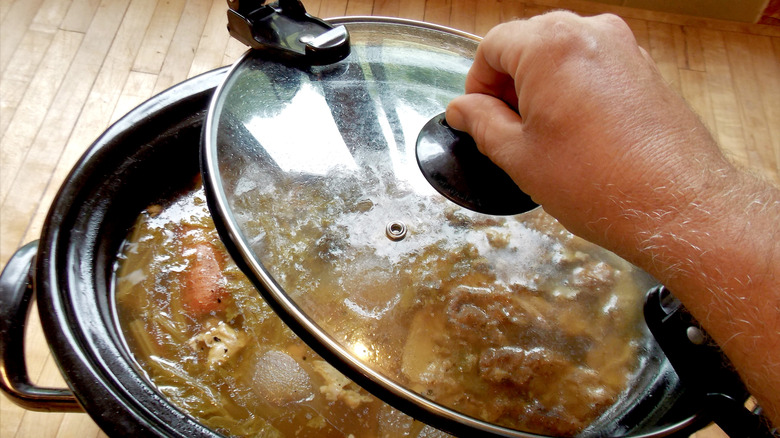
Do your slow cooker recipes — like slow cooker chili or your German sausage and kale stew — dependably run over the expected duration? The easy-to-fall-into habit of opening the lid is likely to blame. It's certainly alluring to slide over the cover — even just momentarily — checking in on how the contents are shaping up. Some cooks might also be tempted to stir components, another maneuver that isn't necessary. Yet keep in mind each peek adds up to 20 minutes of cooking time. Simple Crock-Pot taste tests really stack up!
The device contains lots of trapped heat, with steam forming during the cooking process. The lid catches the water particles, depositing them back into the vessel, and thereby moistening the food. So when you crack open the cover, you not only lower the internal temperature, but you let some of the moisture dissipate, too. The simple maneuver ruins the Crock-Pot's momentum, forcing the components to reheat, and thereby worsening the dish. So reserve sampling for the very end, when the contents are nearly ready for consumption.
Know how to prep Crock-Pot ingredients for ideal texture
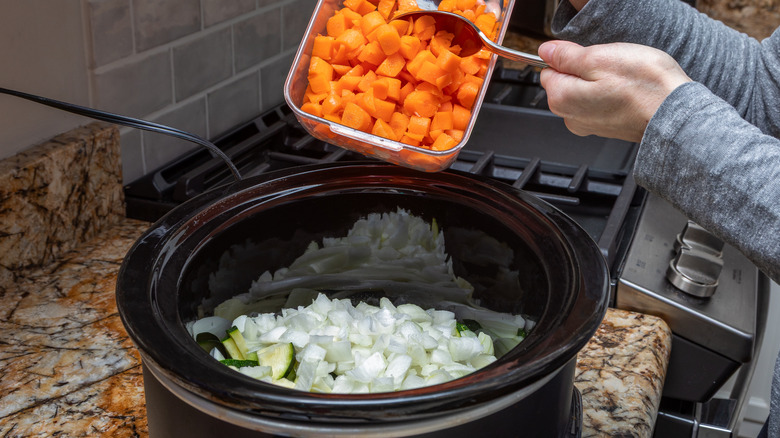
While most Crock-Pot problems occur during cooking, some issues arise during prep, too. Like with roasting or sauteing, it's essential to properly cut up ingredients for the slow-cooker. With vegetables, many cooks cut too small. Root vegetables should be cut coarser than for a pan-fry — you'll want them to retain some shape upon completion. Yet go too large, and they won't cook down: You're looking for approximately two-thirds of an inch in thickness and width.
Meat requires its own adjustments. For starters, it's imperative to use the right cut; never put expensive meats in your slow cooker. Instead, settle on collagen-packed beef meant for braising, such as various types of chuck roast. You'll want around three to four pounds of beef — an adequate size for typical Crock-Pot capacity — sliced into pieces about a pound each. And while not essential, it pays off to sear the meat first, enhancing the flavor via Maillard reactions. With proteins like chicken and pork, the prep is easier: Simply add a similar quantity of three to four pounds to the cooking vessel, as is. Still, always check the size of Crock-Pot ingredients, thereby ensuring everything cooks to a tee.