

How To Clean And Sanitize Your Thrift Store Kitchen Find
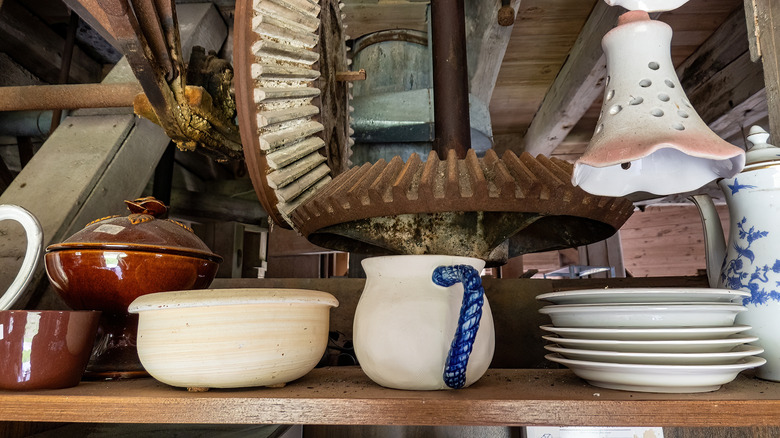
If you're in the market for new, high-quality kitchenware but don't have the budget to fork over hundreds for Le Creuset or Staub, you might have luck finding pieces from these brands at your local thrift store. With a sharp eye and a little digging, shoppers have managed to snag coveted items, like collectible (and gorgeous) carnival glass for a mere fraction of their usual retail prices. But once you've got your hands on a bargain, it's essential to clean and sanitize your thrift store finds before using them. You wouldn't wear secondhand clothes without washing them, right? There's simply no way of knowing what conditions your items were kept in before they found their way to you, so, at a minimum, always wash them with soap and warm water to remove any hidden germs.
Fortunately, many secondhand kitchen items are easy to clean in the dishwasher on a sanitizing cycle. That said, if you've managed to snag gilded or hand-painted dishware, keep it out of the dishwasher. Harsh detergents and high heat can ruin the delicate designs. We'd also steer clear of putting vintage crystal or hand-blown glassware through the dishwasher, since older pieces tend to be less durable than modern versions and could shatter. The same goes for porous items, like cast iron or wood, since they can soak up water, causing them to rust or warp. For these items, a light hand, a sponge, and some mild dish soap should get the job done in no time. If you want to be extra safe with nonporous, bleach-safe items, mix up a simple sanitizing solution of 1 tablespoon of unscented household bleach per gallon of cool water. Let the items soak for at least two minutes, then air-dry.
When thrifting kitchenware is a steal, and when it's a risk
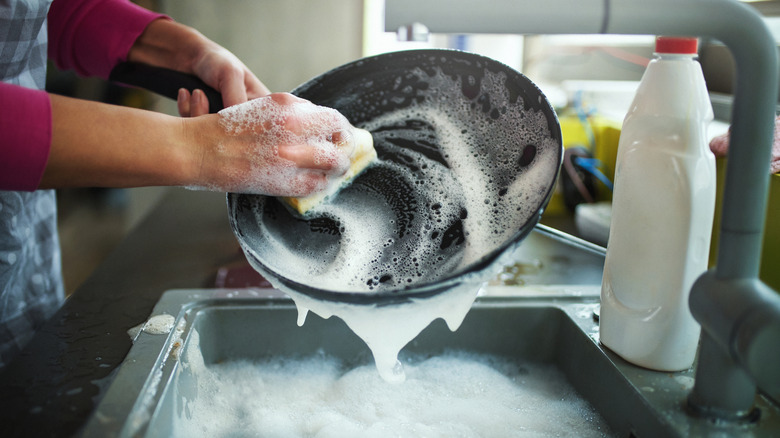
If you've stumbled upon a coveted Le Creuset Dutch oven or some stylish retro Norwegian enamelware but find it caked in a stubborn layer of grease and grime, don't skip it. That grime can actually work in your favor: It'll likely drive the price down, and a little elbow grease at home can get the piece looking as good as new.
To restore a dirty pan, stick to the time-tested combo of Bar Keepers Friend Powder Cleanser and a wet, nonabrasive sponge, provided the manufacturer's care instructions allow it. Scrub gently, and the grease should lift right off. But if you'd rather stay true to the spirit of thrifting while you clean, all you've got to do is fill the inside of the pan or Dutch oven with enough water to cover the affected areas, stir in some baking soda, bring it to a boil, and then scrape away the softened grease with a wooden or silicone spoon or spatula. For the exterior, a paste of baking soda and water, worked in with a nonabrasive sponge, does the trick just as well.
But sometimes, even if the deal seems irresistible, the thrifted item might not be worth it. If you've come across a beautiful piece but notice that its surface is covered in thin, web-like cracks, skip it. That's called crazing, and it is known to occur frequently in older pieces. It can show up on everything from ceramic and porcelain bakeware to enameled cast iron and antique china. It's not just a cosmetic flaw: These tiny cracks can give bacteria somewhere to hide, and, if an older piece has a lead-containing glaze, damage or deterioration may increase the risk of lead leaching into your food.