

Why You Should Add This Savory Deli Meat To Your Italian Subs
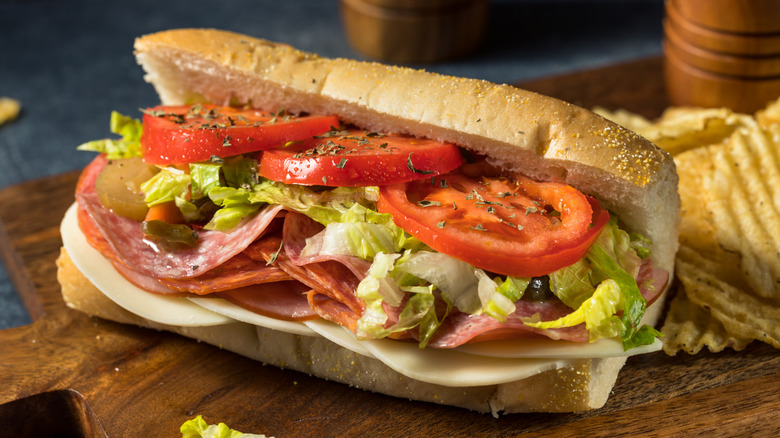
The Italian deli sub is the perfect example of how uncomplicated ingredients can still produce gastronomic wonder. Of course, the recipe varies from place to place, but you'll always find a layered mix of Italian cured meats, melted cheeses, and a medley of fresh, oregano-seasoned vegetables, all piled onto an Italian-style roll or baguette. Without question, the meats are the best part of the sandwich — after all, who doesn't want to make a meat monster of an Italian sub? — and one hugely underrated cut you should add to your next sub is finocchiona.
Finocchiona might not be as prolific as mortadella or prosciutto, but we'd venture to say its flavor is sitting in a whole new realm. Finocchiona (derived from the Italian word "finocchio," meaning fennel) contains either whole (not ground) fennel seeds or flowers mixed directly into the ground pork meat and fat before it's stuffed into casings and cured. The cozy, anise-like notes of the fennel cut through the rich, savory flavors of the pork, creating a product that feels indulgent yet vibrant.
As finocchiona is a coarsely ground salami, its texture is naturally denser and firmer than ultra-fine blends like mortadella. This makes it ideal for snacking on its own, but in a sandwich, ensure it's sliced as thinly as possible, so its naturally chewy texture doesn't dominate every bite. Disperse your slices evenly; fold them like ribbons or ruffles, so they stay tender when you bite into your sandwich. As fennel is the star of the show here, stick to mild cheeses like provolone or fresh mozzarella, so its flavor can shine. Using heavy sauces like mayo will get you side-eye, so stick to something a bit lighter: A splash of red wine vinegar or a generous glug of olive oil is enough to bring the flavors to life and add a bit of bite to cut through the fattiness of the meat.
Finocchiona must be produced under strict guidelines
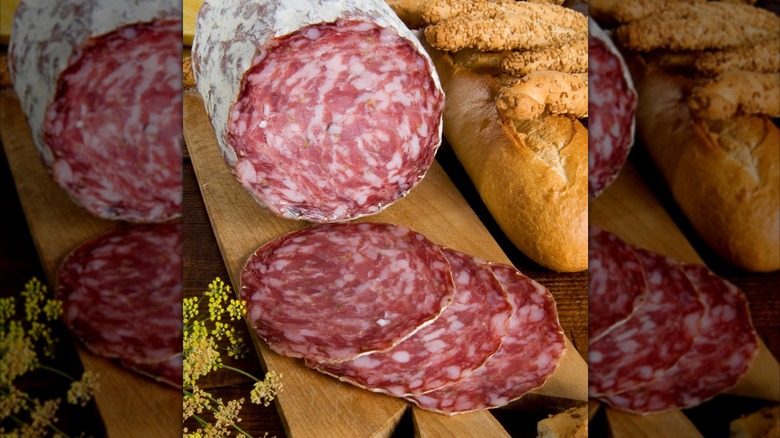
Italy's culinary landscape has many layers. Contrary to popular belief, there's no such thing as a single "Italian cuisine." Instead, the country's food is vastly regional, with dishes reflecting the ingredients and history of their specific areas. Finocchiona, said to have originated during the Middle Ages, was first created in rural Tuscany, where wild fennel grows abundantly across the fertile hills. At first, fennel was simply a cheaper alternative to expensive imported black pepper. However, people caught on quickly that fennel was delicious in its own right. Today, the seed is so tied to the Tuscan salami that it's protected by the European Union's Protected Geographical Indication designation (IGP), ensuring it's authentically made in Tuscany using certified local methods and ingredients.
Finocchiona IGP requires production exclusively within mainland Tuscany, using fresh, unfrozen meat from certified heavy pigs like Large White, Landrace, Duroc, or traditional Cinta Senese. The mixture uses a medium grind, flavored with salt, pepper, garlic, and, of course, fennel. Curing follows traditional rules overseen by the Consorzio di tutela della Finocchiona IGP, which dictates the temperature and humidity during drying and curing, along with the total aging time, ranging from 15 to 45 days depending on the size and weight of the product. You can also find finocchiona's softer, more crumbly cousin, sbriciolona, which is aged for a much shorter period, keeping the meat especially tender and fresh.