

The Chinese Spice You Should Be Adding To Your Meat Marinade
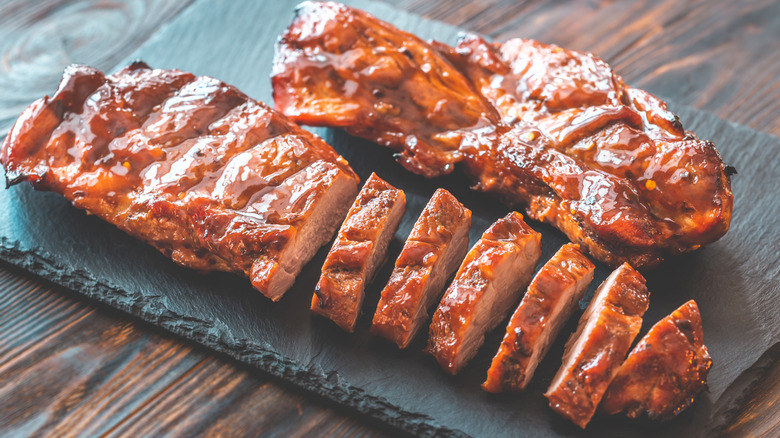
Marinating meats is a great way to coat protein with a lot of flavor before cooking, and the beautiful thing about them is that there really isn't a single right way to put one together. Despite the large array of seasonings available, though, meat marinades can sometimes seem repetitive. You can shake up your marinating routine by looking at other cuisines and how they prepare meats for the best flavor. One culinary style you shouldn't ignore when building your flavor base is Chinese cuisine.
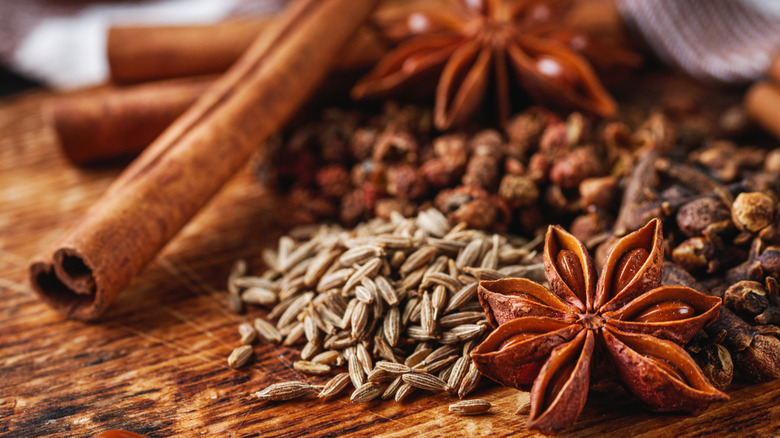
There are plenty of Chinese ingredients that can elevate your cooking, but when it comes to marinated meat, few compare to five-spice powder. This traditional seasoning blend is commonly associated with five different flavors and can include more than five spices, though it often includes a combination of star anise, fennel seeds, cinnamon, cloves, and Sichuan peppercorns. Some versions may replace the numbing Sichuan peppercorns with white pepper, while others may include ginger and cumin.
The aroma is reminiscent of apple pie spice but with more savory and aromatic notes, and it helps give a char siu recipe its signature flavor. As such, it fits beautifully into a barbecue marinade or dry rub. For instance, the sweet spices in this Chinese seasoning are an ideal addition to sticky barbecued pork, and it's amazing on wings, especially if you're opting for a sticky sauce. When the holiday season comes around, don't forget about Chinese five-spice powder for marinating your turkey or whatever other protein is featured on your banquet table.
More Asian pantry staples to elevate your meat marinades
Five-spice powder isn't the only Chinese ingredient that can make your marinades really sing. Dark soy sauce, which packs a huge punch of umami and gives meat a deep ebony color, can add an extra dimension to your steaks or chops. Shaoxing cooking wine, a rice wine with a flavor profile similar to sherry, can also add depth to a meat marinade in ways that grape wines cannot. Also, consider using Shanxi black vinegar, which is traditionally made primarily from sorghum and adds tanginess without making your protein taste pickled, along with a subtle, mellow savoriness.
Move beyond China, and you have even more options for your marinades. Japanese miso, for instance, can replace some or all of the salt in your marinade, add a lot of nuanced savoriness, and help tenderize tougher cuts of meat. Head over to Korea, and its iconic fermented chile paste, gochujang, can give your marinade a smoldering heat and just a hint of sweetness. Southeast Asian cuisines also use many ingredients that will elevate your meat marinades, such as fish sauce, whose funky umami flavor blends into a dish while giving it a little something extra that you can't quite identify but will notice when it's missing. And if you want something extra sweet and sticky, don't pass on Indonesian kecap manis, a thick, sweet soy sauce that is often used in sate.