

Add 10x More Flavor To Alfredo Sauce With This Italian Ingredient
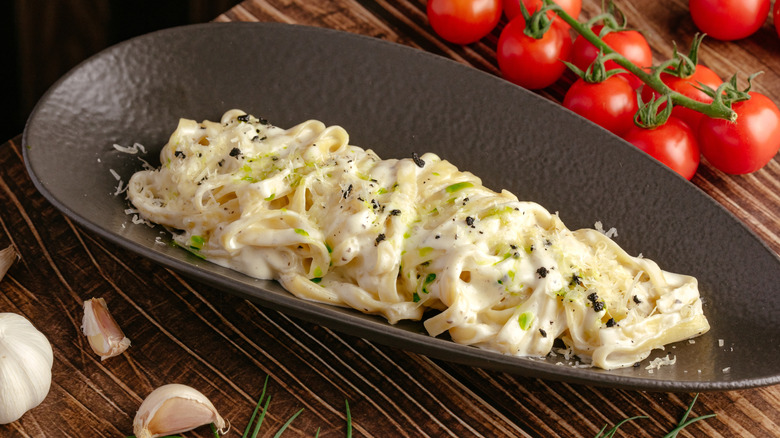
If there's one thing your alfredo sauce shouldn't lack, it's flavor. It's far from a subtle sauce, meant to be packed with cheesy creaminess that is unmistakable compared to similar recipes, like béchamel or white gravy. But if you want the best taste that never compromises on texture, you need mascarpone.
When it comes to mascarpone versus ricotta, the two can often be used interchangeably in many recipes depending on your preferences. But while you can use tangy ricotta to impart a touch of brightness to alfredo, mascarpone is better across the board when used in bulk. It's smooth right out of the package, with a spreadable texture similar to a particularly airy cream cheese. It's far higher in butterfat, so while it's a bit more subtle, it's also richer and gives creamy sauces an extra dose of decadence. This is particularly important if you prefer your alfredo to be heavier on garlic, herbs, or even wine, but you still want plenty of cheesiness.
All this makes it a classic Italian cheese you need to try if you haven't already, incredibly versatile for everything from pasta sauces to desserts. Plus, mascarpone won't outshine other cheeses like parmesan or mozzarella even if you're heavy-handed with it, so achieving a wider range of dairy flavors is quite easy. It's easy to melt and incorporate into any liquid, so whether you're looking to upgrade store-bought sauce or just revise your own recipe, it's hard to go wrong with this perfect Italian ingredient.
Tips on using mascarpone in alfredo sauce
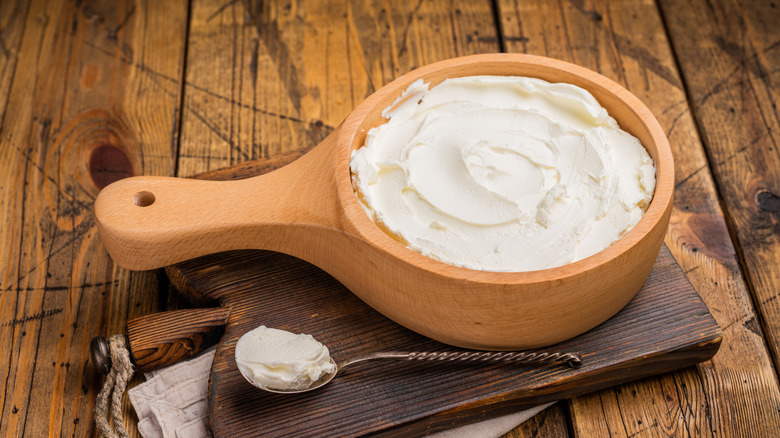
While it's hard to go wrong when using mascarpone in alfredo, the most flavor-packed sauces still need the right ratio of additional ingredients. To get the most out of it and keep your recipes simple, your best bet is to pair your new cheese with the right seasonings and add it in the best way.
For texture, few ingredients can beat mascarpone's ability to create a smooth, velvety alfredo. But while a mascarpone-only alfredo may have great texture, you may notice it missing a little something. The same way adding salt to cookies brings out their sweetness, a bit of sharpness brings out the pillowy, soft flavors of your new ingredient. Contrasting mascarpone with a sprinkle of salty Parmigiano-Reggiano, provolone piccante, or an aged manchego covers the spectrum of cheese flavors quite easily. Plus, you can just sprinkle in these extras over individual portions, ensuring you won't have to use so much that your sauce's texture changes.
Adding cheese too fast or too early messes with the dairy proteins and fats, creating something gluey and greasy rather than smooth. Given mascarpone's fat content of roughly 75%, it's vital that you add it at the very end of a cook, possibly even once the sauce is off the heat. Don't worry; it's hard to beat it when it comes to meltability, and the residual heat should be more than enough to render even a fresh-from-the-fridge tub of mascarpone into a smooth, creamy matrix ready for pasta.