

Johnnie Walker Black Label Vs Double Black: How The Scotch Whiskies Differ
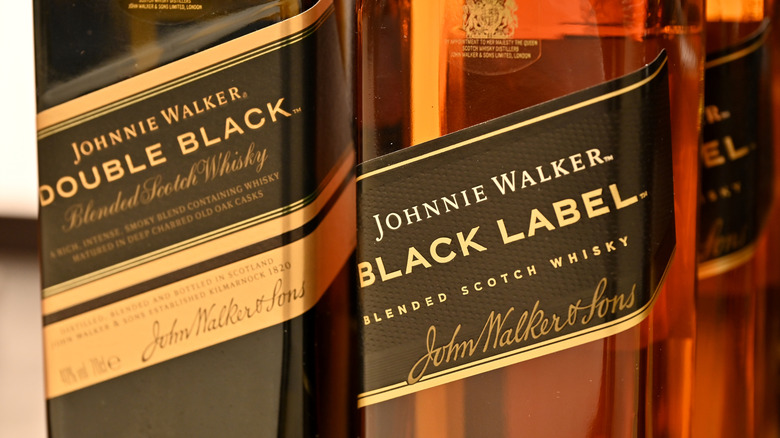
If you're looking to immerse yourself in the suave world of Scotch whisky, there's no better introductory label than Johnnie Walker. Tracing its origins back over two centuries to 1820 in Kilmarnock, Scotland, the brand has since built a global empire. Today, it holds the title of the world's best-selling Scotch whisky brand, famed for quality, heritage, and an impressive catalogue. Chief among its most iconic offerings are Black Label and Double Black. To the untrained eye, the two expressions might not seem too far removed from each other, but to the discerning drinker, they couldn't be more distinct.
Scotch has earned its stellar reputation thanks to its unique provenance. Made and aged exclusively in Scotland, it must, by law, be produced from water and malted barley, aged in oak casks for at least three years, and bottled at a minimum of 40% alcohol by volume (ABV). Beginners should familiarize themselves with the five official types of Scotch whisky: single malt, single grain, blended Scotch, blended malt, and blended grain. It's also worth knowing that Scotland is divided into distinct whisky-producing regions; this is where the differences between Black Label and Double Black begin to form.
Both fall under the category of blended Scotch whisky, but they use different proportions of regional malts in the blend. Another key difference comes down to the age statement — the number on the bottle marking the minimum number of years a spirit has matured in oak. Speaking of oak, the barrels themselves also differ. Double Black is matured in more heavily charred casks, drawing out flavors that produce a distinct expression from Black Label.
Johnnie Walker Black Label is a certified crowd favorite
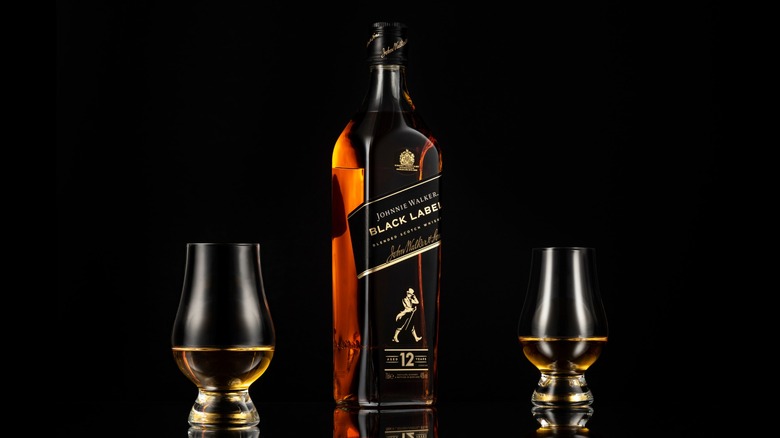
If you've heard of Johnnie Walker, you've almost certainly heard of Black Label. First bottled in 1909, this expression is among the brand's most well-received products, and the fact that it's received a Royal Warrant proves it. For those not familiar: A Royal Warrant is a formal document issued by a monarch or senior royal family member of the United Kingdom. This coveted document allows brands that regularly supply goods to the royal household to display the royal coat of arms on their packaging. Considered to be a sure indicator of both quality and prestige, Black Label still sits at a remarkably affordable price point, and you can expect a bottle to set you back just $12 to $55, depending on size and your location.
What sets Black Label apart from other affordable blended Scotch whiskies, however, is the presence of an age statement. Black Label carries a statement of 12 years, identifying that the youngest whisky in the bottle has been aged for that long. This is certainly impressive, as 12 years is considered to be within the "sweet spot" for Scotch aging. This is particularly pertinent as the cool, humid climate of Scotland slows down evaporation, resulting in the whisky needing more time to concentrate its flavor and develop a smoother texture.
A 12-year age statement therefore reveals to buyers that the whisky has had adequate time to draw the sweeter compounds from the oak barrel, resulting in a smoother mouthfeel and markedly more thoughtful, considered flavor profile. There are much older age-statement whiskies available on the market, but once you get past the 25-year point, you run the risk of veering into territory where the barrel's wood-forward flavors can disrupt the delicate balance of the liquor itself.
Johnnie Walker Double Black is the bolder and smokier sister of Black Label
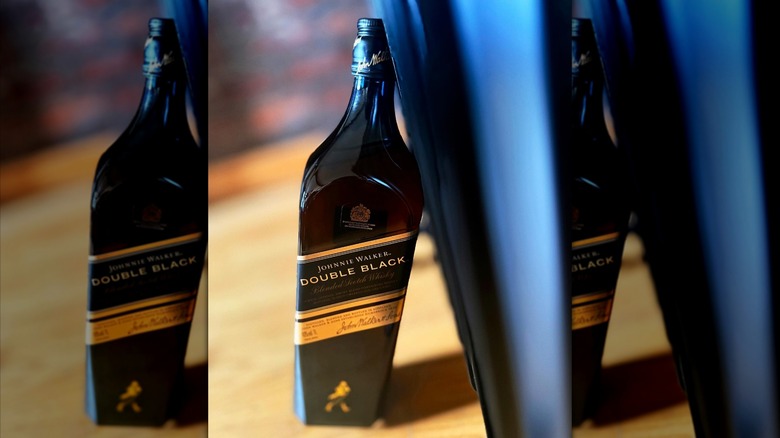
Scotch whisky offers a remarkably diverse range of flavors. This welcome variety comes from flexible aging rules allowing used casks (e.g., ex-sherry, bourbon, or wine), diverse regional terroirs, and the use of peat smoke during malting. The resulting spectrum of flavor can range from light and floral to rich and smoky. Black Label sits somewhere in the middle, making it exceptionally beginner-friendly: It's known to be neither too sweet nor smoky. But for those looking to venture outside their comfort zones, Double Black is an excellent place to start. This expression holds nothing back; it features bold, smoky flavors that give drinkers a true taste of what peaty whisky has to offer.
First released in 2011, Double Black turns up the smoke by blending a higher percentage of smoky malts from Western Scotland. This region — particularly its Western Isles — is the spiritual home of smoky Scotch. Islay, an island (and whisky region) sitting on Scotland's West Coast, is notably famous for its peaty whiskies. The island's characteristically damp climate and coastal bogs are teeming with peat: spongy, organic material made of decayed plants like moss and grass packed tightly in wet ground over thousands of years. In early Scotch making, workers cut peat and burned it as fuel to dry malted barley, inadvertently infusing it with smoky flavors.
Several of Islay's distilleries, such as Caol Ila or Lagavulin, produce much of the foundational peaty malts that go into Johnnie Walker Double Black. But adding smokiness doesn't end before aging. The whisky used for Double Black is aged in extra-charred barrels. In the world of whisky, the longer and deeper the char, the richer, smokier, and bolder the spirit.