

How Often You Should Clean Your Yeti Water Bottle
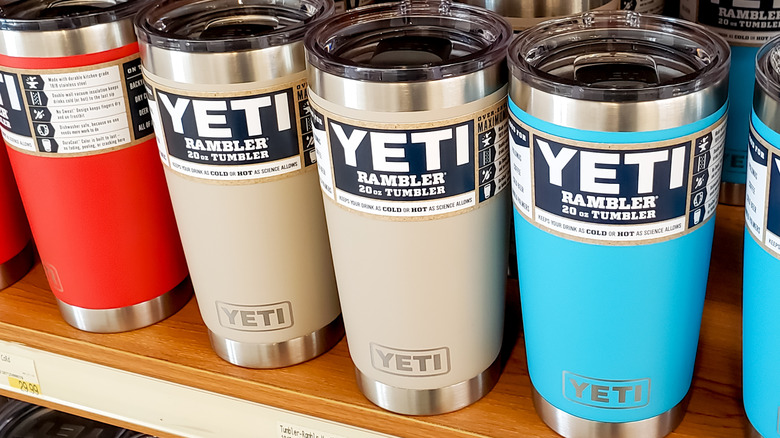
Sometime in the early 2000s, cute, reusable water bottles emerged as the definitive accessory and even a status symbol for many Americans. It started with Nalgene, and then exploded into a variety of other brands that are now household names: Owala, Hydro Flask, Stanley, and especially Yeti. Yeti's popularity might have peaked in the early 2020s, but these ultra-durable and incredibly reliable water bottles are still one of the major brand suggestions whenever someone asks around. However, with great (hydro) power comes great responsibility, and it's a fact that most people do not clean their Yeti water bottles as often as they should. How often is that? It's actually an activity you should partake in daily.
You see, no matter how hygienic the bottle itself might be (and the Ramblers' bodies in particular are made of kitchen-grade stainless steel), the lids tend to be made out of plastic, which is not mold- or bacteria-resistant. Add in the fact that these bottles hold water, a key component of mold and bacteria growth, and you have a breeding ground for some nasty stuff growing inside your Yeti. This is why it's best to get in the habit of cleaning it every day, or, perhaps more realistically, every other day, so mold doesn't have any opportunity to fester. It's worth noting, too, that a regular, good scrub also takes care of two of the five most common Yeti water bottle problems.
How to properly clean your Yeti water bottle
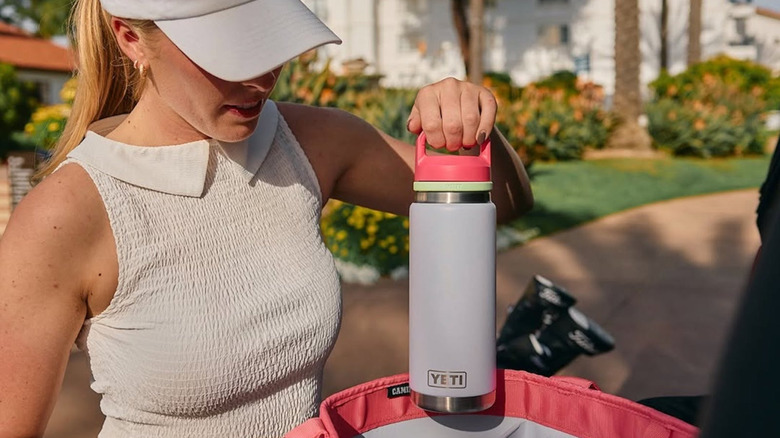
If you've gone longer than you care to admit without cleaning your Yeti water bottle, you're not alone, and there's no time like the present. Here's the thing: Yeti bottles are some of the easiest to get sparkling and fresh again because, unlike most other bottles on the market, the whole thing can go in your dishwasher. That's right, lid, body, everything, though you will want to separate all the parts, including the gaskets, rubber sleeves, straws, etc., and place them in a utensil compartment for safekeeping.
If you're not ready to run your dishwasher, or you don't have one, they can also be washed by hand. You'll still want to pull all the pieces apart and use some mild dish soap to clean everything. Then, set everything out to dry, and don't put it back together until all the pieces are as arid as the desert, or else lingering moisture can set off the molding process once again.
If you notice lingering stains in your Yeti, there's a quick fix for that. Baking soda, which is a natural cleaner for your kitchen, is also handy for the interior of your water bottle. Just make a paste with it by gradually adding water, slather it over the stains, and give it a scrub with a non-abrasive sponge, like a Scrub Daddy.