

The Type Of Whiskey Cowboys Imbibed In The Old West
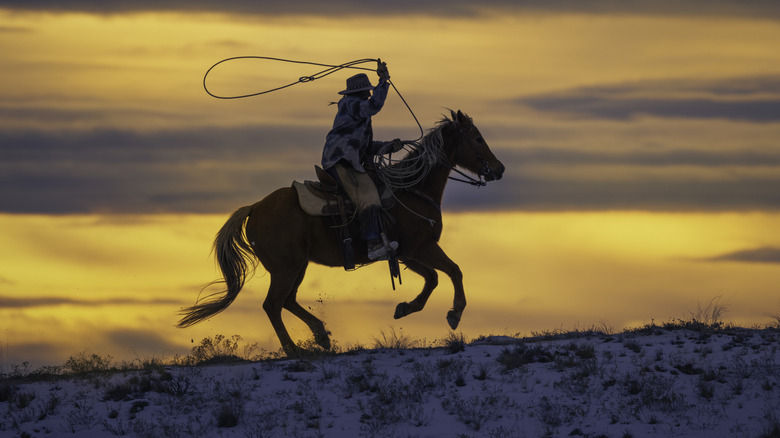
The Wild West is imprinted in our collective psyche as a near-mythological era of larger-than-life battles, folklore, free-spirited cowboys roaming barren plains, and, more often than not, the foods and drinks that accompanied them. Alongside the meaty snacks ranchers kept at hand, whiskey was a fixture, usually pictured being gulped down at a dusty saloon bar, but there wasn't a single "cowboy whiskey." Rye and bourbon were both available in the Old West, alongside other American grain whiskeys, and what would end up in your glass depended heavily on location, price, and what a saloon stocked — and whether or not you knew someone who made their own when supplies ran dry.
Whiskey had a clear role in the region's traditions despite its historical roots in Britain, which is evidenced by material we find in newspaper archives. In 1886, "The Daily Tombstone" in Arizona ran an advertisement for Simonds' Nabob Bourbon Whisky, while six years later, a paper in Nevada also advertised different kinds of whiskeys, bourbon, and rye. Much of this association is rooted within the United States' own broader history. There was a long-standing tie between rye and the country, namely because distilleries in eastern states, such as Maryland and Pennsylvania, were already distilling the product well before the "Wild West" period we've come to know. Bourbon also had an established presence since the late 18th century — and if you need any help distinguishing whiskey and bourbon, understanding why not all whiskeys count as bourbon, just remember most of the mash in bourbon must be corn.
But while Hollywood established the association between whiskey and the Old West, there was significantly more diversity in terms of drinking options. The Transcontinental Railroad helped bring bottled booze to drinking establishments throughout the region, even in the smallest of towns, where you could find selections like beer, wine, gin, and rum, as well as an Old West tried-and-tested bacchic darling, sarsaparilla.
Old West whiskey wasn't always the best quality
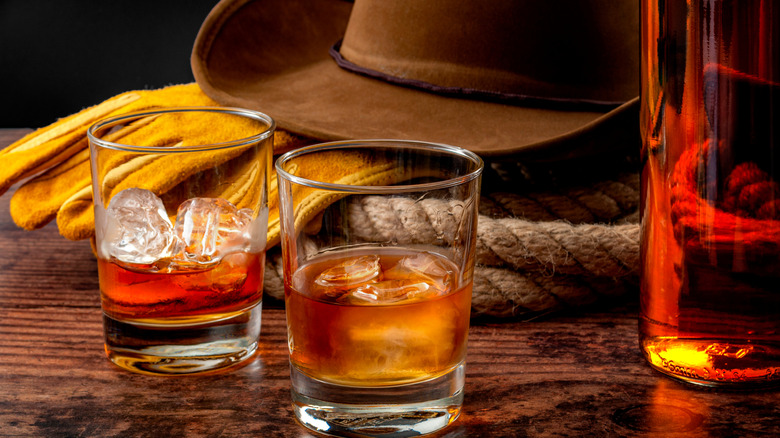
Just as there was a significant variety of whiskey being served across bars in the Old West, the quality you'd be getting in each pour could also vary tremendously. The era's association with low-quality, throat-scorching rotgut whiskey depicted in Western movies isn't entirely unfounded — saloons would often try to increase their profits by serving low-quality spirits that had been doctored, using a range of often outlandish ingredients that would make your drink more of a poison than anything else. Regulations on what you'd find in your glass came in towards the later end of the century: 1897 for the Bottled-in-Bond Act passed by the federal government, for instance, introduced tight controls on how spirits could be produced and labeled.
One of the big differentiators with modern-day whiskey quality was the aging process itself. Current regulations note that aging is defined by the duration of time a whiskey spends in an oak container, which is what gives the drink its distinctive taste and character. For drinkers out in the Old West, however, their saloon rotgut could be significantly unaged, which can make it harsh on the tongue.
Rotguts, however, aren't the full story of what you'd be served on the frontier. High-quality and well-established whiskeys could also be found in saloons, as evidence from the time shows. Premium spirits were often known as the "good stuff" or "top shelf," with premium brands like Old Overholt shipped from the East being recognized above poor-quality local barrel mixes. Ultimately, cowboys could be faced with the good, the bad, and the ugly of whiskey drinks — there wasn't one single Old Western experience.