

How Is Thick Soy Sauce Different From The Sauce You Dip Sushi In?
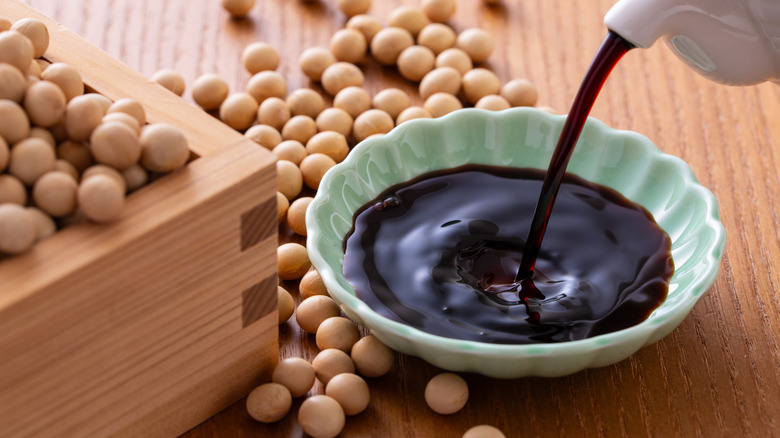
Soy sauce is a true cornerstone of Asian cooking. Originating in China over 2,200 years ago, it's a fundamental source of the fifth flavor, umami. Used in everyday cooking across East, Southeast, and other regional Asian cuisines, it's no surprise that there are many different types available on the market. Many people are familiar with light and dark soy sauce, but one lesser-known variety is Taiwanese thick soy sauce — aka jiàng yóu gāo, or "soy paste" — which stands out for its use of sugar and starch to give it a thicker, glossier texture.
Generally, the best kind of soy sauce for sushi dipping is Japanese shōyu, a distinct style of soy sauce. It's made by combining cooked soybeans and wheat, adding kōji (a type of mold), and salt, then letting that mixture ferment. There are five recognized categories of shōyu, with koikuchi-style being the most popular and all-purpose. Contrary to popular belief, this dark soy sauce is better for dipping than light shōyu (usukuchi shōyu), since it develops a more complex blend of sweet and savory flavors. Usukuchi, despite being light, is actually the saltier of the two, which can overpower the delicate flavors of the rice and fish.
Where koikuchi-style shōyu derives its sweetness from fermentation, thick soy sauce instead gets it from adding sugar to standard soy sauce, boiling it, and then reducing it down. The addition of starch gives jiàng yóu gāo a texture reminiscent of thick, viscous oyster sauce. Certain types of shōyu can also be thicker, but this is derived from either using no wheat or re-fermenting the batch rather than adding starch-based thickeners.
How is thick soy sauce used in Taiwanese cooking?
Taiwan is responsible for plenty of food innovations. Back in the 1980s, vendors combined black tea, milk, and chewy tapioca pearls to create the universally beloved bubble tea. Or maybe you're a fan of delicious Taiwanese-style beef noodle soup, considered by many to be the national dish of the country. Long story short, Taiwanese food is operating on another level, and behind many of its most delicious dishes is thick soy sauce. Kimlan, a notable Taiwanese producer of thick soy sauce, credits itself with inventing the product back in 1958.
Just as Japan has many versions of shōyu, Taiwan has several different types of soy paste of its own. In the south, it stands out for often being made with black soybeans, whereas most standard soy sauce uses yellow soybeans. Some argue that the difference is minimal, but several connoisseurs claim that black soybeans give the sauce a more pronounced flavor and aroma. Southern soy paste also tends to be saltier than its northern counterpart, which favors yellow soybeans and sometimes adds licorice as a flavoring.
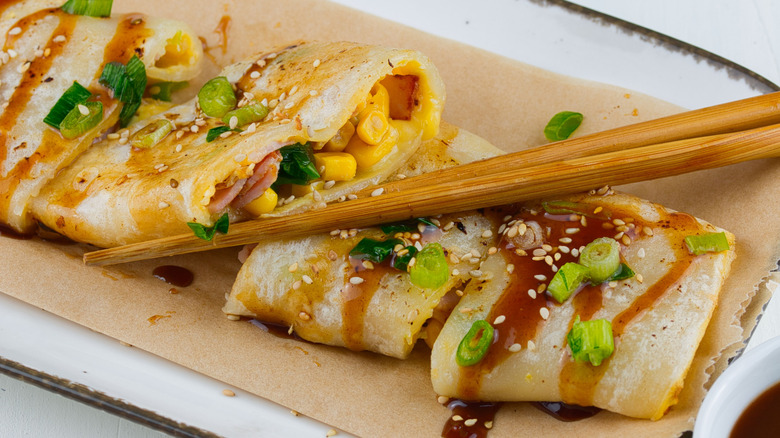
Soy paste's thick, viscous texture makes the sauce a kitchen all-rounder and a pantry essential. You'll most commonly find it in breakfast-favorite egg crepes (dan bing) or night-market essentials like scallion pancakes (cōng yóu bǐng). Its uses don't stop at sauce, either. It shows up in braises, stir-fries, and meat or vegetable glazes, too. One particularly foundational Taiwanese braising liquid is lǔ wèi. This flavorful liquid combines water, soy sauce, soy paste, and aromatic spices to tenderize meat and fill it with flavor. If you don't have soy paste on hand, oyster sauce is considered a worthy substitute.