

Why Azerbaijan Loves The Simple Pomegranate
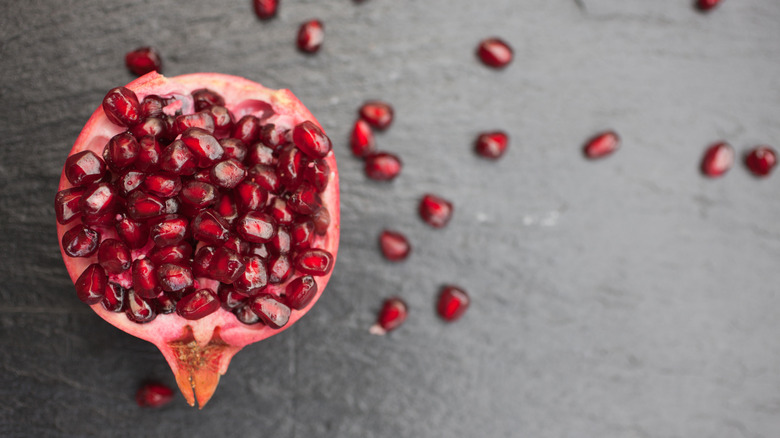
In some places, pomegranate is more than a mere snack or salad garnish, and has a much more special significance — among the many things you might not know about the fruit. Azerbaijan is one of them. Its story with the ingredient, or "nar" as it's called in Azeri, is tied to the Caucasian state's traditions, agriculture, art, folklore, and overall national identity — no wonder the country's tourist board describes it as the "king of fruits."
The symbolism is just as embedded in the local culture. In Azerbaijani traditions, pomegranates are associated with long-term productivity and abundance, with local legends associating them with passion and love. There's a religious component, too, as they have been depicted as a symbol of eternity. The pomegranate's ruby-hued arils, often compared to jewels in appearance, have a profound historical place in local mythology, a recurring motif in classic Azerbaijani folk tales such as in The Pomegranate Maiden, a story of a prince who falls in love with a magical bride hidden inside the fruit.
Azerbaijan's affection for pomegranate is strongly tied to one specific area, the central region of Goychay, where an annual festival, Nar Bayrami, takes place around the October-November harvest. The occasion isn't a merely a celebration of a now-trendy fruit, but a moment where the crop and all that surrounds it — including the livelihoods, the passions, and the hard labor of those who cultivate, cook, and preserve the ingredient — is commemorated. UNESCO's own description of the celebration says it appears everywhere from traditional meals and poetry to arts, crafts, myths, and storytelling. Given its rich heritage, it's no wonder that it made the organization's Intangible Heritage list in 2020, merely 14 years after the festival was officially launched.
How Azerbaijan uses pomegranates in its cuisine
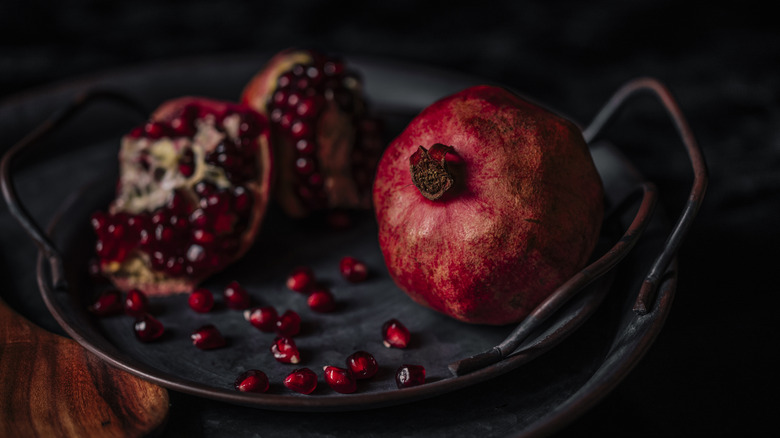
Pomegranate has a highly versatile function in cooking. You can add it to savory and sweet dishes, from beef skewers to indulgent toast and nut butter snacks like Padma Lakshimi's own favorite. But when it comes to mastering the use of the pomegranate, we can take a note or two from Azerbaijan. The fruit makes an appearance earlier in the day, as it's common in a breakfast dish known as narnumru, where fried eggs are cooked on top of a bed of pomegranate arils — a true feast for the eyes.
Unsurprisingly, the Caucasian country's cuisine also treats the fruit as a main character rather than a quirky gastronomic sidekick, providing a harmonious sweet balance to umami-rich dishes. Its appearance in hearty mains is well-established. Take nar govurma, for instance — a dish from Central Aran made with either beef or lamb sauteed with some onions, chestnuts, and then cooked with both the arils and the fresh pomegranate juice, coating the meat exquisitely.
Concentrated forms of pomegranate are also a staple within a broad range of Azerbaijani dishes. A dense pomegranate molasses, narsharab, commonly accompanies Caspian fish, providing a tangy counterbalance to any oiliness. You can even find it hidden within your meal: gutab, a meat-stuffed flatbread, often has the sauce or seeds mixed inside the fillings. Azerbaijani cuisine serves to show that beyond pomegranate's clear beauty and cultural symbolism, its functions in the kitchen are potentially limitless.