

Coke Vs Pepsi: Why The Powerhouse Sodas Taste Different
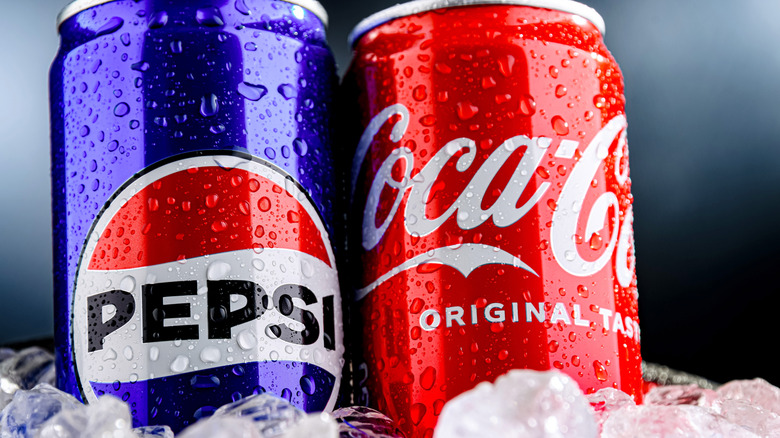
Coca-Cola and Pepsi are the unmistakable titans of the soft drink world. The cola-flavored, caramel-hued carbonated beverages are an omnipresence. Selling billions of servings a year, they're a must with almost everyone's takeout order, splashed across billboards in virtually every major city, and for decades, hiring the likes of Madonna, Britney Spears, Michael Jackson, Whitney Houston, and other pop royalty for their commercials. But when it comes to their distinct flavor, how exactly, and why, do they differ?
Coke and Pepsi don't publish their exact recipes, but while both have a similar flavor base — cola, referring to the kola nut — and similar ingredients, they noticeably differ in a way that is picked up by blind tasters. Coke is generally perceived as spicier, sharper, and darker, with vanilla and raisin-like notes; Pepsi, on the other hand, evokes a sweeter, lighter sensation, with a bright, citrusy profile. Things get even more muddled when comparing the sugar-free versions of the beverages — diet and zero-sugar sodas aren't exactly the same — which are increasingly popular alternatives; then, we need to look at the differences between U.S. and international variants, and the countless flavored types, such as vanilla, cherry, lime, and mango. Here's a full breakdown of how the two brands differ.
Coke is sharper, crisper, and more acidic
Coca-Cola has been around since 1886, when the drink was first served in Atlanta by pharmacist John Pemberton. The ingredient list on a modern American can is pretty specific and concise: carbonated water, high-fructose corn syrup, caramel color, phosphoric acid, natural flavors, and the biggie: caffeine. Crucially, regular U.S. Coke does not list citric acid, which Pepsi does. Coca-Cola itself says phosphoric acid supplies the drink's tart bite while the caffeine contributes a certain degree of bitterness. The elusive "natural flavors" do the rest of the job, and the precise blend remains one of the company's most highly guarded secrets.
The particularly sharp impression which Coke provides boils down to a balance between sweetness, acidity, and carbonation rather than a single magical ingredient. Many note Coke is especially strong on carbonation and complexity; on places like Reddit, tasters repeatedly praised its fizz, while also finding its flavor profile deeper than Pepsi. Coke also contains 39 grams of sugar per 12-ounce serving compared with Pepsi's 41 grams, leaving ever-so-slightly less sweetness to soften those tart, bitter, and spiced undertones. Nutritionally, the difference is almost negligible, but when two soft drinks share such similar foundations, small changes can have a decisive impact.
Even then, not every Coke is made equal, nor do they taste exactly the same. The American variety generally uses high-fructose corn syrup, whereas Coke imported from Mexico famously uses cane sugar, potentially changing the way its sweetness comes across — one of the reasons the country has become a pilgrimage site for Coke devotees. How it's dispensed also matters — something particularly obvious when considering why Coke tastes better at fast foods like McDonald's, for instance.
Pepsi is sweeter, lighter, and more citrusy
Pepsi — birthed in 1893 by a North Carolina pharmacist as a digestive aid and called Brad's Drink — might look similar to Coke, but real soft drink aficionados can tell the difference. Pepsi's ingredient list reveals one of the clearest reasons it heads in another direction from its competitor. Alongside carbonated water, caramel color, caffeine, natural flavor, and phosphoric acid, Pepsi has citric acid while listing both high-fructose corn syrup and sugar. Citric acid brings another dimension of acidity to the drink, but one that's more commonly associated with fruity and citrus-forward flavors. Given Pepsi's higher sugar content, it helps produce that brighter, lighter first impression rather than Coke's darker, spicier twist.
The difference goes beyond Coke-versus-Pepsi fan war folklore. Pepsi actually takes the highest overall score in several cola blind tastings (everyone remember the Pepsi challenge?), with participants particularly enjoying its immediate sweetness — although some feel it verges on the syrupy. Put plainly, the extra sugar doesn't just make Pepsi taste like a sweeter Coke, but the additional acid changes how that sweetness comes across, bright and light.
This links to a particularly interesting contradiction, commonly referred to as the "Pepsi Paradox": while Pepsi tends to outperform Coke in blind tasting, Coke still possesses greater brand dominance, despite Pepsi's heavy investment in star-laden commercials and the Pepsi Challenge launched in the 1970s.The rivalry extends beyond mere customer loyalty, as fast food restaurants themselves often have to pick which of the two colas they get to serve.