

Why You May Want To Avoid Fruit Without Stickers
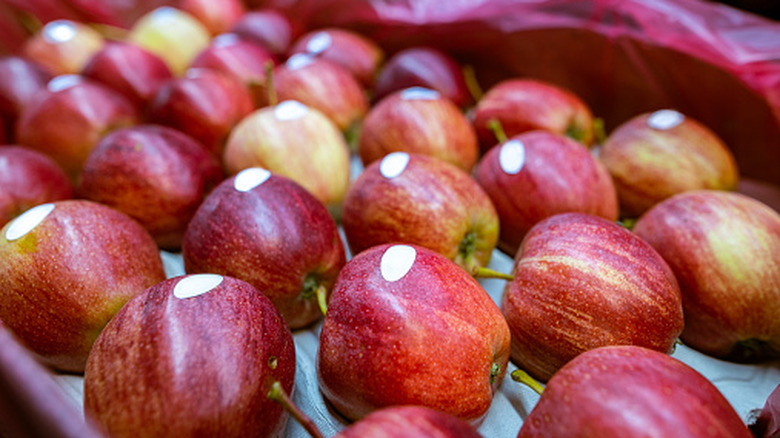
When shopping for fruit, most people don't give a second thought to the small stickers plastered on the surface. Sometimes they fall off on their own; other times you'll need to peel them off yourself. Simple, right? Well, not always. No one's out here eating fruit stickers on purpose (we hope), and peeling one off might seem harmless enough. But in certain cases, that small act can create tiny tears or bruises on the fruit, which can quickly shorten its shelf life.
There are several reasons why even the smallest of tears in the skin can spell trouble for your fruit. Think of the skin as the fruit's own personal bodyguard, keeping oxygen and bacteria out. Once that barrier breaks, oxygen touches the exposed cells and kickstarts a chemical reaction called oxidation, which results in enzymatic browning. This is what's responsible for turning the flesh of a fruit a dark, dull brown color. It doesn't take long to start, either. Just think of how fast a freshly sliced apple goes from crisp and white to soft and slimy. To make matters worse, damaged plant cells release an enzyme called polyphenol oxidase, which speeds up that browning and breakdown even further. There's a hygiene risk too. Germs and microbes that land on the skin can usually be washed off, but once they're inside the fruit, that's no longer an option.
Some fruits are more at risk than others. Keep an eye on soft, delicate ones like peaches, plums, and nectarines, which bruise and tear without much effort at all. Firmer fruits like apples or oranges are usually on the safer side. But the rule of thumb should be applied equally; let the stickers hang around until you're ready to eat, and skip any fruit with tears or bruises.
How to extend the shelf-life of damaged fruit
Once a knife cuts into fruit, it's instantly considered damaged, even if it still looks fine. If you're not the wasteful type and want to save some leftover apple slices or orange peels, you've got to store them properly to avoid the rapid onset of oxidation. Since the main culprit behind oxidation is oxygen, the most logical way to preserve damaged fruits is to deprive them of exactly that. Store them in an airtight container, or just wrap them tightly in cling film. Even soaking your slices in a saltwater bath can delay the onset of oxidation. While none of these options are a permanent fix, they'll definitely help to buy you some time. It's also important to store any damaged or bruised fruits in the refrigerator to slow down any potential bacterial growth.
In a perfect world, fruit would last forever. But alas, that sadly isn't the case. Several of our favorite fruits — think apples, tomatoes, and bananas — are climacteric, meaning they keep ripening after being harvested. This means that once they've left the store, you're racing against the clock. One by-product of that ripening is ethylene gas, a natural hormone that's the reason bananas go from green and hard to soft and yellow. But once fruit has been cut and damaged, a burst of ethylene gas gets released as a result of the stress. Not only does this speed up the spoilage of your cut fruit, but it can also trigger ripening in whatever other climacteric fruit happens to be sitting nearby. To stop one piece of fruit from spoiling a whole bunch, keep any cut or damaged fruit far away from anything newer and unspoiled.