

15 Companion Plants For Your Blueberries That Will Lead To A Better Harvest
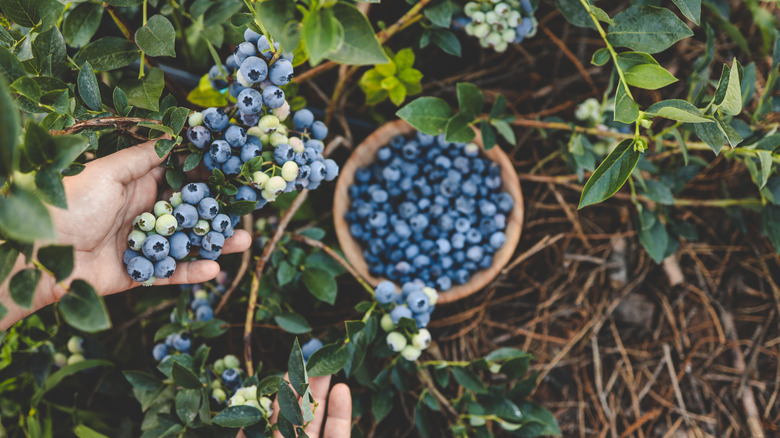
Compared to other berry plants, blueberries can be a bit finicky about their growing conditions. While creating a DIY soil mixture, guaranteeing good drainage, and providing plenty of sun may all help them get started, picking the right companion plants is just as important if you want to maximize your harvest. A companion plant is a second plant that helps your first plant in any number of ways, including by preventing disease or deterring insects.
Like all companion plants, your first step should be finding something that grows in the same conditions blueberries thrive in. They love a soil pH around 4.5 to 5.0, so an area that's just a touch acidic is great for them. While the plant itself may grow fine in partial shade, you'll notice a distinct lack of berries unless you guarantee at least six hours of good sunlight a day. These conditions bode well for plenty of plants, but others like acid-loving nightshades or delicate squashes may struggle in this environment.
You'll also want to avoid planting blueberries near heavy feeders that hog all the nutrients and anything that grows too aggressively. Plants that reproduce through rhizomes, like raspberries and mint, may start out fine, but you'll notice that they tend to take over the patch after a year or two. Still, if a prolific grower doesn't have a very deep root system or if you're fine with them not producing as much as your blueberries, there can still be advantages to putting them in the ground nearby. Provided they aren't showing much competition, most plants are perfectly fine near your bushes.
Black-eyed Susans are season-long bloomers for pollinators
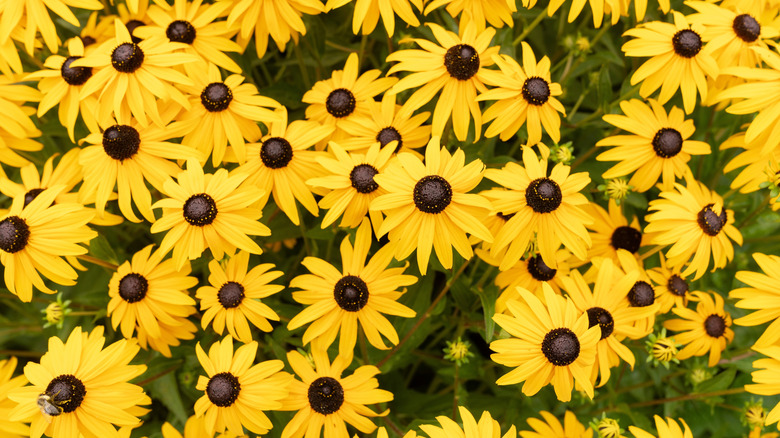
Blueberries are highly dependent on cross-pollination with similar varieties, such as planting Titan and Powder Blue bushes next to each other because they're both rabbiteye breeds. But to get the most out of this, you need pollinators, and black-eyed Susans bloom practically all spring and summer long, bringing in all the bees, hummingbirds, and wasps you could want.
Creeping thyme is a double-threat ground cover
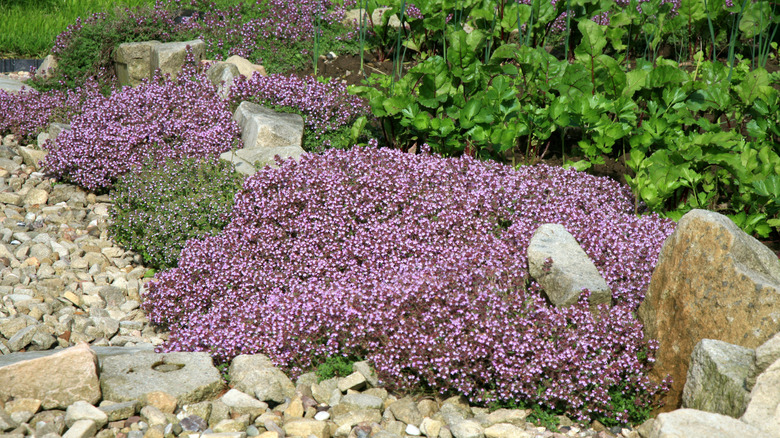
Ground cover plants hug the soil and provide shade, preventing moisture from evaporating. Not only does creeping thyme offer water retention, but its powerful odor is also great for keeping insects and small mammals from nibbling on your berries before you get a chance to pick them.
Yarrow is a low-maintenance flower that attracts the perfect bugs
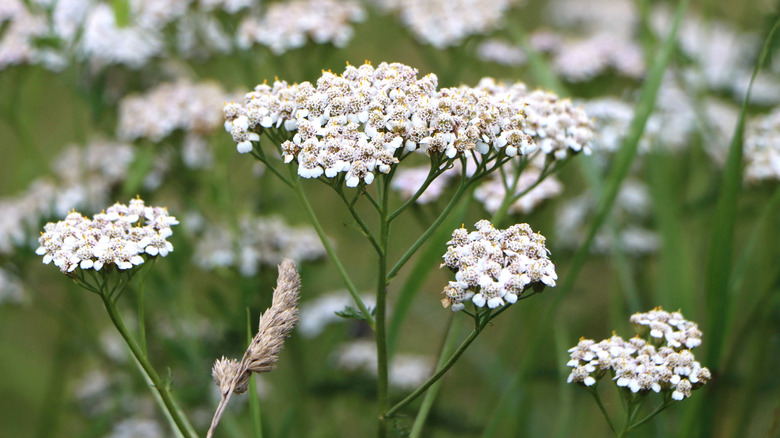
Yarrow is native to most of the Northern Hemisphere and needs very little care once it's established. It's also the perfect home for ladybugs, which may look cute but are actually some of the most voracious eaters of aphids, one of blueberries' worst pests.
Basil is the perfect companion plant for just about everything
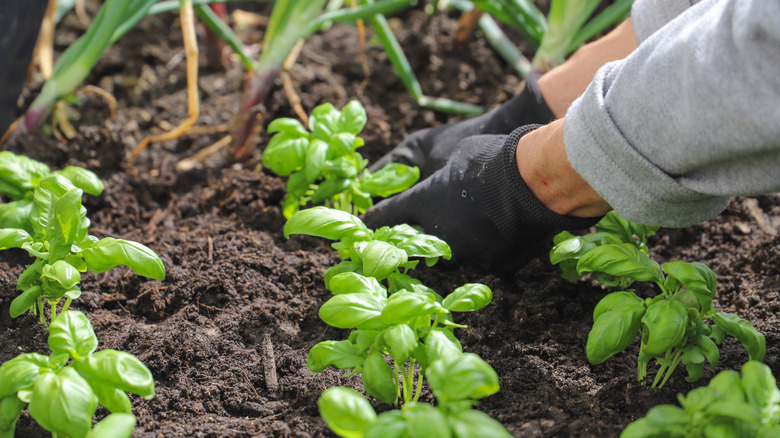
You should always plant basil next to tomatoes because its powerful odor is great at repelling bugs, and the two just go together in so many recipes. However, it's also great for blueberries because it requires very few nutrients, leaving plenty for your heavy-feeding bushes to produce tons of fruit.
Lupine is a pollinator-attracting legume
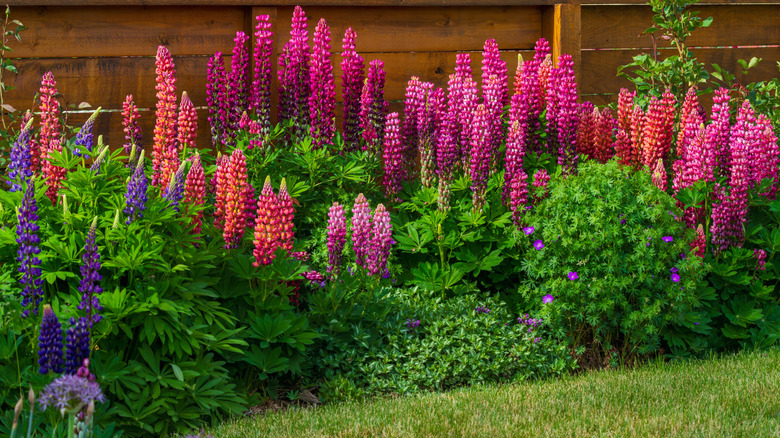
Just about every flower is great for attracting pollinators, but lupines are particularly well-suited for berry patches because they're also a legume, like peanuts. This family of plants is great at fixing nitrogen in soil, which helps your blueberry bushes develop the leafy foliage they need to photosynthesize and get their berry-producing energy.
Nasturtium is the perfect trap crop for blueberry bushes
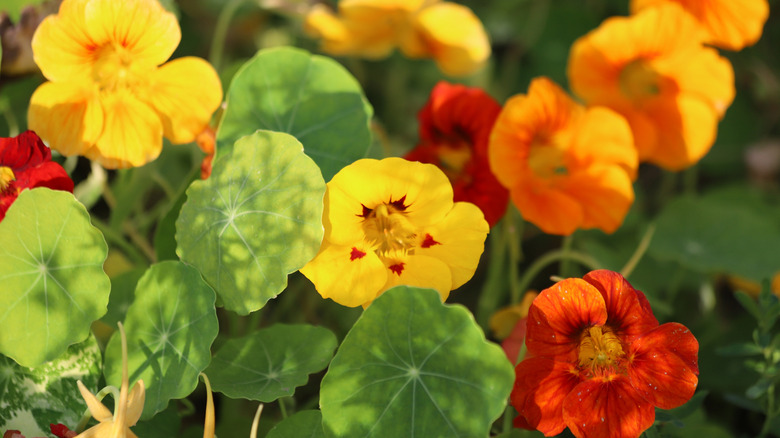
No matter how thorough you are, some pests will always find their way to your berry patch. That's why you need something like nasturtium, an aggressively spreading plant that not only brings in pollinators but is also highly attractive to blueberry pests and distracts them from your more valuable fruit. Just be sure to keep their growth in check, so they don't overrun your bushes.
Crimson clover comes with some beneficial pirates
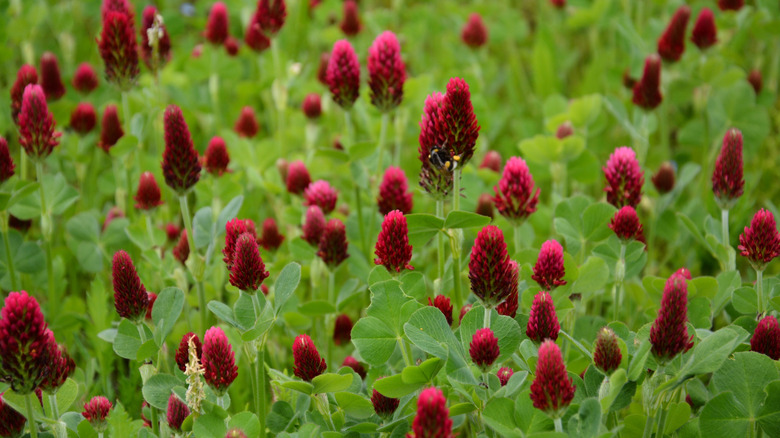
Crimson clover is an extremely popular ground cover because it blooms with beautiful red bottlebrushes that attract tons of pollinators. However, they're also a preferred home for pirate bugs, diabolical little pest controllers that love to feed on fly eggs, aphids, and just about anything else that could threaten your berries.
Pine trees are the natural companion to wild blueberries
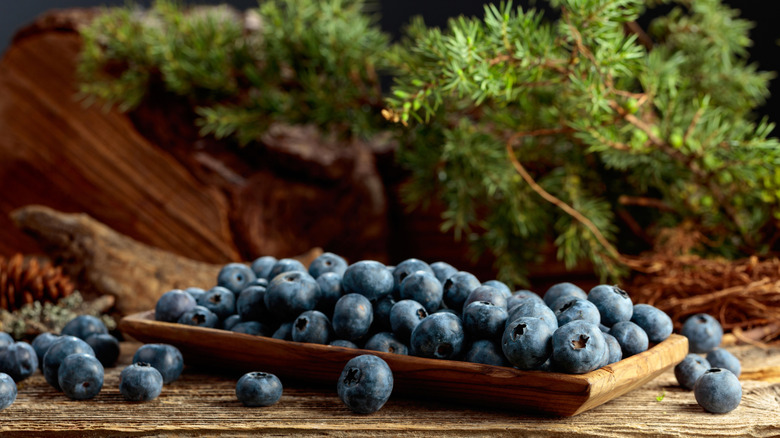
It's quite common to see blueberry bushes in pine forests because their shed needles provide the perfect acidic mulch. While you'll have to wait quite a while for one to grow around your bushes, planting blueberries 15 or so feet from a pine tree's trunk is a great way of guaranteeing the right soil conditions right off the bat.
Comfrey makes deep nutrients more accessible to your blueberries
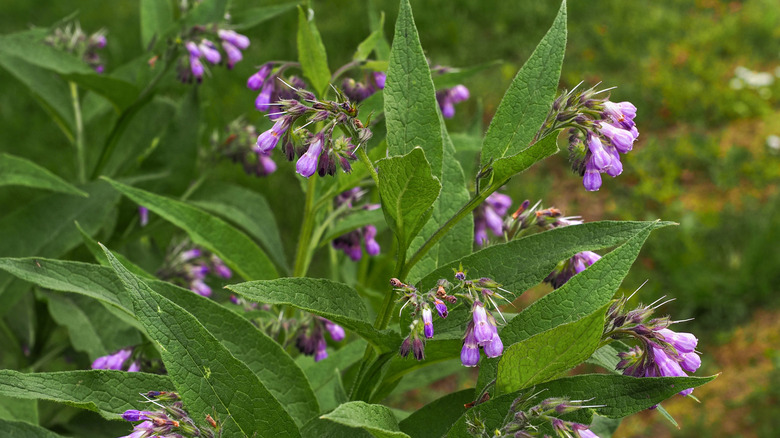
The biggest problem with companion plants is that they typically spread their roots at the same level as your blueberries. However, comfrey is famous for its incredibly deep root systems, which access unobtainable nutrients and store them in its leaves, which it later sheds into a delicious mulch your bushes will love.
Strawberries give you more moisture and an extra snack
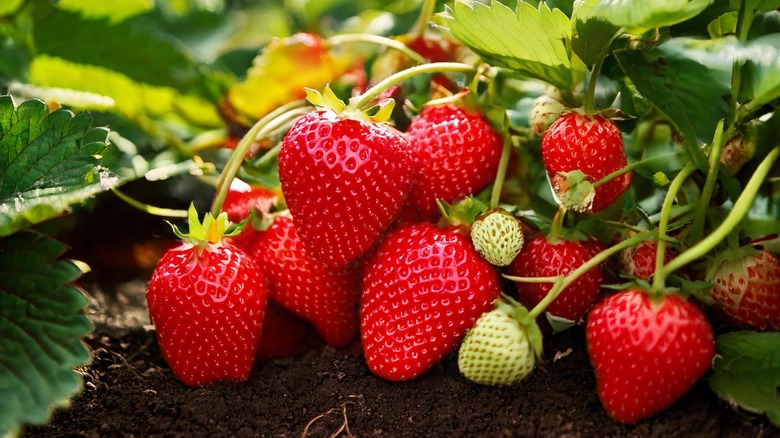
Another popular summertime fruit, strawberries are a surprisingly good companion plant for blueberries. Acting as a ground cover, they retain soil moisture quite well, but they also produce berries! While your blueberries will hog most of the sunlight and nutrients, you'll still get a few strawberries if you maintain the soil.
Grass is a surprising fix for a common blueberry problem
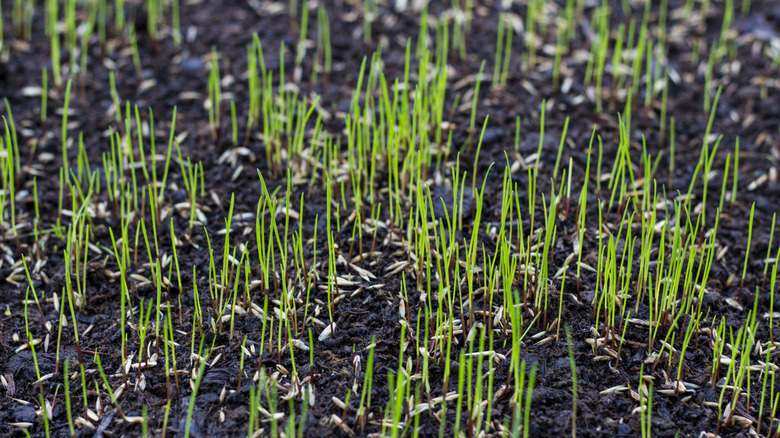
One of the biggest problems blueberry growers face is called iron chlorosis, essentially an iron deficiency that prevents them from developing chlorophyll correctly. However, grass is great at producing a chemical that makes the iron in soil more accessible, and it has a shallow enough root system that it shouldn't compete with your bushes for food.
Hedge-growing roses are the perfect, giant pollinator attractor
Every pollinator loves roses, so when you cultivate a big, beautiful hedge, you're essentially creating a giant wall for them to visit. While you'll need to keep your bushes a few feet away to prevent competition and give each plant its respective acidity requirements, a hedge of roses guarantees regular pollinator traffic that will always stop and visit your berries.
Chives are the perfect, low-stress herb companion
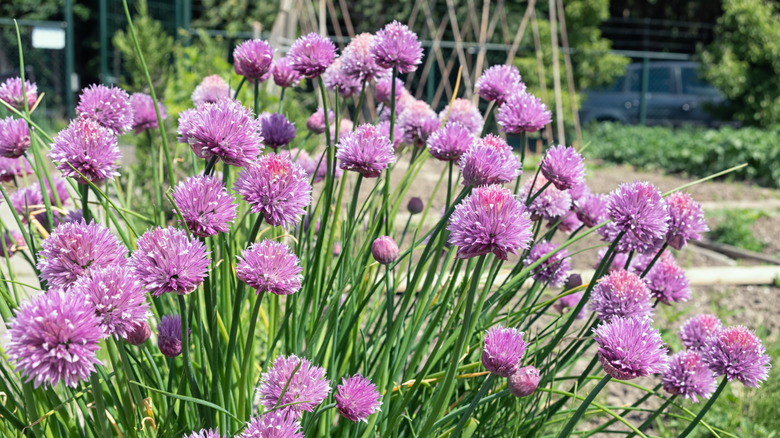
Chives produce beautiful purple flowers that attract pollinators as well as give off an oniony smell that pests hate. While they may not grow incredibly well under a blueberry bush, growing chives is more about quantity over quality thanks to their small size, so you'll be sure to get some harvestable herbs for your kitchen.
Crape myrtles can provide the perfect afternoon shade
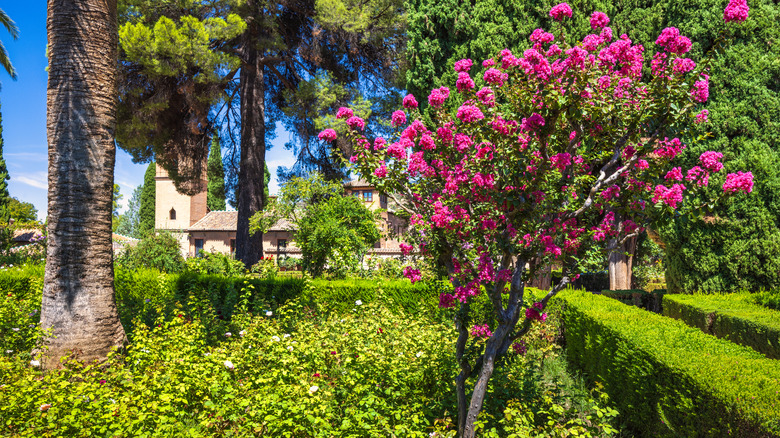
Late afternoon sunlight tends to be higher on the UV index, which can stress out your plants. If you find your blueberries need a bit of afternoon shade, crape myrtles concentrate their foliage and flowers quite high up, leaving plenty of room for your blueberries to stretch their own branches while getting a bit of sun protection.
Ferns are a highly fertilizing cover crop
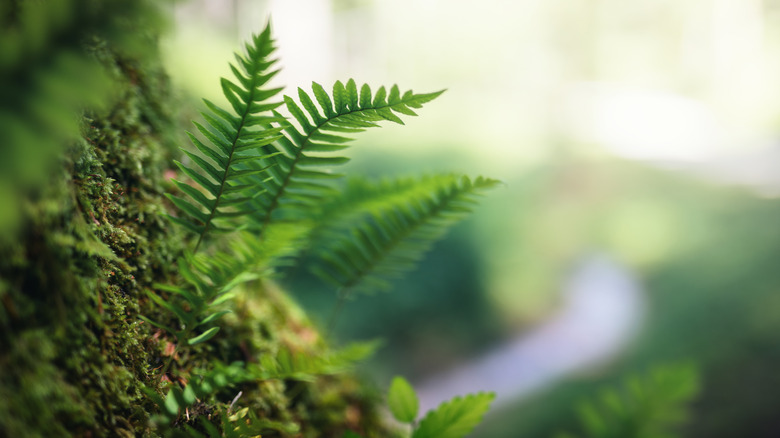
Most cover crops are great because they don't need many nutrients, but few add back to the soil quite so much as ferns. Known for budding, growing, then dying back multiple times in the same season, ferns are a solid way to guarantee moisture, organic matter, and plenty of nutrients throughout your blueberries' growing season.