

What Subway Does With Unsold Food
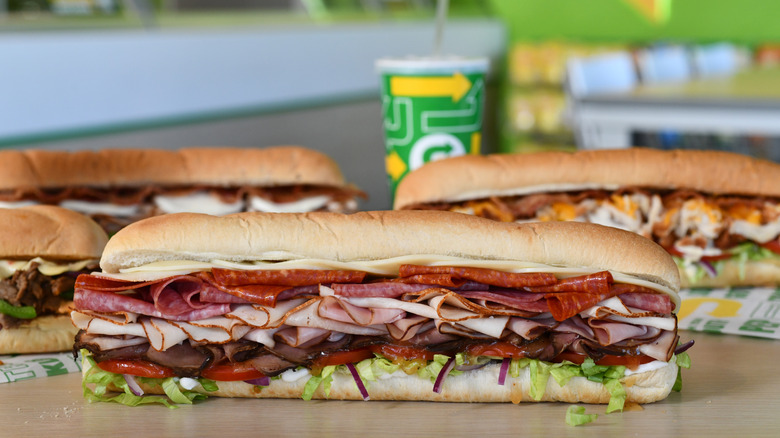
Fast food is known to have a waste problem. So when it comes to sandwich king Subway, many might wonder, what exactly happens to all the food that didn't make it into their sandwich? The short, sad answer is that much of Subway's unsold food ends up in the garbage. However, this doesn't mean that rows of completed foot-longs are waiting around for their own demise. Rather, the main casualties tend to be hot fillings, prepped ingredients, cookies, and incorrectly assembled subs, according to folks on Reddit.
Subway doesn't provide much official information on the topic beyond stating, "Our restaurants are required to maintain a clean environment and adhere to all local waste management and waste sorting regulations." Much of what is known about the fate of its unsold food is anecdotal evidence provided by self-proclaimed employees on social media. For example, on Reddit, staffers discussing the matter spoke of having to throw out heated meatballs, tea, prepped avocado, soup, and food at its expiry date. One worker posted an image of a tray of cookies headed for the dustbin, while another said burned or damaged ones can be taken home. While these first-hand testimonies may not have been independently verified, they offer a peek into what could be going on behind the scenes.
The fast food sandwich chain's setup naturally limits some waste, with meats, cheeses, and vegetables added to the bread as each customer shuffles down. Being able to gauge how much of each item should be on the line at once doesn't mean those ingredients can wait around forever, though. Once an item has passed its expiration, its safety to customers is compromised.
Unsold food rules vary by Subway location
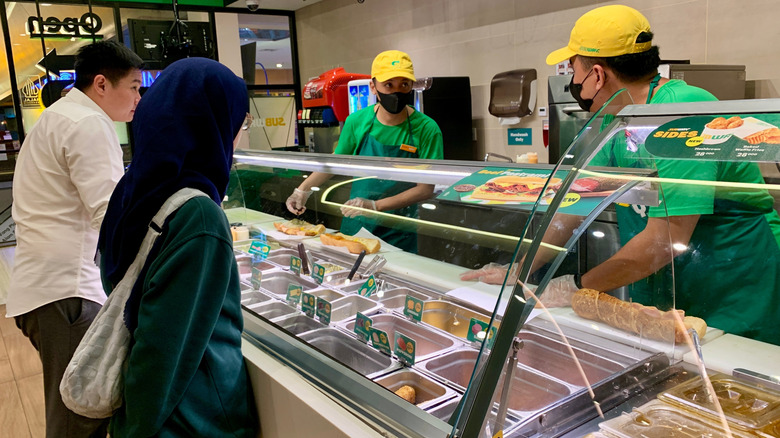
The reason Subway's unsold food can become trash at one establishment and a staff meal at another is because the restaurant's 35,000 locations are independently operated. While the corporate branding and menu may be standardized, the person in charge is a local operator.
There is some debate as to whether employees should take discarded food home. Some aren't especially convinced, like this Reddit user: "Too many people accidentally 'ruin' food, or make too much, when they can take it home afterwards. I don't even think most people do this consciously, they are just less careful than they should be because they are incentivized not to care as much about mistakes." They added that the amount of waste dropped after management disallowed the practice. While this is just one person's experience, it might explain why a manager might prefer the garbage can.
Donation is another possibility, and policy makes it viable. The Bill Emerson Good Samaritan Food Donation Act provides some liability protection for food donations to nonprofits, but not all businesses are familiar with this law. Other restaurants may not have the staffing, logistical set-up, or space to accommodate donation storage and transportation.
Subway currently promotes hunger-relief work through the Subway Cares Foundation, but it doesn't describe a chain-wide system that redirects excess food. That's unlike what Chick-fil-A does with its leftover chicken, as the chain has a formal program that helps participating restaurants donate food. At present, much like what happens with McDonald's leftover food, there is no second life awaiting every Subway item — it largely depends on location, donation partners, and food safety timing.