

Old West Cowboys Relied On This Doughy Food During Rough Times
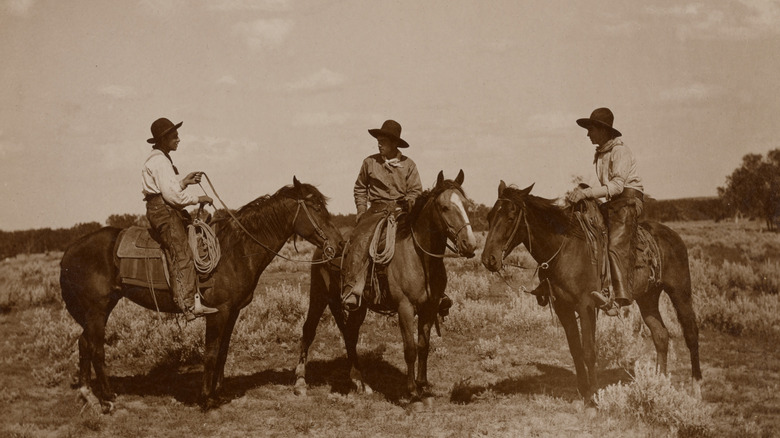
The life of a cowboy was worlds away from what we're used to seeing on screen. It was a tough, unrewarding job that demanded weeks, or even months, on long trails far from civilization. It also carried unique occupational hazards, including securing a reliable source of food. Daily life meant herding huge cattle drives, catching calves with ropes, and spending long nights on watch for predators. It's tiring just to read about. But cowboys were famously resourceful, and to keep themselves on their feet, they always had sourdough biscuits on hand.
Yep, that's right. Cowboys were eating sourdough long before it was cool. But it was nothing like the trendy loaves we know and love today. It was a simple affair, made from a basic mix of flour, water or milk (if they were lucky), baking soda or sourdough starter, sugar (a rare luxury), and lard, which was likely rendered from salt pork, another trail essential. Cowboys carried only what they needed, but the chuckwagon's cook always kept a Dutch oven on hand, which made baking biscuits over an open fire and hot coals a breeze — and is still how many people bake bread today, albeit with slightly more refined measurements and techniques.
There are plenty of reasons why biscuits were well-suited to trail life. For starters, the core ingredients — flour, water, and salt — were cheap, easy to come by, and lasted a long time without spoiling. As long as these ingredients were occasionally added to the sourdough starter, cooks could keep making biscuits indefinitely — the world's oldest sourdough starter is over 4,000 years old. But they were more than just sustenance. Biscuits occupied a special place in a cowboy's heart, and any chuckwagon "cookie" who could whip up a good batch instantly earned the respect of the crew.
Sourdough fueled far more than just 19th-century cowboys
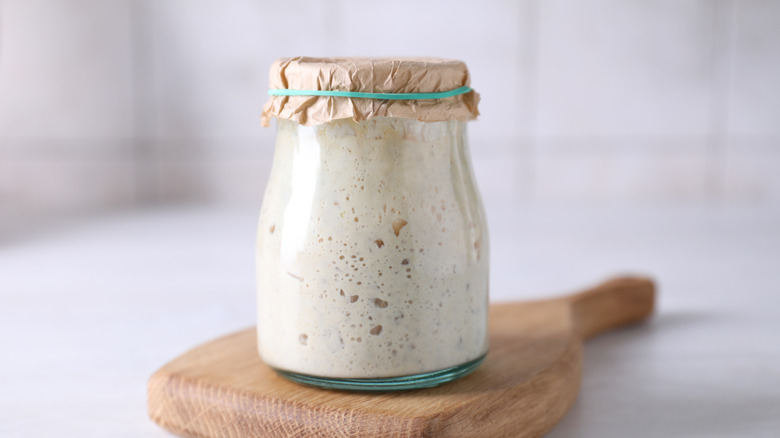
Sourdough has been around for a long, long time. In fact, it's the oldest form of leavened (risen) bread, with origins tracing back to ancient Egypt thousands of years ago. Wild yeast and lactic acid bacteria were used to make dough rise back then, and they are still the same organisms responsible for modern sourdough loaves. Wild yeast and bacteria naturally live on flour, and mixing flour and water together wakes up these dormant microscopic organisms. Together, they produce a unique chemical reaction: Yeast eats the sugars and produces gas, which is what makes the bread light and fluffy once baked, while bacteria produce the lactic acids responsible for that distinctive tang, or "sourness." While cowboys used sourdough biscuits to fuel long cattle drives, the Egyptians were documented using sourdough to feed workers building the pyramids.
Cowboys weren't the only ones reliant on sourdough starters in the 19th century, either. During the California Gold Rush, miners and prospectors carried personal sourdough starters, known as "mother dough," on their long journeys, since fresh commercial yeast wasn't readily available. In 1849, French bakers like the Boudin family arrived in San Francisco and combined their traditional techniques with local starters, laying the foundation for the city's later reputation as a sourdough hotspot. The city even got a lactic acid bacterium named after it: Lactobacillus sanfranciscensis, prized for producing high levels of acid that gave San Francisco sourdough its famously sharp tang. While many bakers claimed this is what made the city's sourdough so unique, it was later discovered that this specific strain wasn't unique to San Francisco and could be found all over the world.