

12 Underrated '60s Candies You Need To Try
We may receive a commission on purchases made from links.
Candy in the 1960s was a mix of sweet, sour, fizzy, and fun. Candymakers were experimenting with new flavors as old favorites, like taffy, took new forms. Inspired by the Space Race and the Atomic Age, confections like Astro Pops and Razzles began to appear on store shelves. But the new candies didn't replace old favorites, such as Mallo Cups, Long Boys, and Peanut Butter Bars.
Even now, nearly 70 years later, many sweets that people loved in the '60s are still being enjoyed by the masses. Treats like Starbursts, 100 Grand Bars, and Now and Later candy can be found on a wide variety of grocery and convenience store shelves. And those retro classics don't show any sign of leaving anytime soon. So, here are a few retro candies that were popular in the 1960s to feed your belly as well as your nostalgia. All it takes is a little luck to find them.
Abba-Zaba Bar
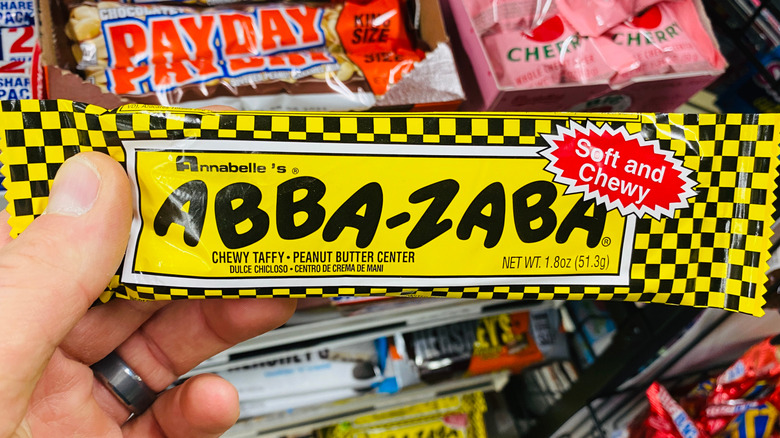
Peanut butter lovers are sure to fall for the Abba-Zaba bar — even if it isn't something you should probably eat every day, unlike peanut butter itself. The unique candy debuted in the early 1920s and was made with a thick layer of taffy surrounding a peanut butter center. The contrast of flavors and textures quickly made the bar a favorite, particularly on the West Coast, where it was produced. Fans of the film "Half Baked" starring Dave Chappelle will recognize the candy bar as his character's favorite sweet treat. In fact, the candy was so widely admired that a song was named after it in 1967.
Fans of the treat recommend either freezing it and breaking it into pieces or microwaving it to make it softer and easier to eat. Either way, you still get a lovely punch of vanilla combined with creamy peanut butter. And there's plenty of nostalgia involved, too. One person noted the bar brings back great memories of their parents, who would buy the candy for them as a child in the '60s.
Bonomo Turkish Taffy
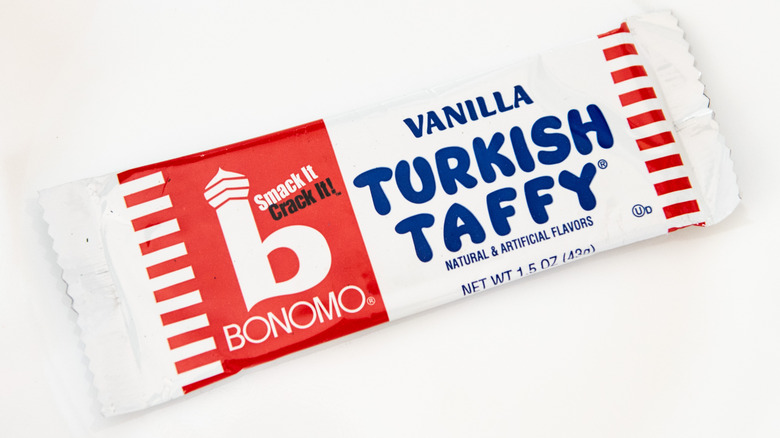
Bonomo Turkish Taffy is one of the oldest candies on this list. Originating in 1912, the treat was sold exclusively at Coney Island before it expanded into a nationally coveted item. The candy was marketed with catchy jingles through television ads and a slogan that's still on the packaging today — "Smack it. Crack it!"
The taffy was one of the first sweets to be sold on TV in the late 1940s. By the 1960s, it was well known and only cost a nickel in many places. It comes in several different flavors, including strawberry, vanilla, chocolate, and banana. The candy was discontinued in 1989 but was brought back due to popular demand in 2010.
Fans remember getting full-size bars of the sweet for Halloween in the 1960s and how they would freeze it, then throw it on the sidewalk to crack the hard taffy into smaller, more manageable pieces. Others recall buying the treat with their parents, making it even more nostalgic. 1960s kids loved the stuff, even if chewing it before letting it soften a bit could lead to pulled fillings. For those patient enough to wait, the sweet would last for quite a while, making a great investment for kids with a few cents to spend.
Bit-o-Honey Bars
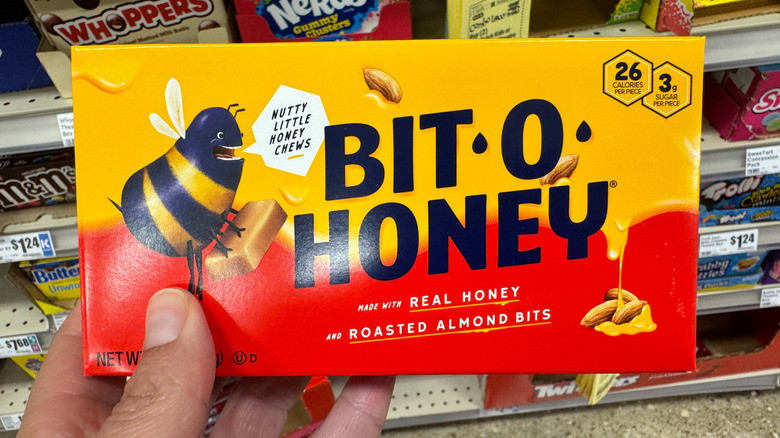
If you're a fan of the Northeast treat called sponge candy, odds are you'll like Bit-O-Honey, too. While sponge candy has a crispy bite, Bit-O-Honey gets pops of crunchiness from roasted almond pieces. The nuts are encased in a honey-flavored taffy that starts out hard and chewy, but quickly becomes soft and pliable.
First introduced in 1924, the candy really took off (so to speak) in the 1960s when advertisements praising the treat's long-lasting nature appeared on television. Nowadays, it's made by the Spangler Candy Company, which means you can find the sweet at a variety of retailers.
Fans happily recall the treat costing a nickel and buying it at stores or movie theatres in the 1960s. Some people still claim that it's their favorite candy. In fact, Bit-O-Honey memorabilia — including display boxes and the actual candy from the '60s – is auctioned off for high prices to nostalgic collectors. So it seems the treats and the memories they induce do indeed last a long, long time.
Charleston Chew
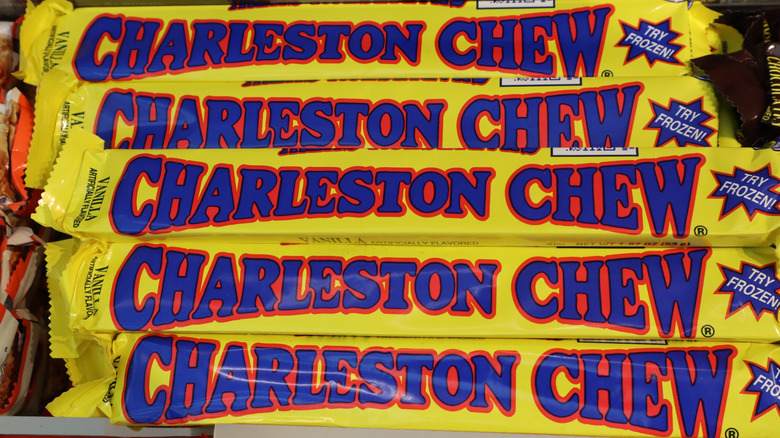
Charleston Chew candy bars might be the most well-known treat on this list, having been immortalized on the animated sitcom "Futurama." The sweet is made from a simple nougat center that's covered in silky chocolate. They were originally only sold with vanilla nougat, but the candy's increasing popularity in the 1960s and '70s led to the introduction of strawberry and chocolate flavors as well. For a short time, there was even a banana flavor.
Named for the fast-paced dance called the Charleston during the 1920s when the candy was created, the bars really took off in the late-1950s and throughout the 1960s, thanks to a massive advertising campaign. The wrappers began advising customers to put the bars in the refrigerator or freezer, making them a refreshing treat that could be easily broken into pieces against a hard surface. Fans are still cracking the candy into bite-sized morsels, and all three flavors are still produced today through Tootsie Roll Industries.
Ice Cubes
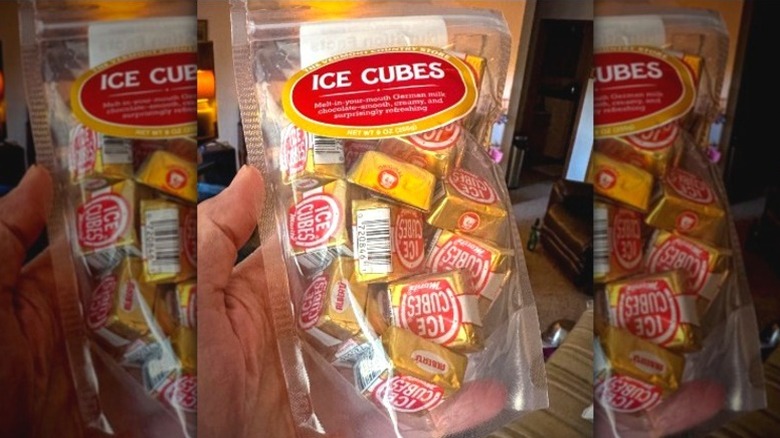
You're very lucky if you remember the chocolate squares known as Ice Cubes in the U.S. These confections were created and distributed in Germany in the late 1920s as ice chocolates, but a company named Albert's brought them to the States in the mid-1930s. They weren't available everywhere, although fans remember them fondly from the 1960s and '70s.
If you were close to a spot that sold them, odds were you would have heard about or experienced the unique cooling sensation this treat provided. Made with coconut oil and hazelnut chocolate, the confection melts at a lower temperature than other sweets, which is what made people's mouths feel cool when they ate them.
Those who tried them in the 1960s remember them as penny or nickel candies, with many recalling its old-school blue and silver wrapping. The packaging was changed to gold foil at some point (although some remember them always being gold). While some believe that the recipe was also tweaked a bit, the chocolate still has a similar cooling sensation today.
Atkinson Peanut Butter Bars
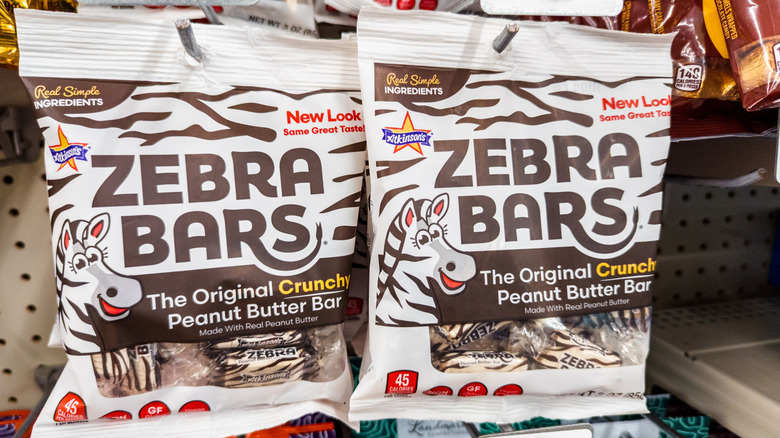
Atkinson Candy Company is a name you'll see a lot on this list, and the reason why is simple. The company was started during the Great Depression as a way for the family to make money while the country suffered through a devastating economic downturn. It worked out for the Atkinsons, and the candy company is still devoted to making nostalgic treats in Lufkin, Texas. One of the business's most famous products is its Zebra Bars, also called peanut butter bars. The candy is immediately identifiable, thanks to its black and white striped packaging and intensely nutty taste.
Fans compare the taste and texture to a Butterfinger, only without the chocolate shell. It's a good comparison because Zebra Bars have a honeycombed peanut butter center with a white, flaky candy shell. Many people remember their family members working at the Atkinson factory in the 1960s, with some recalling the fact that their aunts, uncles, and grandparents would bring freshly made treats, like the peanut butter bars, home. Others went to the five-and-dime stores to purchase their own nutty treats.
Chick-O-Stick
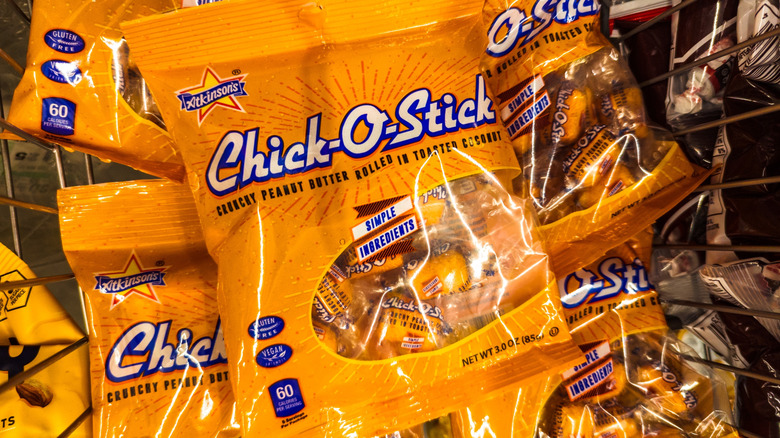
Chick-O-Stick has one of the most unusual names in the candy kingdom. Originally known as chicken bones, the name had to be changed because another candy already had that name. The treat that became known as Chick-O-Stick debuted in the 1950s and continued growing in popularity throughout the 1960s. The candy was a blend of a honeycomb center and roasted peanuts that were rolled in bits of toasted coconut. The result was supposed to look a bit like fried chicken, which is where the name came from.
Fans remember the crunchy treat with great fondness. One person talked about walking to the corner store as a child during the '60s just to buy the candy. Another noted that their father brought the candy home for the family after cashing his paycheck, making it highly nostalgic. One fan reminisced about buying a Chick-O-Stick and a soda at their local pool as a child for only a quarter. While you can't secure the same snacks for $0.25 today, it is still available thanks to the Atkinson Candy Company.
Mary Jane Candy
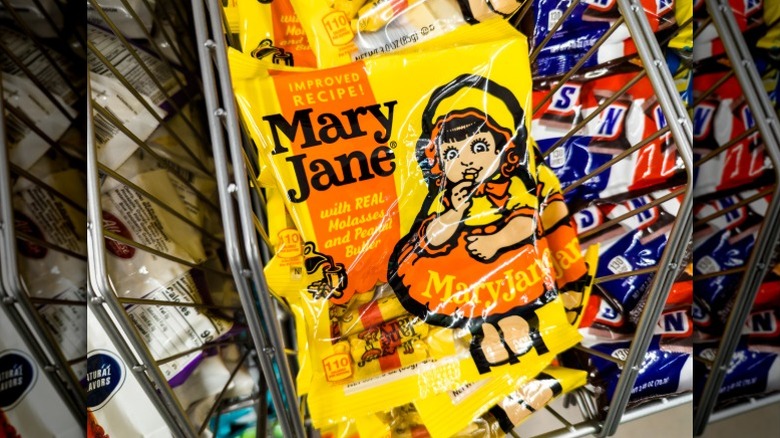
Mary Jane candies might have the most memorable name of any treat on this list. But instead of implying anything illicit, this peanut butter-and-molasses-flavored taffy is named after the creator's favorite aunt. The sticky, hard sweet gradually softens as you eat it, but the first few chews can be a bit difficult to get through. But that's no reason not to give it a go because the resulting taste is unforgettable. Another memorable fact about the sweets is that they were created in the same home once occupied by Revolutionary War hero Paul Revere, making them a New England favorite to this day.
Mary Jane candy was a popular Halloween candy in the 1960s (thanks in no small part to the color scheme of its packaging), and many kids would go home with a few of the sweets in their bags. Fans fondly remember eating them while growing up in the '60s and '70s. They'll immediately recognize the little cartoon girl on the packaging because she's remained the same since the candy appeared in 1914.
Long Boys Candy
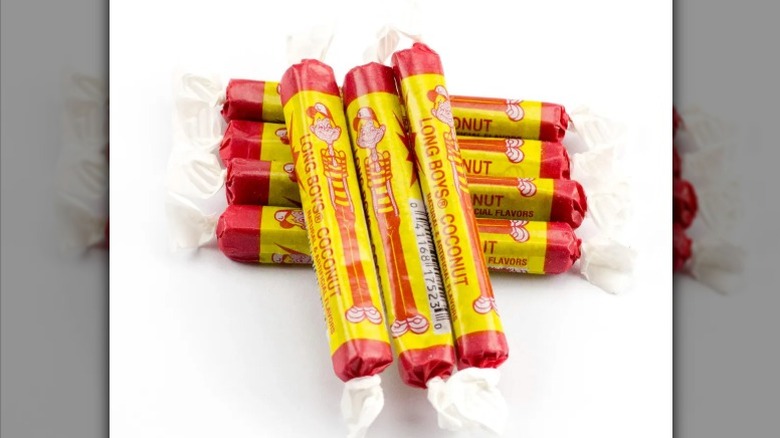
Long Boys are a thin, 3-inch-long piece of candy made with caramel and toasted coconut. They were originally made from a family recipe in New Orleans, Louisiana, in the 1950s, but had become a local favorite by the '60s. The treat's wrapper is still retro-style to this day, featuring a very tall boy wearing a baseball hat.
The nostalgia-inducing sweet was sold to the Atkinson Candy Company in the early 2000s. Back in the day, New Orleanians fondly remember the candy being made by the Bayou Candy Company. Many people's family members worked in the factory, and some people even recall the smell of the candy being cooked there throughout the 1950s and '60s. Today, you can find the treat in the original 3-inch version, as well as in a single bar, a shorter variety, and a chocolate coconut caramel.
Slo Poke Caramels
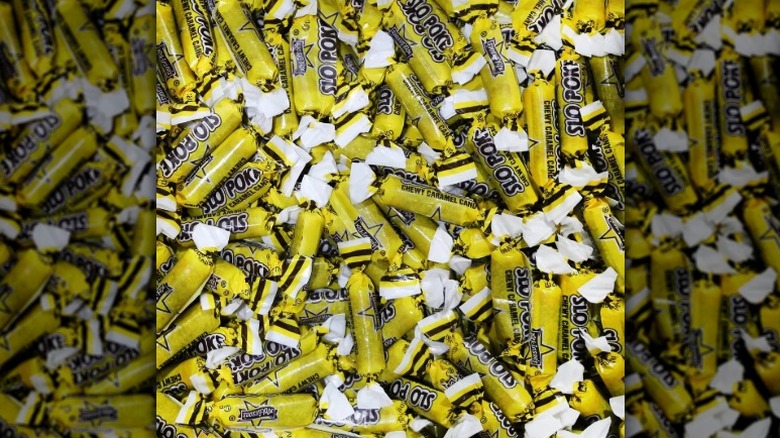
Slo Poke candy first appeared in 1926. It's a dense but soft buttery caramel that was initially sold on a stick. It's since evolved into both a candy bar and bite-sized pieces. Some people suggest breaking it into pieces against a countertop before eating. Made by the Atkinson Candy Company in Luftkin, Texas, the caramel can also be stretched into long strips for easier eating.
Many fans remember buying Slo Pokes from vending machines and grocery stores in the 1960s, with some saying they loved the candy (even if it was unfortunately skilled at removing loose fillings from unsuspecting teeth back in the day). But the name Slo Poke was a clue as to how to eat it. Many children would savor the vanilla-tinged caramel for several days by putting the candy back into the wrapper when they were done. It not only saved on dental work, but made the treat that much better because the nickel or dime they'd invested in it wasn't gone as quickly as it would've been with other sweets.
Mallo Cups
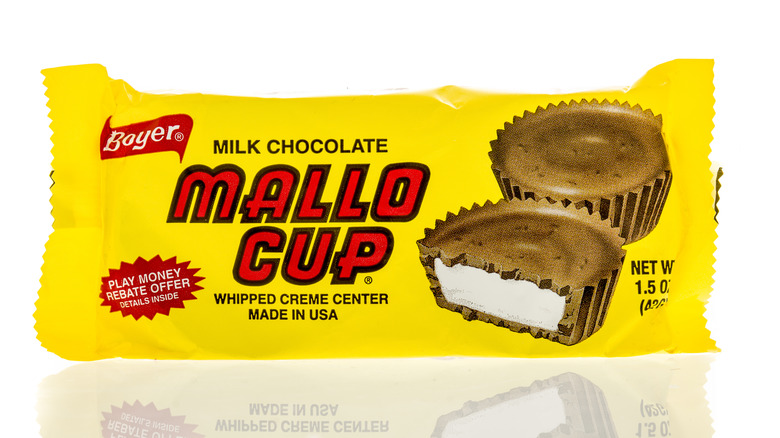
Like many of the candies represented here, Mallo Cups were invented a few decades before the 1960s. In fact, the chewy, marshmallow-filled candies were created in the mid-1930s. But these remained immensely popular during the 1960s, partly thanks to the Boyer brand's ingenious marketing technique of putting "play money" into each package of the treat. That play money could be saved up for prizes ranging from a box of Mallo Cups all the way up to toasters and other small appliances. People saved up the money until they had enough for a prize, and the company still inserts the small cardboard cards into packages now.
But what exactly is a Mallo Cup? A layer of chocolate covers a filling of whipped marshmallow creme that's flecked with tiny pieces of toasted coconut. The result has been dubbed America's first-ever "cup candy," although many more followed.
These tasty morsels are still made in Altoona, Pennsylvania, and you can visit the factory for deeply discounted "imperfect" versions of these and several other Boyer-brand candies. If you happen to be allergic or averse to coconut, this recipe for three-ingredient marshmallow fluff can help you make your own version at home. Just be aware that most marshmallows you make or buy won't be vegan because they're made with gelatin.
Chuckles
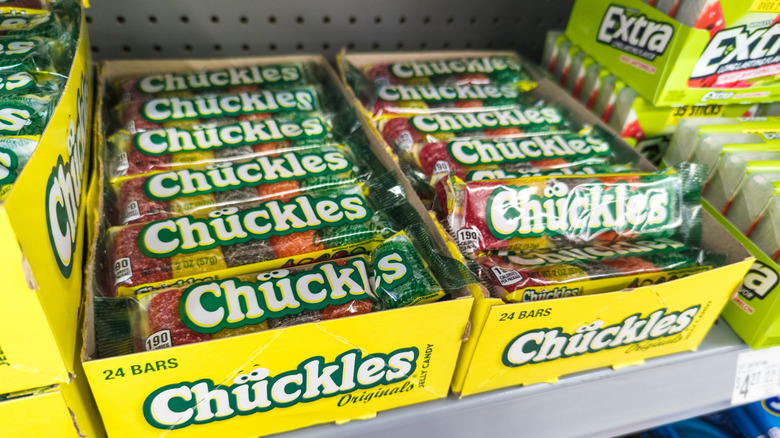
Chuckles jelly candies were created in 1921, and they were produced in Danville, Illinois, through the 1960s. In fact, the sweets were produced at one factory for decades until the business was bought out in 1970 by Nabisco. Chuckles then were produced around the country — but let's go back to the 1960s.
People fondly remember eating these at movie theatres during the decade, while older people might remember the candy's slogan of "5 Chuckles, 5 flavors, 5 cents" during World War II. The fact that Chuckles came in five different flavors was unique, but the candy itself was even more so. Before it was created, jellies would often become sticky from sweating. In addition to changing the flavor, it made the treats harder to eat because half of them would stick to the package. But the 1921 formula stopped all that by coating the candy's outside with sugar. That gave it texture and made each piece as tasty and easy to eat as possible.
A pack of Chuckles typically has cherry, lemon, orange, lime, and licorice flavors. This retro treat should definitely be in your pocket or purse the next time you want something sweet. You can even throw the gummy candy in the freezer for a firmer texture.