

Why You Should Keep Chalk In Your Kitchen
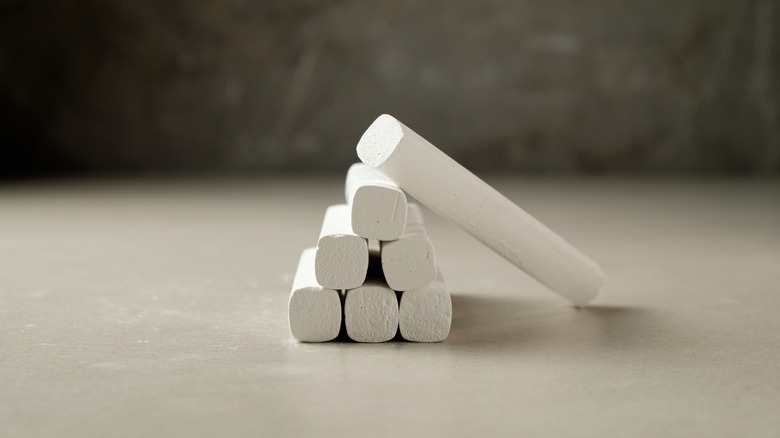
When it comes to oil stains, especially ones on fabric, it's important to address them as soon as possible so they don't become long-term problems. As strange as it sounds, chalk is actually your best option to handle them, because it's cheap, effective, and easy to store.
When grease sits on fabrics, it sinks deeper and deeper into the threads until it's almost impossible to get out. That's why whenever you're doing something that may dirty your clothes, it's best to have something on hand that you can immediately reach for and address the problem. Chalk is as convenient as it gets since you can store it pretty much anywhere and all you have to do is rub it into the stain before washing your clothes. As it breaks off into the fabric, all those little mineral-based particles absorb the oil before it has a chance to sink into the threads.
To avoid any extra dyes or aromas, you'll want to use plain old white chalk rather than what the kids may use to draw on the sidewalk. Since it's non-toxic, you can use it on just about any kitchen fabric, from towels to curtains, making it another great Dollar Tree gem for cleaning a dirty kitchen. You can even run to your fridge and combine the chalk with an egg yolk to remove stains, further increasing the cleaning power without needing to turn to a chemical alternative.
Other uses for chalk in the kitchen
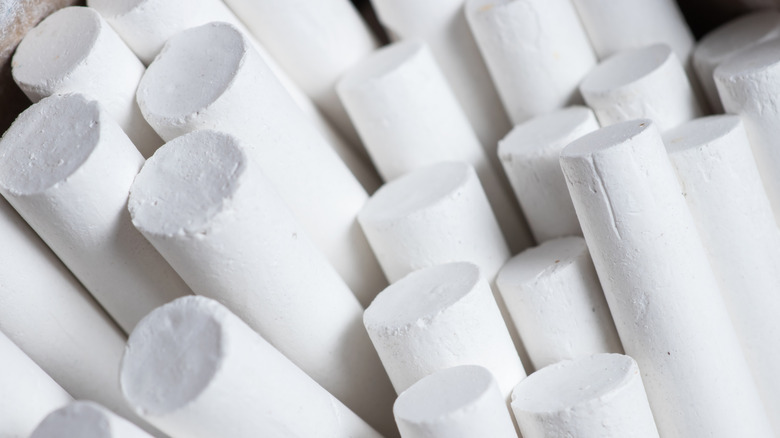
Chalk is essentially just a stick of calcium carbonate, a porous mineral that is neutral-smelling, non-reactive, and safe if you accidentally consume small amounts. Whether you just keep it in a drawer or use it as a cleaning agent for stained surfaces, it may be more versatile than you realize.
The same way baking soda helps you achieve a cleaner fridge by absorbing odors, chalk left in a drawer can help you achieve shinier silverware. When ambient moisture interacts with metals, it tends to speed up tarnishing. However, chalk works almost like a desiccant packet, absorbing moisture over time and making sure drawers maintain a drier environment. If you're worried about your flatware coming into contact with sticks of chalk, just wrap them up in cheesecloth so they can still access moisture but won't rub off on your forks and knives.
Chalk isn't just good for lifting stains out of fabric; you can also use it to polish marble surfaces. Cleaning marble countertops can be tricky because acidic cleaners can erode and chemical ones may weaken the surface, depending on the material. However, calcium carbonate chalk is similar to marble's chemical composition, so a paste made from ground chalk, baking soda, and water is abrasive enough to polish the surface but gentle enough not to scratch or erode.