

What Sabbath Mode On Your Fridge Means
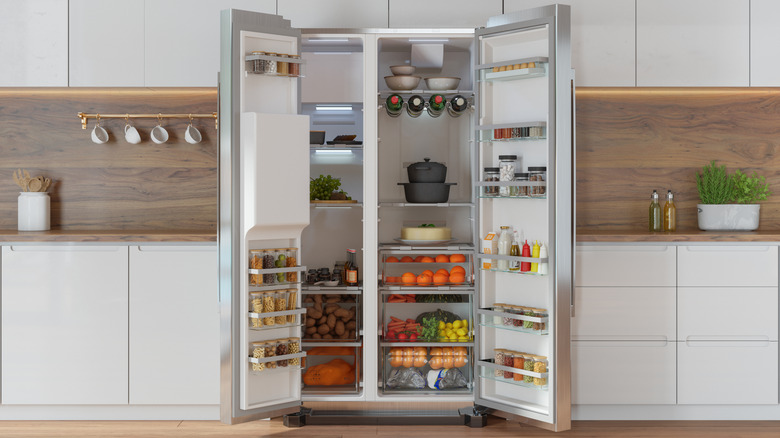
Although some argue modern fridges are not as smart as midcentury models, from integrated touch screens to AI vision, today's refrigerators often feature a wide assortment of handy apps, gadgets, and upgrades. One feature they're likely to have is Sabbath mode, which might not mean much if you're not Jewish. But to Shabbat-observant Jews, this essential feature permits them to keep using their refrigerator during one of the religion's most important ritual days.
Shabbat refers to the weekly Jewish day of rest (aka the sabbath, sometimes called shabbos), which begins at sunset on Friday and ends after nightfall on Saturday. Jewish law forbids Jews from doing "work" on Shabbat. These activities are categorized into 39 forms of labor called melachah. Shabbat rules predate refrigerators — or any modern tech, for that matter — but the ancient categories of melachah are still applied to new inventions by analyzing how they function. Take opening a refrigerator door, for example. Typically, a light turns on, which is considered forbidden: It can be seen as creating a spark, completing a circuit (which falls under the category of "building"), or heating a filament, depending on which rabbinic interpretation you follow. So if you're craving a cold snack on Shabbat, Sabbath mode comes in clutch.
Sabbath mode must be turned on before the Sabbath begins; adjusting digital electronic settings during the holy day itself is forbidden. Depending on your fridge model, activating it in advance can have several different functions — like ensuring that the interior bulbs stay off when you open the door, control panels and digital screens turn off or stop responding to touch, and ice makers and water dispensers are also typically disabled. This allows observers to continue using the fridge without directly influencing how it functions, therefore adhering to the rules of the Sabbath.
The fridge isn't the only kitchen appliance with Sabbath mode
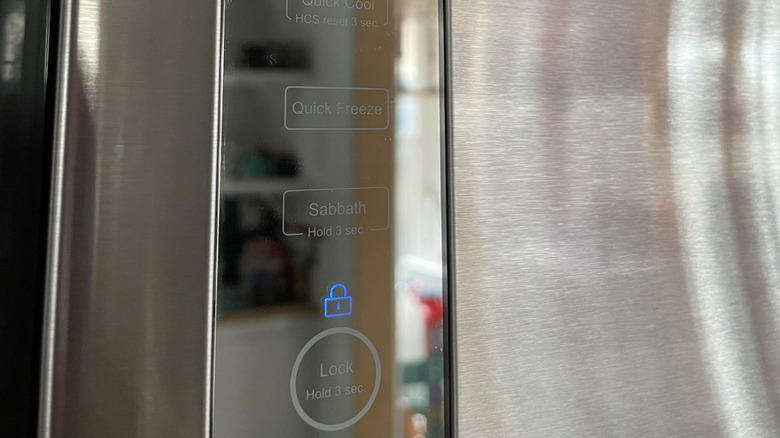
Before Sabbath mode existed, observant Jews didn't have it easy. Observers would remove lightbulbs from refrigerators and tape down the doors' automatic light switches to prevent them from turning on. With Sabbath mode now popular among many top-tier refrigerator brands, that stress is long gone, allowing followers to actually enjoy their much-needed day of rest.
Aside from the refrigerator, another appliance where Sabbath mode is essential is the oven. The melachah of bishul (aka cooking) makes using an oven or microwave to cook raw or cold food a hard no, and you can also say goodbye to its AI functions. To counteract this, most practitioners meal-prep the night before, but they still need a way to heat that food. As the oven couldn't be turned on, observers would leave it running before Shabbat, letting it warm food without technically using it. But Shabbat is a day-long affair, and while breakfast and an early lunch (more like a brunch) were covered, the oven's auto-shutoff of 12 hours posed a problem for dinner. Sabbath mode solves this by overriding the oven's auto-shutoff feature, keeping it usable all day long. This no-cooking rule is also why the slow cooker was invented; the creator, Irving Naxon, was inspired by his mother's cholent (an Ashkenazi stew) cooking in a large communal oven that was turned off right at Shabbat and slowly cooled overnight.
Another appliance you'll likely find Sabbath mode on is your dishwasher. Open its door, and a cacophony of lights and beeps tends to follow. You've probably got the gist already, but these are another Sabbath red flag. Activating Sabbath mode (it might also be called Kosher Consumer Friendly Mode) disables the lights and locks the control panel, so it won't accidentally start a wash cycle. Essentially, the dishwasher just becomes a place to store your dirty dishes.